Siena in a day, and back at the pool by four
How to do Siena properly in one day from a villa base: the Campo before ten, the striped Duomo, a contrada lunch, and back at the pool by four.
From the founders5 min read
How to do Siena properly in one day from a villa base: the Campo before ten, the striped Duomo, a contrada lunch, and back at the pool by four.
From the founders5 min read

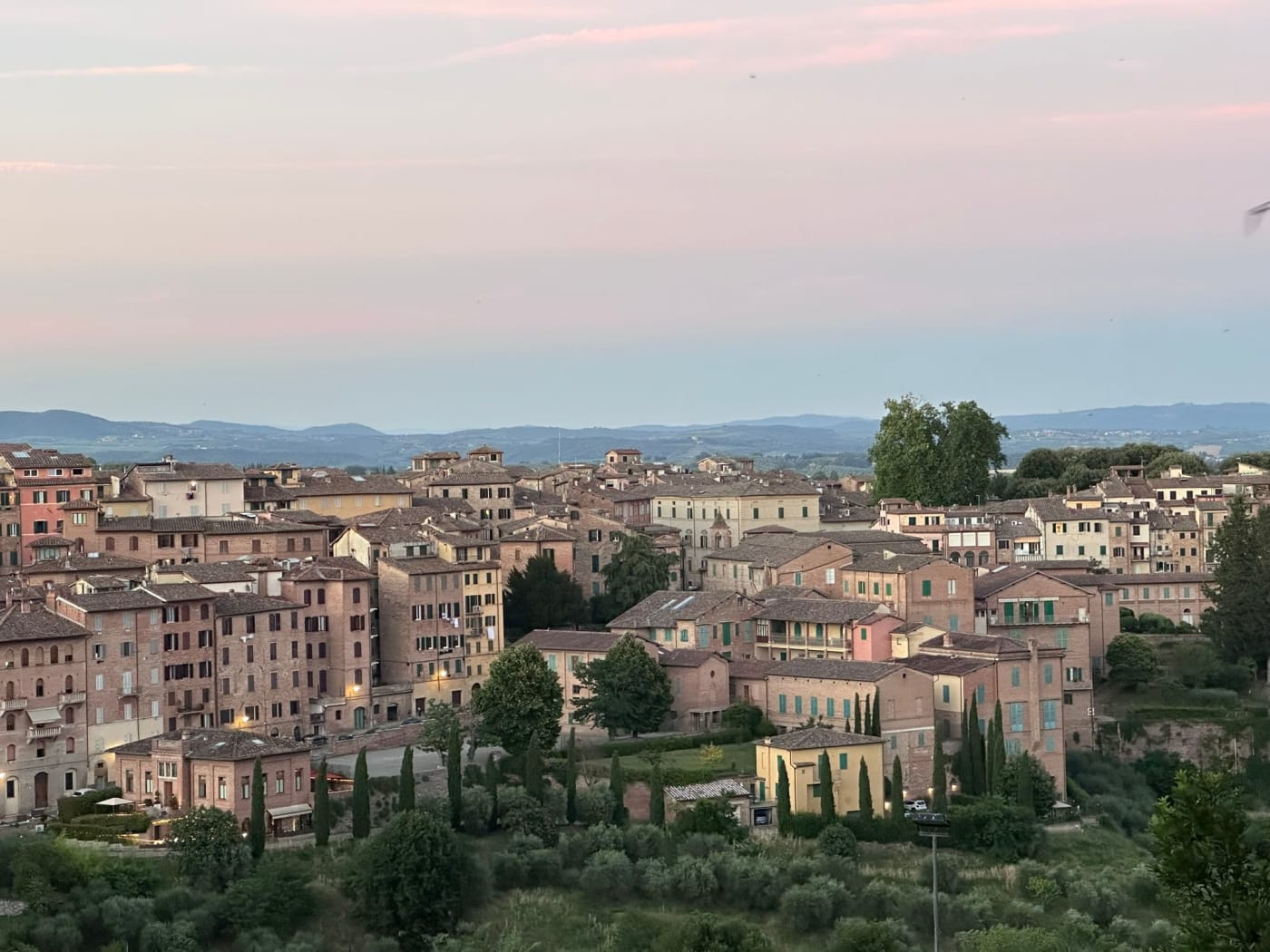
Siena is the reason the south of Tuscany looks the way it does. Until the plague of 1348 it was Florence's equal, a banking city with imperial ambitions; afterwards it never had the money to rebuild, which is why the medieval city survives almost untouched. Florence is the Renaissance; Siena is what came before it, and many of our guests come home preferring it.
We keep no houses inside the city, deliberately. A villa week wants country around it, and Siena rewards a single, well-planned day far more than it rewards sleeping there. The closest houses in the collection sit about forty minutes south at Castiglion del Bosco, which makes Siena the natural big day out of a Val d'Orcia or Crete Senesi week.
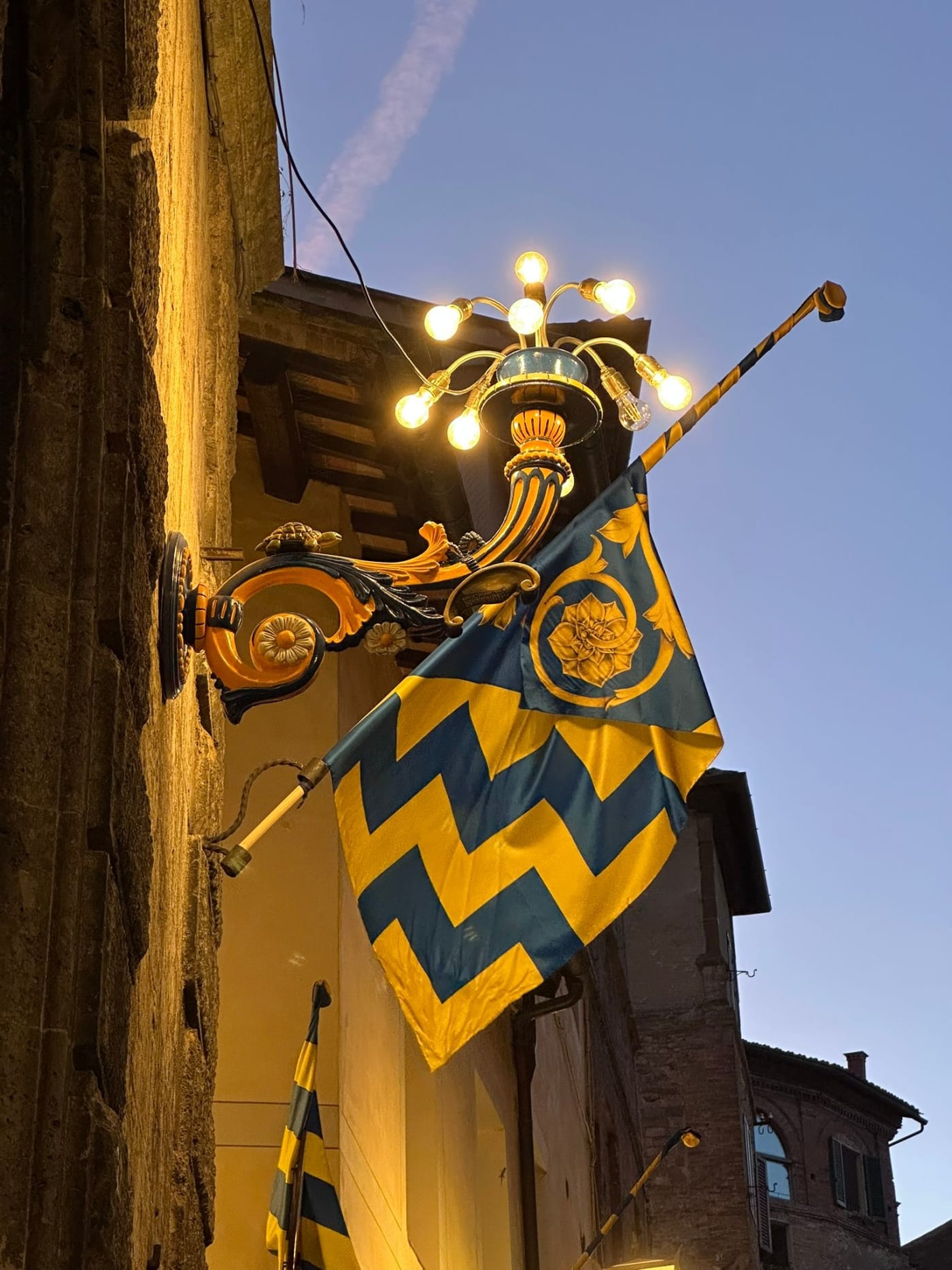
Leave the villa by nine. Siena is a ZTL city, so park below the walls, the Santa Caterina garage is the easy answer, and take the escalators up into the old city. You arrive almost beside the Duomo, which is the thing to do first, before the day-trip coaches: the striped nave, the Piccolomini Library with its impossibly fresh Pinturicchio frescoes, and the inlaid marble floor, parts of which are uncovered only in late summer and autumn.
From the Duomo, let the streets take you downhill to the Campo. There is no bad route. The scallop-shaped piazza is Italy's finest civic space, and the correct thing to do there is nothing at all: a coffee at the edge, twenty minutes watching the light move across the tower of the Palazzo Pubblico. If energy allows, the climb up the Torre del Mangia buys the best view in southern Tuscany.
Lunch belongs in a contrada, one of the seventeen wards that still run the city's inner life. Walk five minutes away from the Campo in any direction and the restaurants stop performing for visitors: pici with wild boar, ribollita in the cooler months, and the local Chianti Colli Senesi by the glass. The afternoon fits one more thing, not three: Santa Maria della Scala, the thousand-year-old hospital turned museum opposite the Duomo, or the Pinacoteca for the gold-ground Sienese painters. Then down the hill, and back at the pool by four.
The Palio runs twice each summer, on 2 July and 16 August, and the days around each race are the only time Siena feels crowded to its core. Standing in the Campo is free, packed and hot. Balcony and window places are bookable months ahead at serious prices, and we arrange them for guests who plan early. The insider's compromise is a trial race on one of the preceding days: most of the spectacle, a fraction of the crush.
Siena's entire historic centre is a camera-enforced ZTL, and the fine arrives by post months later, one per camera passed, so the rule is absolute: do not drive inside the walls, even briefly, even because the navigation suggested it. The system that works is the Santa Caterina garage below the west walls: covered, rarely full, and connected to the city by a run of public escalators that deliver you up beside the Duomo with no climb at all. The San Francesco garage on the north side has its own escalator run and suits a day that starts at the market end of town. Skip street parking entirely; the coloured-line system is a trap for rental cars.
On the train question, honesty: the train is the wrong tool for Siena. The line from Florence takes ninety minutes or more with a change at Empoli, and Siena's station sits well below the town. From a villa in the Val d'Orcia or Crete Senesi the car is the answer, forty minutes of good road, and the Santa Caterina escalators remove the only hard part of arriving.
The Duomo complex runs on a single combined ticket, the OPA SI pass, covering the cathedral, the Piccolomini Library, the crypt, the baptistery and the Duomo museum; buy it online the evening before and walk past the ticket queue. The museum matters more than it sounds: Duccio's Maestà is there, and the climb to the Facciatone viewpoint on the unfinished nave wall is the best-kept secret in the city, the same view as the Torre del Mangia with a fraction of the wait. The Torre del Mangia itself sells timed slots that go quickly from mid-morning in season: go at opening or take the Facciatone instead. The cathedral's inlaid marble floor is fully uncovered only from about late August to October; those weeks are worth planning around. Santa Maria della Scala and the Pinacoteca, by contrast, almost never queue.
The reliable rule is five minutes from the Campo in any direction. On the Campo itself, take coffee, not lunch. Osteria Le Logge, just behind the square on Via del Porrione, is the institutional Sienese table, pici and the local Chianti Colli Senesi done properly. For the sweet things Siena has exported for seven centuries, panforte and the almond ricciarelli, the historic Nannini on Banchi di Sopra is the right counter, and boxes travel well back to the villa. In the contrada streets further out, the trattorie cook for their own ward first and visitors second, which is exactly the recommendation.
Siena is the city that never forgave Florence. Its bank, Monte dei Paschi, founded in 1472, is the oldest surviving bank on earth; its victory over Florence at Montaperti in 1260 is still spoken of as though it were recent; and the plague that ended its golden age is the reason the medieval city survives intact. The city is formally dedicated to the Virgin, Civitas Virginis, which is why both Palios are hers: 2 July for the Madonna di Provenzano, 16 August for the Assumption.
The seventeen contrade are not a tourist re-enactment; they are how the city actually organises itself. Sienese are baptised into their contrada at its own fountain, each ward keeps a museum, a church and a social club, and certain pairs are formal enemies whose rivalry shapes every Palio. Look up as you walk: the wolf, the owl, the tower and the goose on the corner plaques tell you whose streets you are in, and the flags come out weeks before each race.
Siena pairs naturally with the country around it rather than with other cities. On the drive south, Buonconvento's walled old town makes a gentle stop; the Crete Senesi begin twenty-five minutes east of the walls, and their light is best exactly when you are heading home. From the Castiglion del Bosco villas, houses like Villa Alba or Casa del Vescovo, the whole day fits between breakfast and aperitivo. For where the city sits in the larger picture, see the map of Tuscany and our honest guide to where to stay.
At the Santa Caterina garage below the west walls, which connects to the Duomo level by public escalators, or the San Francesco garage on the north side, which has its own escalator run. Never drive inside the walls: the ZTL is camera-enforced, and each camera passed is a separate fine that reaches you by post months later.
Buy the combined OPA SI pass online the evening before and you walk past the ticket queue. The Torre del Mangia's timed slots sell out from mid-morning in season; the Facciatone climb inside the Duomo museum gives a comparable view on the same pass.
The full inlaid floor is normally on show from late August into October. The rest of the year large sections are protected under boarding.
Comfortably. From the Val d'Orcia or Crete Senesi it is about forty minutes by car: leave by nine, Duomo before the coaches, lunch in a contrada, and back at the pool by four. The train is the wrong tool here; from Florence, even the bus beats it.
2 July and 16 August. Standing in the Campo is free, packed and hot; balcony places book months ahead at serious prices, and we arrange them for guests who plan early. A trial race on one of the preceding days is most of the spectacle at a fraction of the crush.
Pici, the hand-rolled pasta, usually with wild boar ragù; ribollita in the cooler months; and the medieval sweets the city invented, panforte and the almond ricciarelli, best from the historic Nannini on Banchi di Sopra.
The lookbook
The season lookbook, a note when a new house joins the collection, and nothing else. No sequences. No discounts, ever.
Written from the same desk that answers every enquiry. Unsubscribe in one click.
Continue reading
Food & Wine
15 March 2026From bistecca alla fiorentina to hand-rolled pici, a complete guide to traditional Tuscan food, where to eat each dish, and what to drink alongside it.
Travel Guide
28 February 2026Beyond the guidebook favourites, discover the charming medieval villages that most visitors miss entirely.