PlanningMap of Tuscany
Map of Tuscany with Towns, Cities and Holiday Areas
Tuscany is in central Italy, with Florence as its capital and a coastline to the west. This map of Tuscany helps you locate the main cities, hilltop towns and countryside areas, then choose a base that fits the places you want to visit.
Start with Florence, Siena, Pisa and Lucca. Chianti lies between Florence and Siena; the Val d’Orcia stretches south of Siena; and Maremma occupies much of the southwest. Umbria is a separate region across Tuscany’s eastern border.
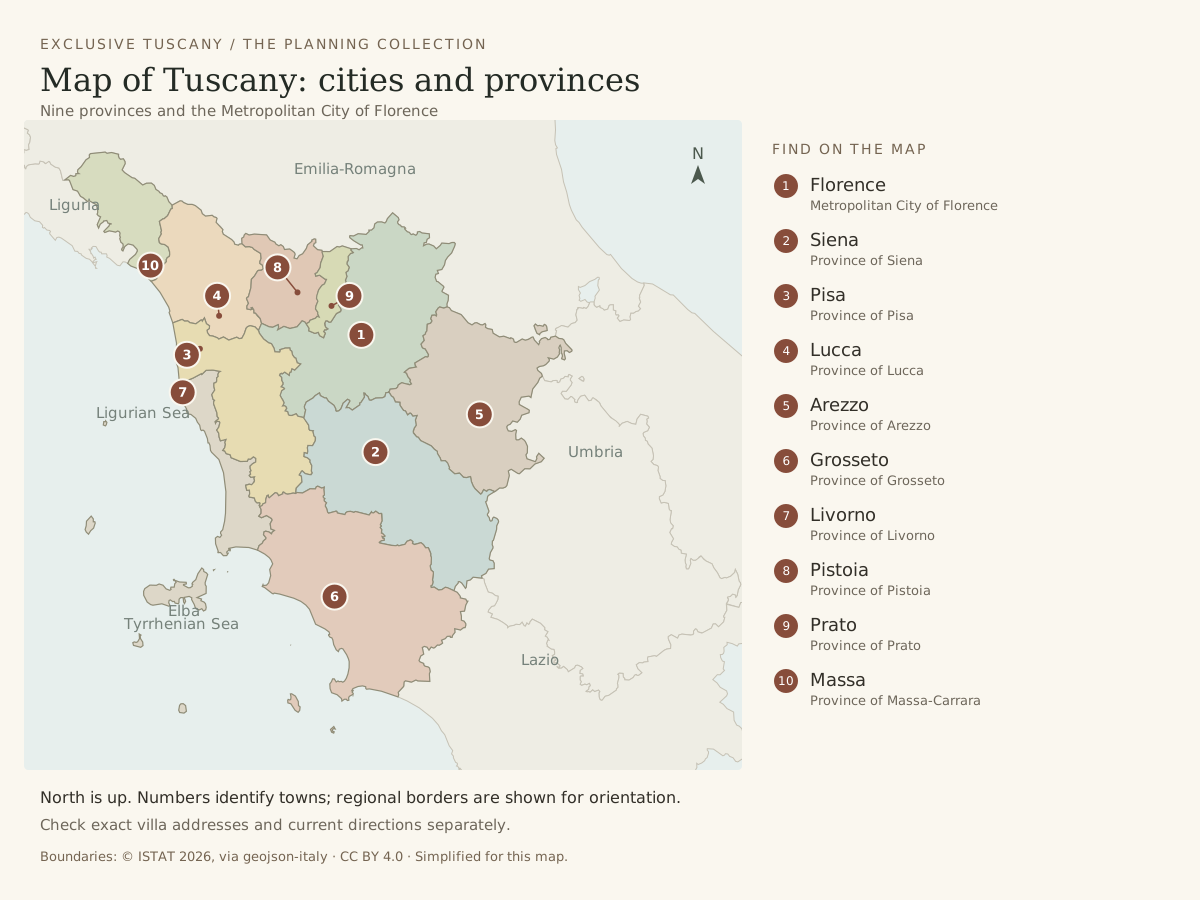
Open the printable map · Explore the interactive map · Compare holiday areas
Where is Tuscany?
Tuscany, or Toscana in Italian, lies north of Lazio, the region containing Rome, and south of Emilia-Romagna. Liguria borders its northwest, while Marche and Umbria lie to the east. Its western coast meets the Ligurian and Tyrrhenian seas.
Florence is inland, in the northern part of the region. Pisa and Lucca are farther west, Siena is south of Florence, and Arezzo is to the east. Those four directions are more useful for planning a holiday than treating Florence as the starting point for every journey.
Tuscany covers about 23,000 square kilometres. A villa near Lucca and a villa near Pienza can offer very different weeks, even when both listings describe their setting simply as “the Tuscan countryside”. Choose your part of the map before comparing individual villas.
Tuscany Map with Cities
Use these cities as reference points when reading the map. Smaller towns and rural properties are easier to place once you know which city they sit near.
| City | Position within Tuscany | Useful orientation |
|---|---|---|
| Florence / Firenze | Northern inland Tuscany | The regional capital; a starting point for Florence visits and northern Chianti |
| Siena | Central inland Tuscany | A reference point for southern Chianti, the Crete Senesi and journeys towards the Val d’Orcia |
| Pisa | Western Tuscany, near the coast | An arrival point to consider for Pisa, Lucca and the western countryside |
| Lucca | Northwest, inland from the coast | A base to compare for the walled city, surrounding hills and trips towards Versilia |
| Arezzo | Eastern Tuscany | A reference point for eastern hill towns and the Valdichiana |
| Grosseto | Southwest | A reference point for Maremma and the southern mainland coast |
Florence and Pisa have airports, but the nearest airport to your villa depends on its exact location. Compare the flight options with the final drive in our Tuscany airports guide.
Florence: art, arrival and northern Tuscany
Florence is the regional capital and a useful first reference point on the map. The Duomo, Uffizi and Accademia can each shape a day in the city; leave time between booked visits rather than treating Florence as a quick stop on a longer countryside route.
For a villa holiday, distinguish staying near Florence from staying in its historic centre. A countryside address can offer more space and a private pool, but the journey includes the approach to the city, parking or a rail connection, and the final walk. Compare villas near Florence against the city visits you actually want to make.
Siena: the city at the centre of many countryside itineraries
Siena helps orientate the central and southern parts of Tuscany. North of the city lies Chianti; to the southeast are the Crete Senesi; farther south are the towns and landscapes associated with the Val d’Orcia.
The Piazza del Campo and cathedral make Siena a substantial outing in its own right. If you plan to visit from a villa, choose your parking and walking route before departure. A driving estimate to “Siena” does not usually include reaching the square on foot. Compare villas near Siena if repeated visits matter to your week.
Pisa: an airport and a city worth its own stop
Pisa sits in western Tuscany, with the Arno running through the city towards the sea. The Leaning Tower and cathedral complex are its best-known sights, while the riverside gives a different perspective on the city beyond the monument area.
Its airport makes Pisa a useful arrival option to compare for western Tuscany. Whether it is best for your party depends on the flight and the onward journey to the villa. Avoid committing to a major sightseeing visit immediately after landing unless your arrival time, luggage arrangements and energy allow it.
Lucca: a city base for the northwest
Lucca’s walls enclose a historic centre that can form the focus of a visit without a packed schedule. The city also provides a reference point for the surrounding plain, the hills and the Serchio valley to the north.
When comparing properties, separate these settings. A villa close to the plain may work for regular meals or visits in Lucca; a villa deeper into the hills may suit a quieter stay with fewer journeys. Our Lucca and Garfagnana guide introduces the broader area.
Arezzo: the eastern side of the map
Arezzo helps locate eastern Tuscany and routes towards Cortona and the Valdichiana. Its historic streets, Piazza Grande and artistic heritage give it a different role from the more frequently combined Florence–Siena itinerary.
If the places on your wishlist are mostly east of Siena, compare eastern bases before choosing Chianti by default. The right starting point can reduce repeated cross-country journeys.
Grosseto: a reference point for Maremma
Grosseto sits in the southwest and is a useful anchor when reading the Maremma map. From here, distinguish coastal destinations from inland towns such as Pitigliano and Sorano. They belong to the same broad part of Tuscany but call for different outings.
For a villa described as “in Maremma”, establish its actual position relative to the beach, shopping and the towns you want to visit. The regional name alone is not a measure of beach access.
Tuscany Regions Map
Chianti, Val d’Orcia and Maremma are geographical or cultural areas, rather than separate Italian regions. Their names are useful when choosing a holiday base, but they do not form a complete set of administrative boundaries.
The table below groups places for trip planning. Some areas overlap, and a villa on the edge of one may be a practical base for visiting another.
| Holiday area | Towns to find on the map | Consider it for | Check before choosing a villa |
|---|---|---|---|
| Chianti | Greve, Castellina, Radda and Gaiole | Vineyard visits and a countryside stay between Florence and Siena | The particular village and road connections; “Chianti” covers more than one convenient starting point |
| Siena and the Crete Senesi | Siena, Asciano and Buonconvento | Siena visits and the countryside south and east of the city | Your route to city parking and the time needed for more distant excursions |
| Val d’Orcia | Pienza, San Quirico d’Orcia, Bagno Vignoni and Montalcino | Landscape, small towns and a slower southern Tuscany itinerary | The final approach to the villa and how much driving you want to do |
| Lucca and the northwest | Lucca, Barga and Castelnuovo di Garfagnana | Lucca’s historic centre, countryside and mountain excursions | Whether the property is on the Lucca plain or farther into the hills |
| Arezzo and Valdichiana | Arezzo, Cortona and Montepulciano | Eastern Tuscany, hill towns and visits towards the Umbrian border | Which towns you plan to combine; the area is too broad to judge from its name alone |
| Val d’Elsa and the Volterra area | San Gimignano, Colle di Val d’Elsa and Volterra | Hill towns and inland touring | Road routes between towns that may look close on a regional map |
| Versilia and the northern coast | Viareggio, Pietrasanta and Forte dei Marmi | Beach visits alongside time in Lucca or Pisa | Actual beach access, parking and the drive from the villa |
| Etruscan Coast | Castagneto Carducci, Bolgheri and San Vincenzo | Coastal outings and inland villages | How far inland the villa sits and which beach you will use |
| Maremma and Argentario | Grosseto, Castiglione della Pescaia, Orbetello and Porto Santo Stefano | Southern coastal stays and countryside | Whether your chosen villa suits beach days, inland sightseeing or both |
Elba and the other Tuscan islands sit offshore. Plan island visits separately, including the crossing, instead of treating them as ordinary mainland day trips.
For a more detailed comparison of the countryside areas, see our guide to the regions of Tuscany.
Chianti: choose the village as well as the region
The familiar wine-country names on a Chianti map include Greve, Panzano, Castellina, Radda and Gaiole. Use these towns to locate individual villas rather than assuming that every villa described as Chianti sits halfway between Florence and Siena.
A northern base may suit a week with more time around Florence; a location farther south may better suit your Siena plans. Check both journeys from the specific property. Build wine visits around a manageable route, allowing time for lunch and arranging transport where needed.
Val d’Orcia: plan around the southern countryside
Pienza, San Quirico d’Orcia, Bagno Vignoni and Montalcino are useful points to identify before choosing a villa. Montepulciano is often included in the same holiday itinerary, but sits on the ridge between Valdichiana and Val d’Orcia and deserves its own position on the map.
This part of Tuscany works well when the landscape and nearby towns are central to the holiday. If Florence is the main priority on several days, compare the journey carefully before booking farther south. Ask for the villa’s arrival instructions too: the last stretch may involve a country lane or gravel drive, with conditions specific to that villa.
Lucca, Garfagnana and the coast: three different settings
Lucca, the mountain country to its north and the coast to its west should not be treated as one interchangeable location. A stay on the Lucca plain, a villa above Barga and a base near Pietrasanta can each serve a different itinerary.
Use the map to decide which setting matters most, then check the journeys to the others. Garfagnana is a geographical area within the province of Lucca, not an additional province of Tuscany.
Maremma and the wider Tuscan coast
The Tuscan coast continues beyond Maremma. In the north, locate Viareggio and Forte dei Marmi; farther south, identify the Etruscan Coast around Castagneto Carducci and San Vincenzo; then continue towards Castiglione della Pescaia, Orbetello and Argentario.
For a countryside villa with beach outings, compare the villa against a named beach and its access arrangements. “Near the coast” can mean very different journeys. An inland Maremma itinerary built around tufa towns and hot springs also differs from a week centred on the sea.
Umbria: a neighbouring region, clearly marked
Umbria appears across the eastern boundary for orientation, but it remains a separate region. Perugia, Assisi and Orvieto are in Umbria, outside Tuscany.
If these places dominate your wishlist, compare a stay in Umbria as an alternative base. Do not assume that including a place on the same regional map makes it a short day trip from every Tuscan villa.
Reading the Tuscany wine map
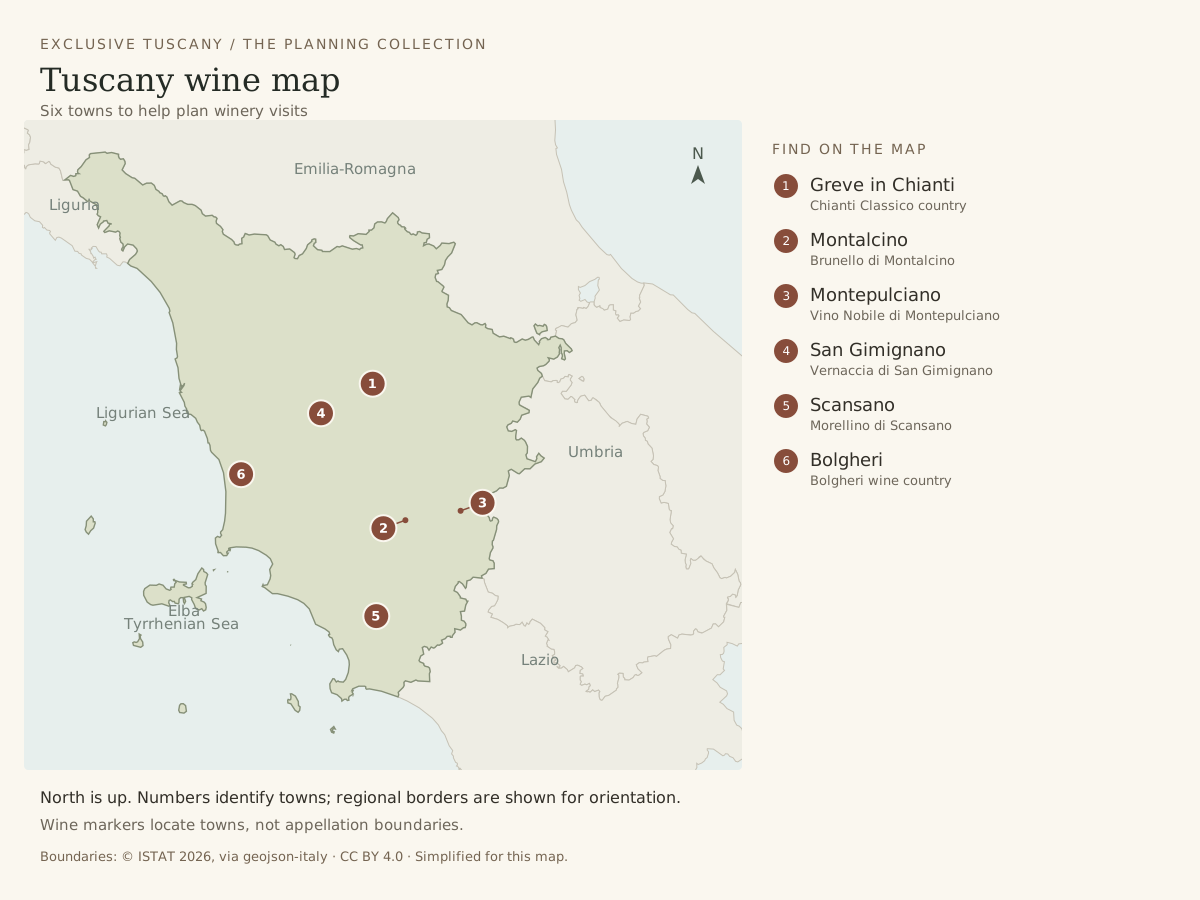
Use the wine map to locate six towns associated with Tuscan wines. Its markers show towns, not the legal boundaries of appellations. Administrative provinces, countryside areas and wine appellations describe different things.
Locate Chianti Classico between Florence and Siena, Montalcino for Brunello, Montepulciano for Vino Nobile, San Gimignano for Vernaccia and Scansano for Morellino. Use those names to organise the places you want to visit, then check the particular wineries, appointments and transport. A wine map helps group visits geographically; it does not confirm opening arrangements.
Tuscany Tourist Map: Hilltop Towns and Places to Visit
Choose a few places you especially want to see, then look for a base nearby. The following towns help you build a manageable shortlist.
San Gimignano and Volterra: Two inland towns west of Siena, with different histories and settings. Compare them with your route through the Val d’Elsa rather than assuming that every central Tuscany villa is equally convenient for both.
Pienza, San Quirico d’Orcia and Bagno Vignoni: A useful group to locate when planning time in the Val d’Orcia. Leave room for stops between towns instead of filling the day with a long list of destinations.
Montalcino and Montepulciano: Both are associated with well-known wines, but they are distinct destinations. Montepulciano stands on a ridge between Valdichiana and Val d’Orcia; it is often visited alongside the latter, without being interchangeable with it.
Cortona and Arezzo: Consider this part of the map if eastern Tuscany is central to your plans. Cortona looks over the Valdichiana towards the Umbrian border.
Lucca and Pisa: Compare a stay in the northwest if these cities are priorities. A property described as “near Lucca” still needs an address check: a villa on the plain and one up a winding hillside have different journey times.
Pitigliano, Sorano and Sovana: These towns belong on a southern inland itinerary. Check the route from your base before combining them with a beach day elsewhere in Maremma.
Cultural landmarks at a glance
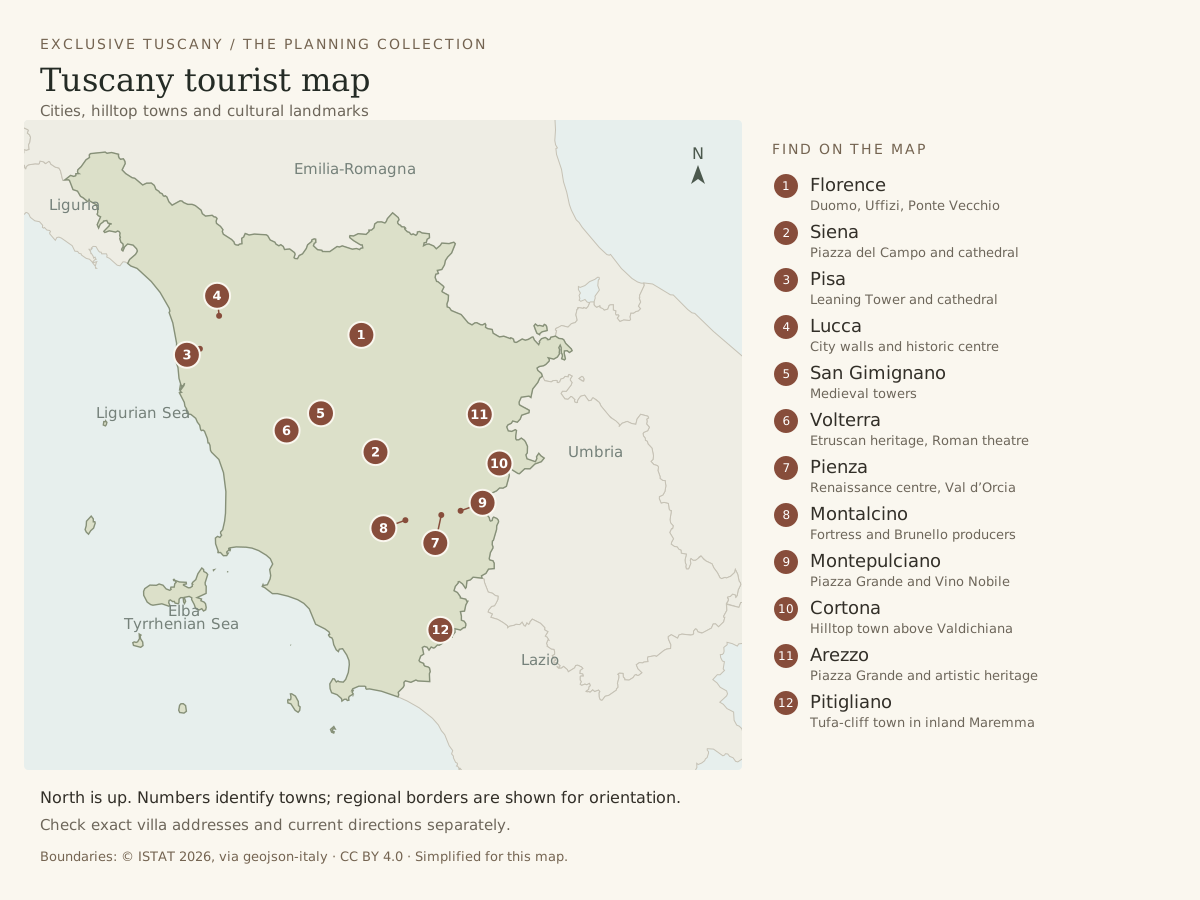
Find the numbered towns on the cultural map, then use this table to build a shortlist of places to visit.
| Town or city | Landmarks and interests | Planning consideration |
|---|---|---|
| Florence | Duomo, Uffizi, Accademia and Ponte Vecchio | Leave space between major visits; check booking requirements for your dates |
| Siena | Piazza del Campo and cathedral | Include the walk from parking or your arrival point |
| Pisa | Leaning Tower and cathedral complex | Decide whether this is a dedicated outing or an arrival/departure stop |
| Lucca | City walls, streets and churches within the centre | Combine a walk with time to explore, rather than using it only as a transit stop |
| San Gimignano | Medieval towers and historic centre | Allow time for the town as well as its best-known viewpoint |
| Volterra | Etruscan heritage, Roman theatre and alabaster workshops | Check the road journey if combining it with San Gimignano |
| Pienza | Renaissance centre and views over Val d’Orcia | Group it with nearby stops without filling every hour |
| Montalcino | Fortress, town and Brunello producers | Plan winery appointments and transport separately |
| Montepulciano | Piazza Grande, historic streets and Vino Nobile | Account for the hilltop setting when planning access |
| Cortona | Historic centre and views across Valdichiana | Check walking requirements for members of your group |
Printable Map of Tuscany with Towns
Open the printable Tuscany guide, then use Print / Save as PDF to keep a paper or offline copy. This opens a print-friendly webpage; saving a PDF is a separate step in your browser’s print options.
Check the print preview before printing, particularly the labels and page breaks. If you save a PDF for your phone, open the saved file before travelling to confirm that it is available offline.
Use a regional map to understand where places sit in relation to one another. For the final approach to a villa, use the property’s arrival instructions and a current route map. A regional overview does not show every entrance, track or local access restriction.
Printing and saving the guide
- Open the printable page and select Print / Save as PDF.
- Choose your paper size and inspect the preview. Use the orientation that keeps the maps and tables readable.
- Check that labels and the right-hand columns of tables remain inside the page. Adjust scaling if necessary.
- For an offline copy, save the document, then open that saved file to confirm the maps and tables are present.
The printable companion includes the same maps and driving estimates, ready to share with other members of your party.
Printable Map of Tuscany
Three maps, holiday areas and fifteen driving routes. Print the guide or save it as a PDF in your browser.
Interactive Map of Tuscany
Load the interactive map to explore the region and zoom into the area around your proposed base. Look up the towns on your shortlist, then check the route from the actual villa address in your preferred navigation app.
Interactive map of Tuscany — click to load, then zoom in to explore regions, cities and driving routes.
For planning, make two short lists: places you would like to visit and journeys you will need to make. The second includes the airport, shopping and any restaurants or activities booked in advance. A beautiful location can work very well for a quiet week while being less convenient for a different outing every day.
Driving Distances and Routes in Tuscany
The distance between two points on a map is only the beginning. Winding roads, the final lane to a property, parking and the walk into a historic centre all affect the time you spend travelling.
Check journeys from the villa’s entrance to your actual destination, rather than between the centres of two nearby towns. Use current directions for travel-time estimates, then add time for arrival and parking.
Driving distances and times from Florence
| Destination | Approx. distance | Modelled drive | Planning note |
|---|---|---|---|
| Siena | 75 km | 1 hr 15 min | Firenze–Siena connection: RA3 |
| Greve in Chianti | 30 km | 35 min | Northern Chianti |
| San Gimignano | 60 km | 1 hr 5 min | Allow for hilltop parking |
| Montepulciano | 110 km | 1 hr 30 min | Valdichiana / Val d’Orcia border |
| Pienza | 115 km | 1 hr 40 min | Val d’Orcia; route choice matters |
| Montalcino | 140 km | 2 hr | Winery addresses may be outside town |
| Lucca | 80 km | 1 hr 5 min | City parking differs from a rural villa |
| Pisa | 100 km | 1 hr 25 min | City, airport and tower are different stops |
| Arezzo | 75 km | 1 hr 5 min | Allow for historic-centre access |
| Pitigliano | 210 km | 2 hr 35 min | Southern inland Maremma |
Indicative OSRM driving estimates checked 22 September 2026, using central town reference points and OpenStreetMap roads. Rounded to the nearest 5 km and up to 5 minutes; no live traffic, stops, parking or walking time. Routes can differ from the shortest road. Historic-centre access may be restricted: use current directions to your chosen parking place or villa entrance.
Driving estimates help compare the scale of outings; they do not include every delay, stop or walk. Check your journey again before travelling, particularly if you have a timed appointment or flight.
More routes: Cortona, Volterra and southern Tuscany
| From | To | Approx. distance | Modelled drive |
|---|---|---|---|
| Florence | Cortona | 105 km | 1 hr 25 min |
| Florence | Volterra | 80 km | 1 hr 25 min |
| Siena | Pienza | 70 km | 1 hr 15 min |
| Siena | Montalcino | 40 km | 1 hr 5 min |
| Siena | Montepulciano | 65 km | 1 hr 10 min |
Indicative OSRM driving estimates checked 22 September 2026, using central town reference points and OpenStreetMap roads. Rounded to the nearest 5 km and up to 5 minutes; no live traffic, stops, parking or walking time. Routes can differ from the shortest road. Historic-centre access may be restricted: use current directions to your chosen parking place or villa entrance.
The Siena routes are particularly useful if you are comparing a central base with one farther south. All fifteen routes are also included in the printable guide.
How to use the distances when choosing a villa
| Journey you are considering | What to check |
|---|---|
| Florence to Siena | The direct Firenze–Siena road connection is the RA3; a scenic drive through Chianti is a different route |
| Florence to a Chianti villa | Which part of Chianti the villa occupies and the final countryside approach |
| Pisa or Florence airport to Lucca | The flight that suits your party and the onward route to the specific property |
| Siena to a Val d’Orcia villa | The road from Siena plus the final stretch to the villa, not just a time to Pienza |
| An inland villa to the coast | The beach you intend to use, access arrangements and parking |
Our driving in Tuscany guide explains the practicalities to check before setting out.
Where to Stay in Tuscany by Area
For a week centred on Florence, Siena and vineyards, begin by comparing villas in Chianti. Check the journeys to both cities from each property; a regional label cannot promise a short drive to everything.
For Pienza, Montalcino and the southern countryside, explore Val d’Orcia villas. This suits an itinerary built around that part of Tuscany, with time left to enjoy the villa.
For Lucca and the northwest, compare villas around Lucca. Decide whether you want easy access to the city, a more rural setting or a base farther into the hills.
For southern beaches and countryside, explore Maremma villas. Maremma is not Tuscany’s only coastal option: Versilia and the Etruscan Coast may also fit your plans.
If several areas appeal, our guide to choosing a villa location in Tuscany compares the next set of decisions.
Choosing a base for a large family or birthday gathering
Use these three villas to compare what different parts of the map mean for a group stay. Choose the area around the outings you actually want, then check the address and travel times before booking.
| Villa and area | Group layout | Collection to explore next |
|---|---|---|
| Villa Elle, Siena countryside | Up to 24 guests in 12 bedrooms across three buildings | Villas near Siena |
| Villa della Cappella, Cortona area | Up to 18 guests in nine bedrooms with en-suite bathrooms | Villas accommodating 16 guests |
| Villa Controni, Lucca area | Up to 24 guests in twelve en-suite bedrooms, with several living rooms | Villas near Lucca |
For a group, the right location has to work for different routines. Some guests may want day trips; others may prefer to stay at the villa. Check airport journeys, access to shopping and the space available for everyone to eat together.
Start with our large villas in Tuscany, including villas for more than sixteen guests. Before allocating rooms, request available floor plans and a bedroom-by-bedroom breakdown of en-suite and shared bathrooms. For a celebration, confirm indoor and outdoor dining capacity, the wet-weather alternative and the owner’s event rules separately from the overnight sleeping capacity.
Our guides to family gatherings and birthday celebrations cover these practical questions in more detail.
Tuscany Average Temperatures by Month
Location and season belong together when planning a villa week. A villa in the hills, a city apartment and a coastal property can have different conditions on the same day. Use monthly figures for orientation, then consult the forecast and the villa’s heating or pool arrangements for your stay.
Climate reference: Florence Peretola, 1991–2020. The figures below are station averages published by Consorzio LaMMA, using Italian Air Force weather-service data. They describe Florence’s lowland setting, not an average for every part of Tuscany. Hilltop, mountain and coastal villas can differ. Rainfall is a monthly total; pool notes are practical questions to ask the owner, not climate measurements.
| Month | Mean | Average high | Average low | Rainfall | Pool planning |
|---|---|---|---|---|---|
| January | 6.7°C / 44°F | 11.2°C / 52°F | 2.1°C / 36°F | 64 mm | Confirm opening and heating |
| February | 7.6°C / 46°F | 12.7°C / 55°F | 2.5°C / 36°F | 64 mm | Confirm opening and heating |
| March | 10.8°C / 51°F | 16.3°C / 61°F | 5.3°C / 42°F | 62 mm | Ask about opening and heating |
| April | 14°C / 57°F | 19.9°C / 68°F | 8°C / 46°F | 67 mm | Check heating and operating dates |
| May | 18.3°C / 65°F | 24.5°C / 76°F | 12.1°C / 54°F | 66 mm | Check heating if swimming is essential |
| June | 22.6°C / 73°F | 29.1°C / 84°F | 16°C / 61°F | 48 mm | Confirm availability for your dates |
| July | 25.3°C / 78°F | 32.2°C / 90°F | 18.3°C / 65°F | 26 mm | Check shade and bedroom cooling |
| August | 25.5°C / 78°F | 32.5°C / 90°F | 18.5°C / 65°F | 40 mm | Check shade and bedroom cooling |
| September | 20.9°C / 70°F | 27.1°C / 81°F | 14.7°C / 58°F | 74 mm | Ask about late-season heating |
| October | 16.3°C / 61°F | 21.6°C / 71°F | 11°C / 52°F | 104 mm | Check closure dates and heating |
| November | 11.2°C / 52°F | 15.7°C / 60°F | 6.7°C / 44°F | 118 mm | Confirm opening and heating |
| December | 7.1°C / 45°F | 11.4°C / 53°F | 2.8°C / 37°F | 88 mm | Confirm opening and heating |
For spring and autumn stays, ask about indoor dining, villa heating and the pool’s actual operating period. For a summer stay, ask about bedroom cooling and shaded outdoor areas. These property details are more useful than assuming a regional monthly average guarantees particular conditions.
Our Tuscany weather guide provides the fuller seasonal discussion.
Geography of Tuscany
Tuscany includes mountains, hill country, river valleys, coastal plains and islands. Those differences explain why places that seem close on a small map can offer different landscapes and journeys.
The Apennines form much of the region’s northern and eastern mountain setting, while the Apuan Alps and Garfagnana are important reference points in the northwest. Around Lucca, distinguish the plain from the country farther up the Serchio valley. A straight line between a hillside villa and the coast does not describe the road you will drive.
The Arno runs through Florence and Pisa towards the sea. Inland, the Chianti hills, Crete Senesi and Val d’Orcia form different countryside areas, with their own towns and road connections. The practical question is which landscape and destinations you want around your villa for most of the week.
The mainland coast extends from the northwestern resorts towards the Etruscan Coast, Maremma and Argentario. Elba and the smaller islands sit offshore and require their own transport planning. Inland Maremma also contains hill towns and countryside well away from the beach: check the specific location before treating a broad coastal-region description as a beach holiday promise.
Provinces, holiday areas and wine regions
Read each map according to its legend. An administrative map shows provinces and metropolitan Florence. A holiday map highlights places such as Chianti and Val d’Orcia. This wine map locates towns associated with particular wines; appellations have their own legal boundaries. These layers can overlap, but one should not be used as a substitute for another.
For choosing a villa, use the holiday-area overview first, then the exact property position and relevant roads. Use the province name to orientate an address, rather than to decide how convenient every villa in that province will be.
Frequently Asked Questions About Tuscany Maps
- Is Florence in Tuscany?
- Yes. Florence, called Firenze in Italian, is Tuscany’s capital. It is a city within the region, rather than a separate destination outside Tuscany.
- Where is Tuscany located in Italy?
- Tuscany is in central Italy, on the western side of the peninsula. It lies north of Lazio and south of Emilia-Romagna, with Liguria to the northwest and Marche and Umbria to the east. Florence is its capital.
- How big is Tuscany?
- Tuscany covers about 23,000 square kilometres. Its size, varied terrain and road network make it worth choosing a particular area for a villa week rather than planning every outing from one supposedly central point.
- Is Umbria part of Tuscany?
- No. Umbria is a separate Italian region east of Tuscany. It can be included in a wider trip, but should be labelled separately on a Tuscany map.
- What are the main holiday areas of Tuscany?
- Useful areas to compare include Chianti, Siena and the Crete Senesi, Val d’Orcia, Lucca and the northwest, Arezzo and Valdichiana, the Val d’Elsa, and the coastal areas of Versilia, the Etruscan Coast and Maremma. This is a practical grouping, not a fixed administrative division.
- Which airport should I use for Tuscany?
- Compare Florence and Pisa with the location of your villa and the flights available for your dates. Airports outside Tuscany may also suit a particular journey. Check the door-to-door transfer rather than choosing from the airport name alone.
- How long should I spend in Tuscany?
- A week allows time to enjoy a villa and make a selection of outings. A longer stay can accommodate more than one area, but does not require filling every day with a distant trip. Check each property’s minimum stay and changeover arrangements for your dates.
- Is Tuscany easy to drive around?
- The experience depends on the route. Main road journeys differ from narrow lanes, hillside approaches and the final drive to a rural villa. Use the distance tables as planning references, then check current directions and the property’s arrival instructions. For town visits, confirm parking and local access restrictions before setting out.
- How many provinces does Tuscany have?
- Tuscany has nine provinces plus the Metropolitan City of Florence. The nine provinces are Arezzo, Grosseto, Livorno, Lucca, Massa-Carrara, Pisa, Pistoia, Prato and Siena. Older maps often describe all ten areas as provinces.
- Which part of Tuscany is best for a villa holiday?
- Choose according to the places you want to visit and the week you want to have. Chianti, Val d’Orcia, the Lucca area and Maremma offer different starting points. The property's precise location matters more than a broad regional description.
- Can I save the map as a PDF?
- Yes. Open the printable guide, select Print / Save as PDF, and use your browser or device’s available PDF option. Check the saved document before relying on it offline.
- Does the map show individual villas?
- The regional map is for orientation. Follow the area and collection links to compare individual villas, then confirm each property’s location and arrival details before booking.
From the Map to a Villa
Once you have chosen one or two areas, compare the villas within them. Browse our Tuscany villa collection, or use the luxury-villa shortlist for a smaller starting selection.
When enquiring, include your dates, guest numbers and the places you most want to visit. For a family gathering or birthday, add bedroom, bathroom, access and dining requirements. Those details help us match the location to the villa and the villa to your group.
Map and travel-data sources
Map boundaries: ISTAT, via geojson-italy, January 2026 edition, simplified for orientation under CC BY 4.0. Driving estimates: OSRM using © OpenStreetMap contributors. Check current directions before travelling. For administrative geography, see Regione Toscana’s territorial report.
Enquire