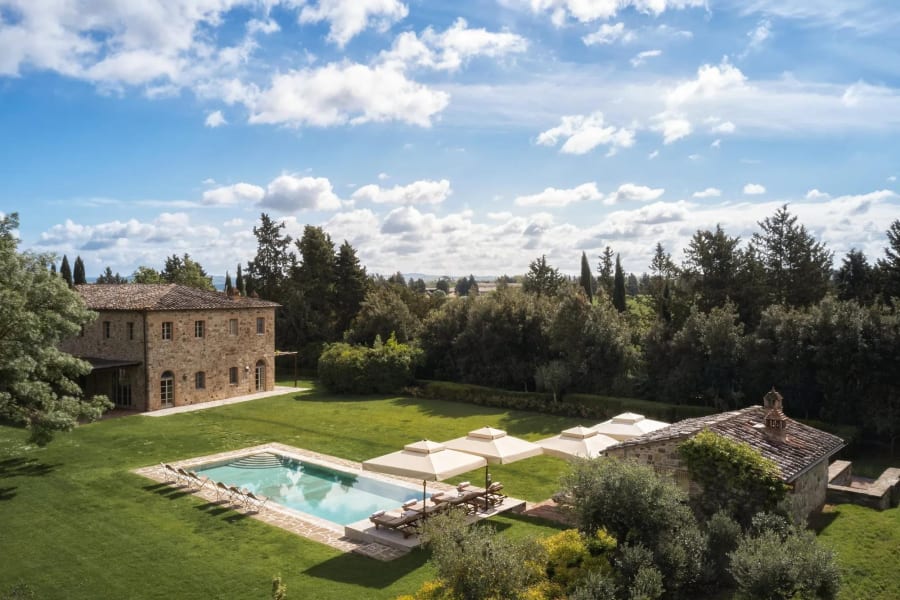
Countryside Classic01
Villa Biondi
Castiglion del Bosco · Sleeps 10 · 5 bedrooms
From €16,000 / night
TuscanySub-region
The UNESCO landscape south of Siena — clay hills, lone cypresses and the hot springs at Bagno Vignoni. The villas here lean grander.
13 villas in the collection4 pieces in the journal
Castiglion del Bosco · Sleeps 10 · 5 bedrooms
From €16,000 / night
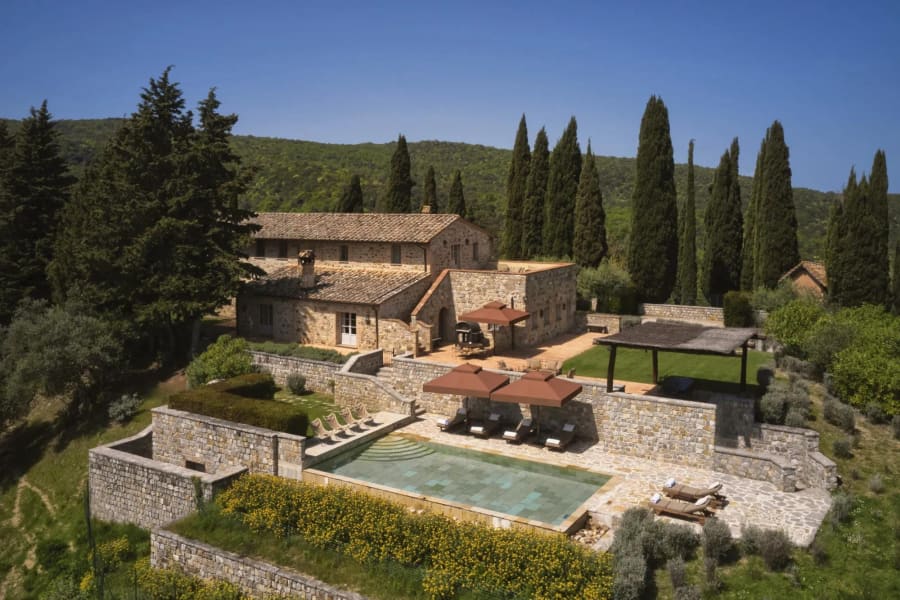
Castiglion del Bosco · Sleeps 6 · 3 bedrooms
From €11,000 / night
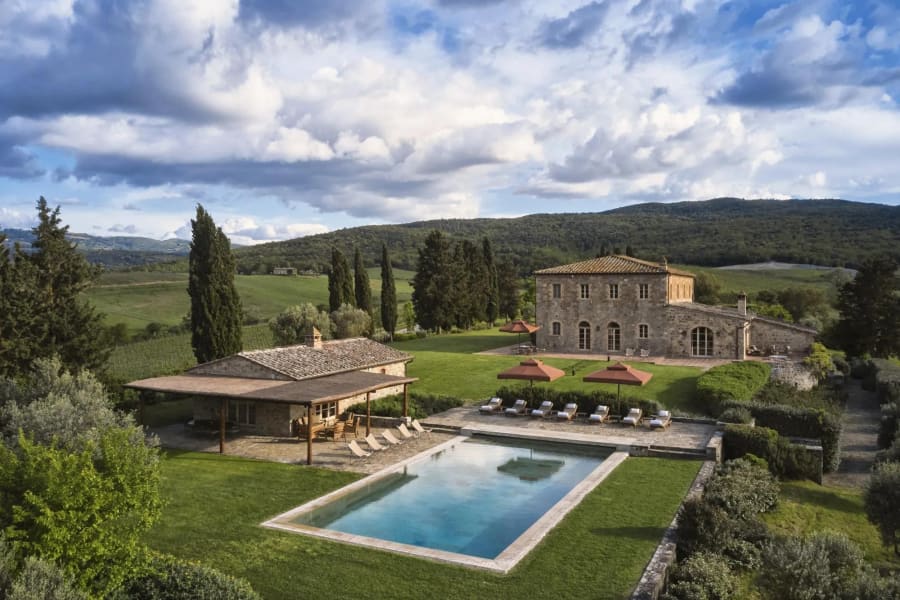
Castiglion del Bosco · Sleeps 10 · 5 bedrooms
From €14,500 / night
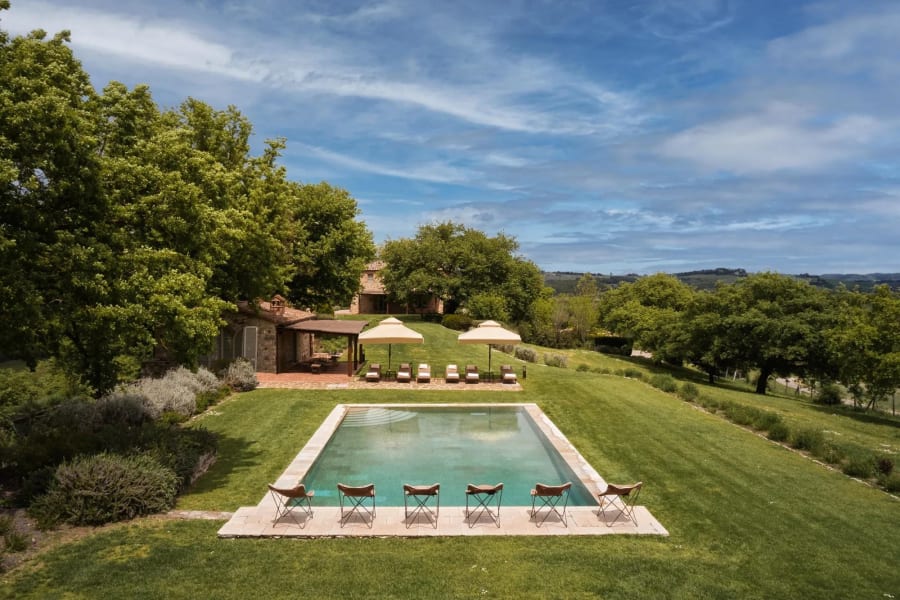
Castiglion del Bosco · Sleeps 11 · 6 bedrooms
From €15,500 / night
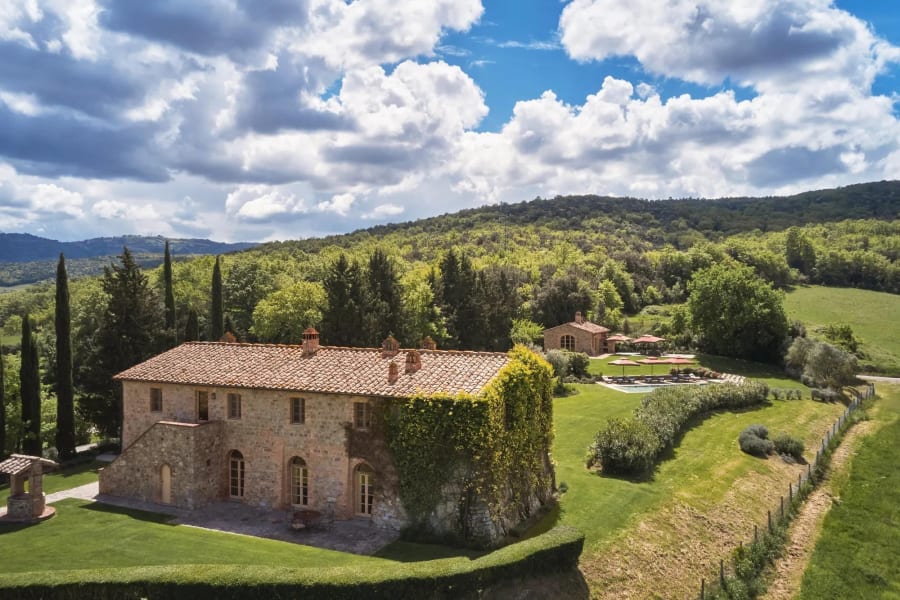
Castiglion del Bosco · Sleeps 8 · 4 bedrooms
From €14,000 / night
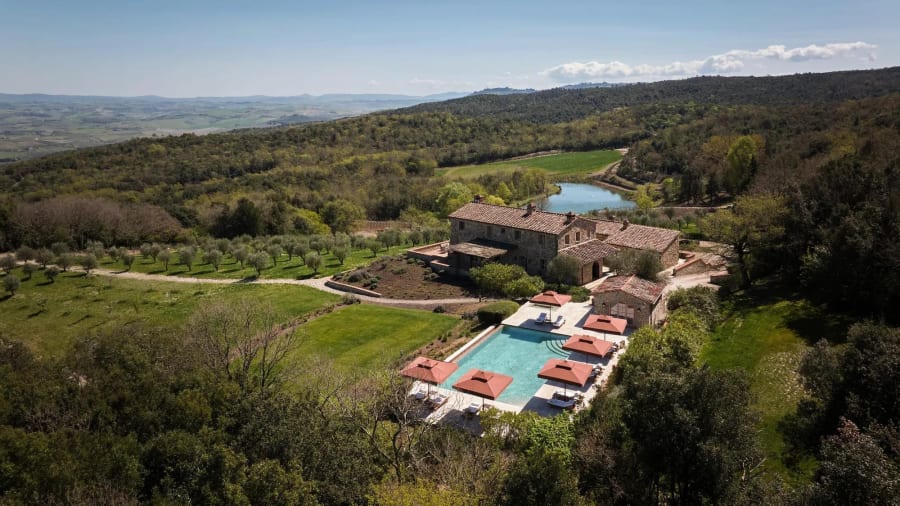
Castiglion del Bosco · Sleeps 12 · 6 bedrooms
Price on enquiry
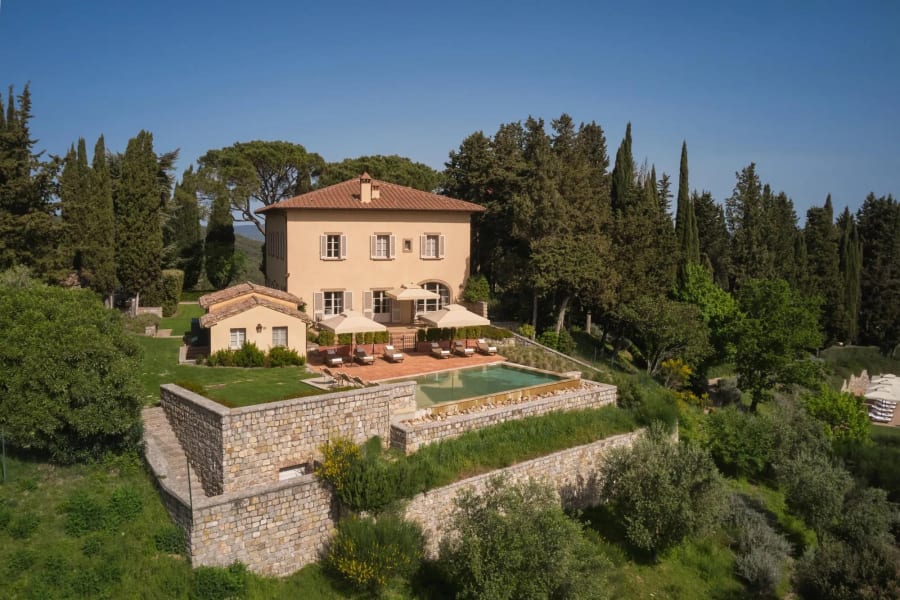
Castiglion del Bosco · Sleeps 8 · 4 bedrooms
From €13,500 / night
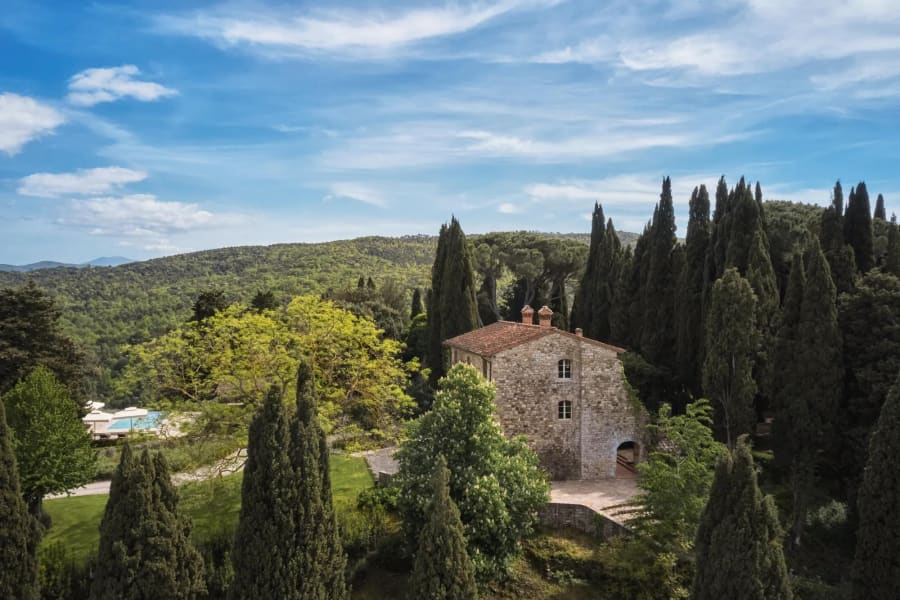
Castiglion del Bosco · Sleeps 6 · 3 bedrooms
From €12,000 / night
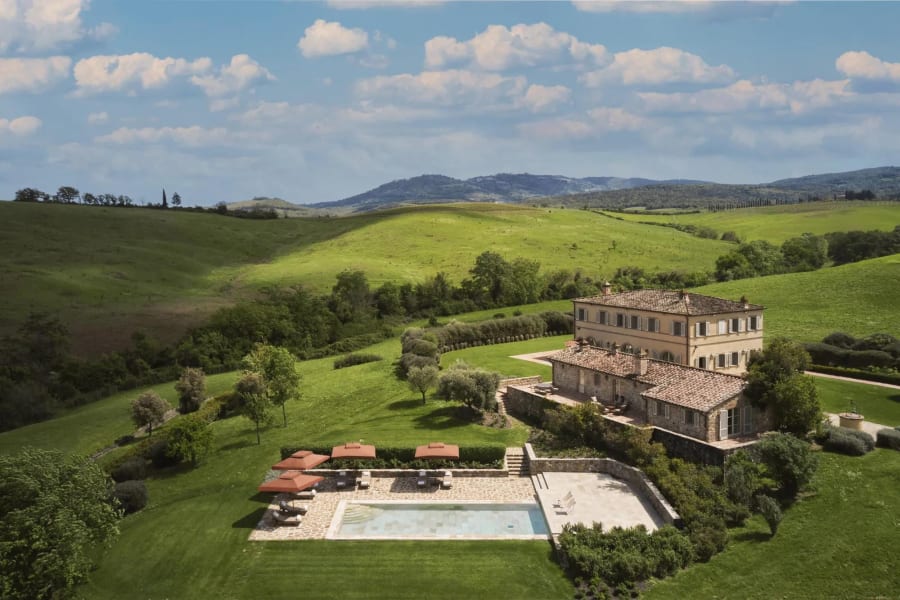
Castiglion del Bosco · Sleeps 8 · 4 bedrooms
Price on enquiry
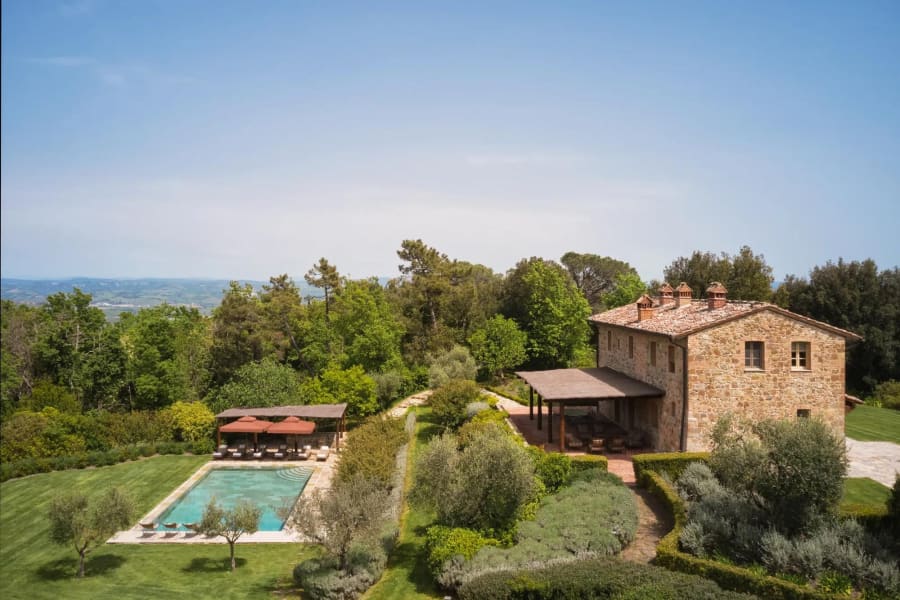
Castiglion del Bosco · Sleeps 6 · 3 bedrooms
From €9,000 / night
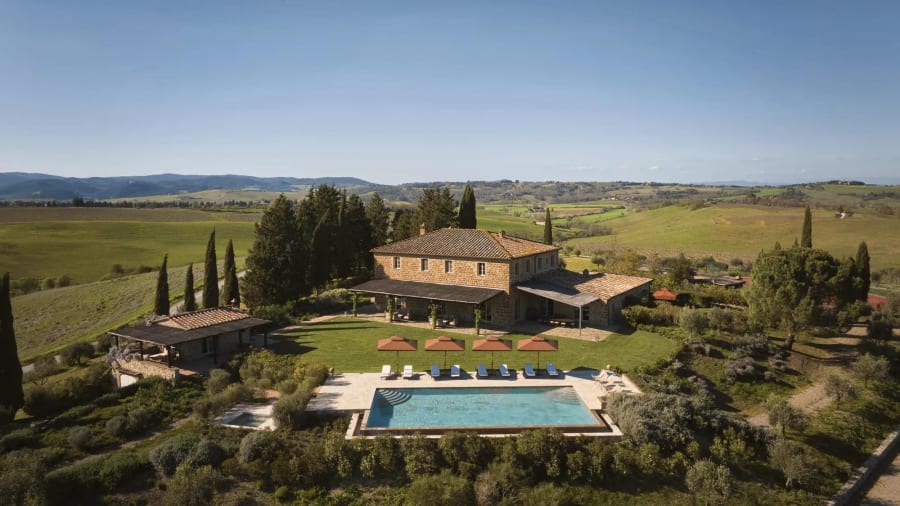
Castiglion del Bosco · Sleeps 12 · 6 bedrooms
Price on enquiry
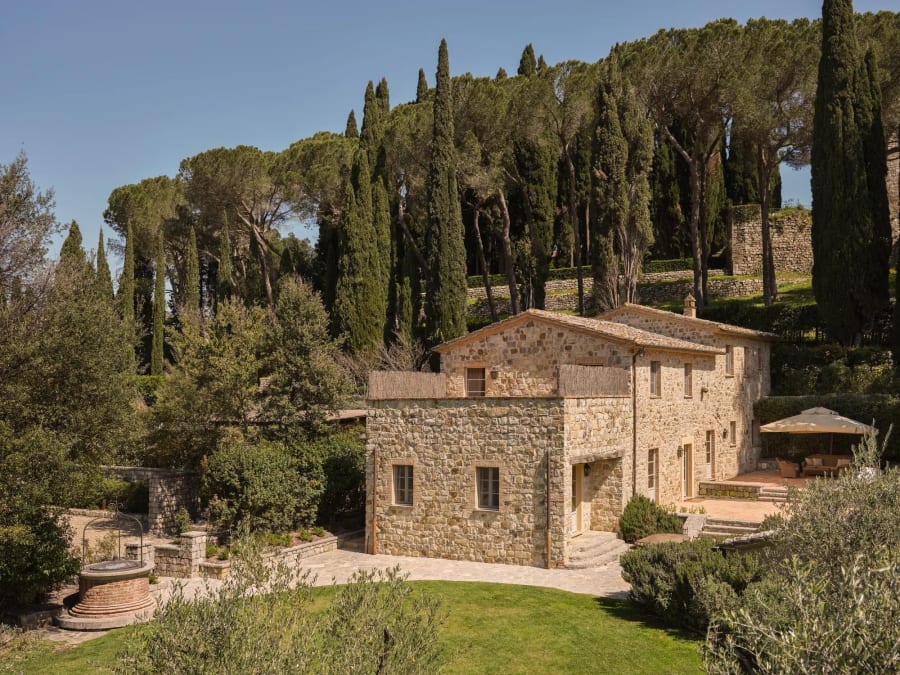
Castiglion del Bosco · Sleeps 4 · 2 bedrooms
From €8,000 / night
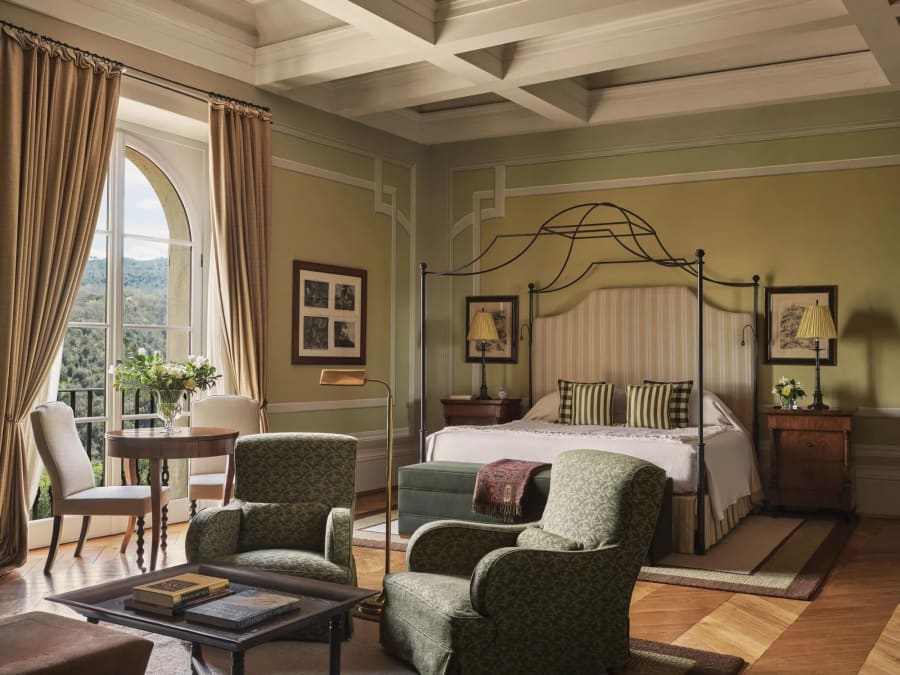
Castiglion del Bosco · Sleeps 5 · 2 bedrooms
From €5,000 / night
On Val d'Orcia
The Val d'Orcia is the open country south of Siena that gave the world its idea of a Tuscan landscape, bare clay hills, single cypresses on geometric ridges, farmhouses where the painters of the Sienese school went to learn perspective. UNESCO inscribed the whole valley on the World Heritage List in 2004 not for any single monument but for the landscape itself, the only cultural-landscape inscription in Italy at that scale.
Our villas here lean grander. The Val d'Orcia is where the largest historic estates in the collection sit, fattorie of two hundred hectares with private chapels, wine cellars that doubled as defensive structures in the fifteenth century, kitchens built around dining tables that seat thirty. Contemporary studios also work seriously in the valley, and several of our Architectural Landmark listings are restorations carried out here by named practices. Several houses sit on the eastern ridge, as much Val di Chiana as Val d'Orcia, with Montepulciano and Cortona as their market towns; anyone looking for exclusive villas in the Val di Chiana will find them on this page.
The valley organises itself around three bases, and the choice sets the tone of the week. Montalcino, on the western rise, is the Brunello town and the right anchor for a wine-led stay. Montepulciano, higher and cooler on the eastern edge, is the Vino Nobile town and the better base for the Chiana valley and Cortona. Pienza and San Quirico d'Orcia sit in the soft middle, closest to the iconic cypress-and-chapel views and the most central for moving between the two wine zones.
Our largest estates tend to sit out in the open country between these towns, on their own land with no near neighbour, which is much of the point. Tell us whether your week leans toward wine, walking or simply the view, and we will place you on the right side of the valley.
The valley holds two of Italy's most serious reds, and they reward scheduling rather than dropping in. Brunello di Montalcino sits on the western slope; Vino Nobile di Montepulciano on the eastern. Both are Sangiovese-based, both DOCG, both built to age. For producers worth booking a visit with: Soldera Case Basse and Biondi-Santi in Montalcino, Avignonesi and Boscarelli for Vino Nobile. For lunch between cellars, the Osteria di Casa Chianti at Castiglion del Bosco; the Locanda dell'Amorosa for an evening. We arrange the appointments, including at estates that do not take public bookings.
The hot springs at Bagno Vignoni, a thermal-water village square built around an open pool dating to the Roman era, and the wilder springs at Bagni San Filippo, free, in a stream, no ticket, are within twenty minutes of every Val d'Orcia villa we hold. They are the valley's great late-afternoon habit.
Pienza, Pope Pius II's Renaissance ideal-city, is the prettiest small town in any sub-region we cover, worth a Saturday-morning walk and a pecorino bought from the cheese shops along Corso Rossellino. It is also the one place in the valley that fills at midday; come early or late.
When to come
Late April through May for the green; the valley turns gold in June. September into October for harvest and softer light. Avoid late July to mid-August unless you want company.
Towns worth knowing
Best for
Practicalities
Florence (FLR) is ninety minutes by car; Rome Fiumicino (FCO) is two hours and often the easier flight for transatlantic guests. Internal trains stop at Chiusi-Chianciano on the line from Florence to Rome.
Frequently asked
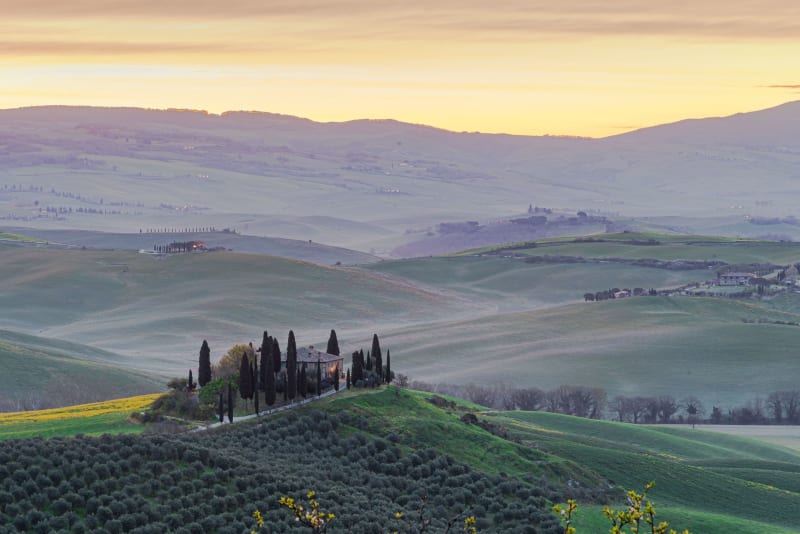
Val d'Orcia
Val d'Orcia in April and May is a different region from the August postcards. Wildflowers along the SP146, the lambs, the cantinas at their easiest. The editor's view of the most photographed weeks of the Tuscan year.
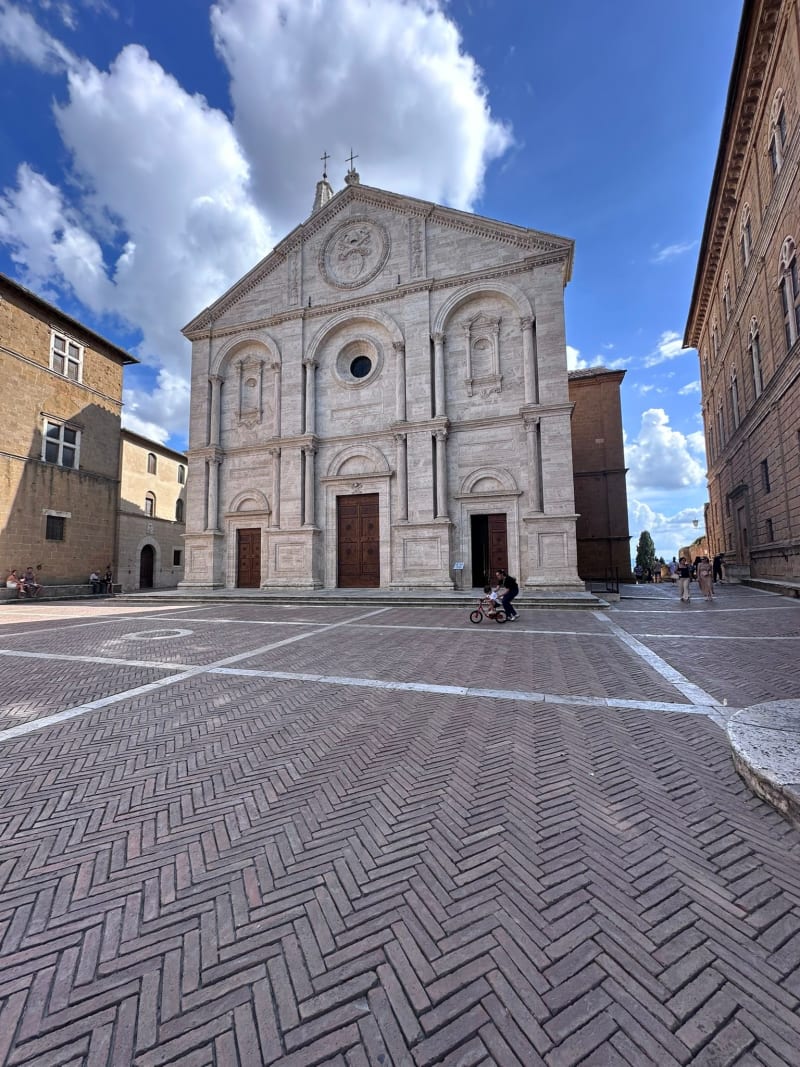
Val d'Orcia
Pienza, the planned Renaissance city built in five years between 1459 and 1464. The pecorino, the pope, the perfect piazza, and how to use the town as part of a Val d'Orcia week.
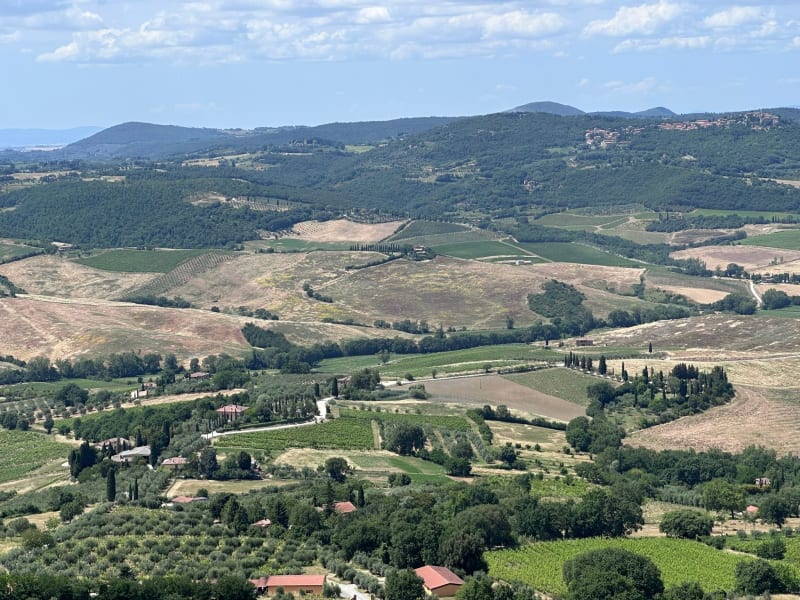
Val d'Orcia
Montepulciano: Vino Nobile, Renaissance hilltop architecture, the cantinas under the town. The editor's view of the steep, serious Tuscan town that is one of the great single-day visits in central Italy.

Val d'Orcia
Why the four weeks after the heat are, quietly, the finest of the year — and what to do with them.
Elsewhere in Tuscany
Planning the week