Montepulciano: Vino Nobile and the cellars under the streets
Montepulciano: Vino Nobile, Renaissance hilltop architecture, the cantinas under the town. The editor's view of the steep, serious Tuscan town that is one of the great single-day visits in central Italy.
From the founders·6 min read
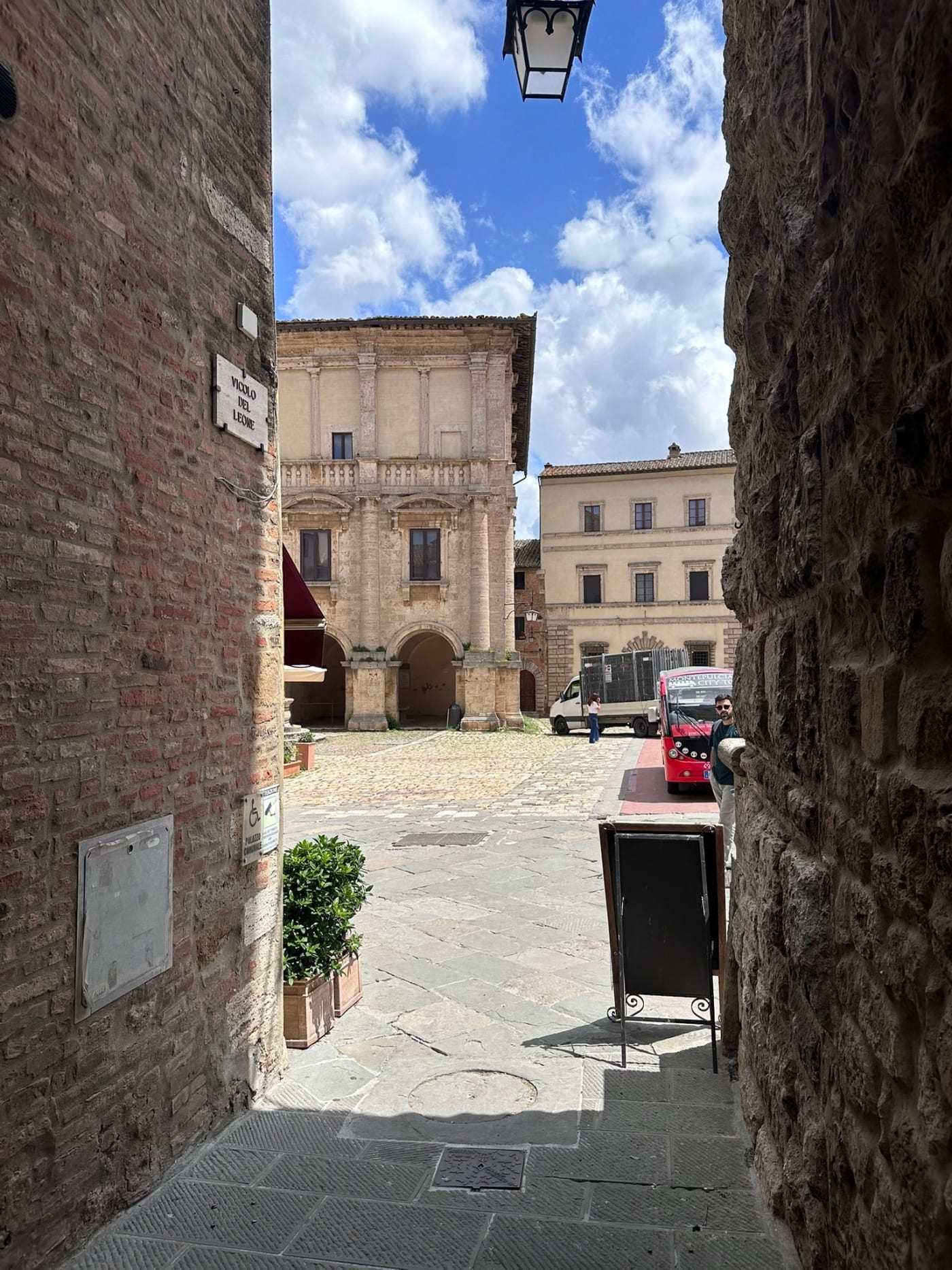
Montepulciano is the steep one. Some Tuscan towns are walked; this one is climbed. The Corso runs uphill from the Porta al Prato at the lower edge to the Piazza Grande at the top, about 700 metres of street, climbing nearly 100 metres of elevation, and the climb is the entire experience. By the time you reach the Piazza Grande, you have walked past four serious cantine (the Renaissance wine cellars built into the hillside under the town houses), three small Renaissance churches, two of the best alimentari in southern Tuscany, and the Palazzo Comunale that looks like a smaller, sharper Florentine Palazzo Vecchio. Montepulciano is the right town to visit on a day when you want a hill, a wine, and a serious medium-sized Tuscan urban experience all in the same afternoon.
The town also gives its name to Vino Nobile di Montepulciano DOCG, one of the three principal red wine appellations of central Tuscany (with Chianti Classico and Brunello). The wine is what most international travellers come for. The town is what they leave with.
What Montepulciano is
Montepulciano sits on a long ridge in the Val di Chiana, 70 km south-east of Siena and 25 km east of Pienza. About 13,000 residents; a historic centre that is essentially the work of the late 15th and 16th centuries. The town's principal streets all converge on the Piazza Grande at the top of the hill.
The town's two architectural anchors are by Antonio da Sangallo the Elder (c. 1455–1534), the Florentine Renaissance architect whose work in Montepulciano is more concentrated than anywhere else.
The Tempio di San Biagio, at the base of the town outside the walls. A free-standing centrally-planned Renaissance church, completed 1545. Considered one of the great Renaissance architectural achievements; the proportions are the textbook example of central-planning theory. Walk down to it from the upper town in the cool of the morning.
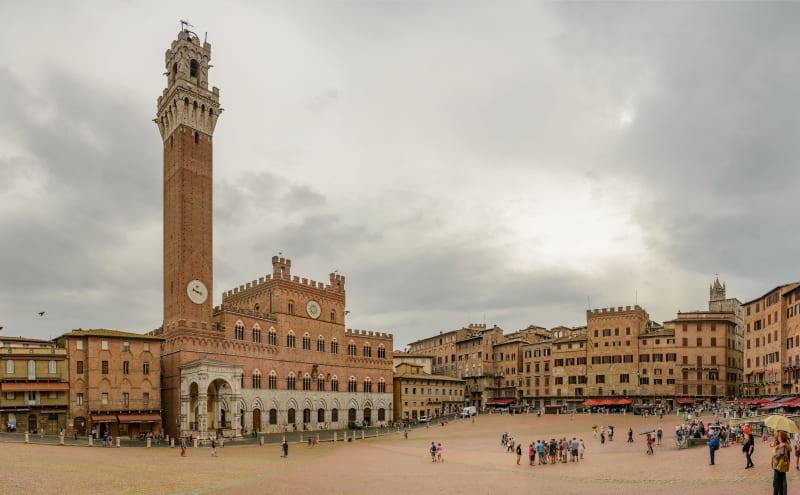
The Palazzo Comunale, on the Piazza Grande. The town hall, late 14th to 15th century, with the brick tower that, viewed from below, recalls the Palazzo Vecchio in Florence. You can climb the tower (€2, 30-minute climb) for one of the great panoramic views of central Tuscany, Lake Trasimeno to the east, the Crete Senesi to the west, Monte Amiata to the south.
The third anchor, less obvious to first-time visitors, is the *system of underground cantine*, the wine cellars cut into the hillside under the historic town houses, used for centuries to age Vino Nobile. Many are open to public visits; Cantina Contucci, Cantina De Ricci, and Cantina Ercolani** are the most accessible.
How to think about a Montepulciano visit
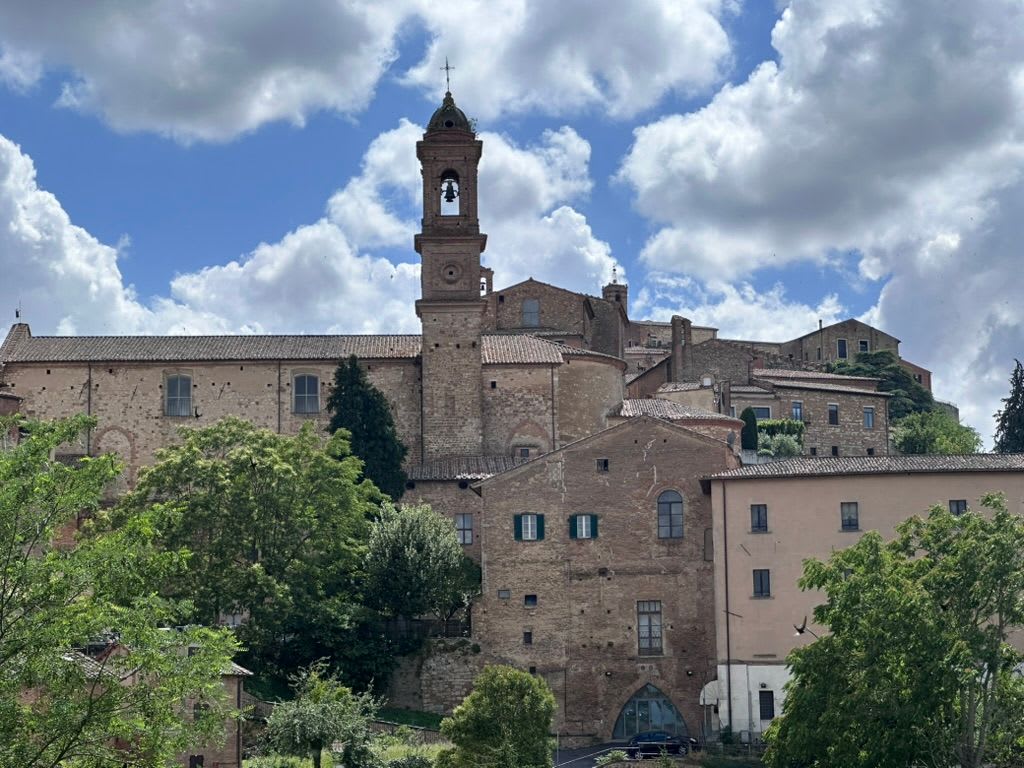
Bell tower on Montepulciano's skyline
The right structure is the morning climb. Park at the Sant'Agnese lot at the lower edge of town (just below the Porta al Prato); walk up the Corso slowly (90 minutes, with stops); reach the Piazza Grande by lunch; eat at one of the trattorias on or near the Piazza; descend in the afternoon, stopping at a cantina on the way down. The total visit is four to five hours.
The alternative, and the one we recommend for guests with a particular interest in wine, is the two-visit pattern: one visit for the town and one (separate, on a different day of the country stay) for two or three serious cantina tastings. Each tasting takes 60 to 90 minutes; doing two or three in a day exhausts the palate; spreading them across two visits gives the wines and the town the attention each deserves.
What to do once you have done the obvious
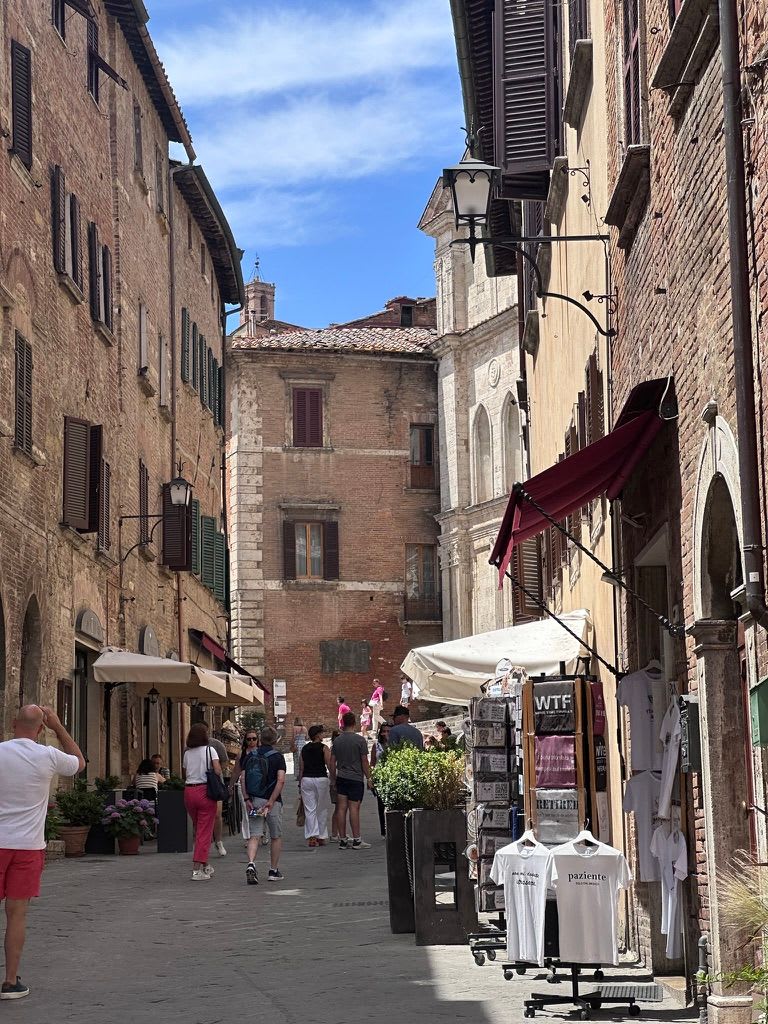
Montepulciano's town centre
Climb the Palazzo Comunale tower. €2, the best panoramic view in southern Tuscany, almost no queue.
Visit the Tempio di San Biagio. Walk down from the lower edge of the town (15 minutes); spend 20 minutes inside. The building's proportions are the entire experience.
Cantina Contucci. The Contucci family have been making wine in Montepulciano since 1008. The current head, Andrea Contucci, runs the working cantina under the family palazzo on the Piazza Grande. Tour the historic cellars; taste the Vino Nobile Riserva in the family room above. By appointment; the tour is free.
Cantina De Ricci. Probably the most architecturally dramatic of the three principal cantine: a multi-level vaulted brick cellar cut deep into the hillside, with thousand-year-old foundations. Tasting flights of three to five vintages. Open daily; book ahead in summer.
The Palazzo Avignonesi cantina. A smaller, less-visited cantina on Via di Gracciano nel Corso, in the lower half of the climb. Tasting in the cortile in summer.
*The Compagnia del Vino Nobile enoteca consortile.* The wine consortium's tasting room, in the Fortezza building above the Piazza Grande. Tastes from twenty to thirty Vino Nobile producers in one room, the right place to scope which producers to visit in person.
*The annual Bravìo delle Botti**, the late-August festival in which teams from the eight contrade* of the town race wine barrels uphill from the Porta al Prato to the Piazza Grande. It is exactly as theatrical as it sounds. Last Sunday of August.
*The Cassero della Fortezza concert series.* Summer evening concerts in the upper-town fortress, July to mid-August. Atmospheric, well-programmed; book ahead.
Where to eat
La Grotta, on Via di San Biagio at the foot of the town, opposite the Tempio. The institutional Montepulciano kitchen, family-run, with one Michelin star. Pici al cinghiale, bistecca alla fiorentina, the house Vino Nobile by the carafe. Closed Wednesdays.
Osteria Acquacheta, on Via del Teatro. Long communal tables; the bistecca register; the most-ordered single dish in town for groups. Reservations essential.
Trattoria Le Logge del Vignola, on Via delle Erbe near the Piazza Grande. Owner-run; ten tables; the considered Montepulciano kitchen. Tortelli ricotta e spinaci, piccione, the proper local pecorino preparations.
Caffè Poliziano, on Via di Voltaia nel Corso. The 1868 caffè in the lower half of the climb. The kind of place where you stop on the climb up for a vin santo and a cantuccio at 11am.
Antica Drogheria Sapori e Sensazioni, on Via di Gracciano. The proper Montepulciano alimentari, with the right pecorino, salumi, and Vino Nobile shopping for an in-villa dinner.
When to come
April to early June and mid-September to early November are the strongest single windows. April for the green-and-cypress photographic register; September for the harvest at the surrounding Vino Nobile estates; October for the post-harvest cantina visits at their easiest.
*The Bravìo delle Botti* runs the last Sunday of August**, the right week to be in town if you want the civic-festival register, the wrong week if you want the quiet medieval town.
July and August are hot. The climb up the Corso in the middle of an August day is unpleasant; do it in the cool of the morning or descend the Corso in the early evening.
November to March is quiet, atmospheric, and the right window for the cantina-led visit. Olio nuovo in mid-November is the seasonal anchor.
Practical ground
Montepulciano has no train station of its own; the closest is Chiusi-Chianciano Terme (15 minutes east). Florence airport (FLR) is 90 minutes north on the A1 motorway. Rome (FCO) is 2 hours south.
Driving in. The historic centre is mostly pedestrian (ZTL enforced). Park at the Sant'Agnese lot just below the Porta al Prato (large, paid, the principal car park) or at Piazzale Nenni (north of the centre, also paid).
The Val di Chiana villas in our collection are 10–25 minutes by car from the Sant'Agnese parking. This is the structural advantage of the Val di Chiana as a Montepulciano base.
Cantina visits. Most of the principal cantine are open to scheduled visits; Cantina Contucci, De Ricci, and Ercolani run hourly tours in summer. The best Vino Nobile tastings (Avignonesi, Boscarelli, Poliziano on the outskirts) require advance booking, particularly in September and October. We arrange these for guests.
The Tempio di San Biagio is open daily, free, no booking needed.
Frequently asked
What is Montepulciano known for?
Montepulciano is best known for Vino Nobile di Montepulciano DOCG, one of the three principal red wine appellations of central Tuscany. It is also a serious Renaissance hilltop town with two notable buildings by Antonio da Sangallo the Elder, the Tempio di San Biagio and the Palazzo Comunale, and a system of underground wine cellars cut into the hillside.
Is Montepulciano the same as Montepulciano d'Abruzzo?
No. The grape variety Montepulciano d'Abruzzo is grown in Abruzzo (further south, on the Adriatic coast) and is unrelated to the town of Montepulciano in Tuscany. Vino Nobile di Montepulciano (the Tuscan wine) is made principally from Sangiovese (locally called Prugnolo Gentile), not from the Montepulciano grape.
How long do I need in Montepulciano?
A long morning (4–5 hours) is enough for a single visit covering the town and one cantina. For wine-led visits, two visits across a country week, one for the town, one for two or three cantine, is the right structure.
Should I stay in Montepulciano or in the countryside?
In the countryside. The town has limited high-end accommodation inside the walls, and the climb is part of the visit, not the daily routine. Our Val di Chiana villas are 10–25 minutes away.
Which cantine should I visit?
For the architectural experience: De Ricci. For the historic-family experience: Contucci. For the ambitious modern winemaking: Avignonesi (out of town) or Poliziano (on the Pienza road). For a tasting flight from many producers in a single room: the enoteca consortile in the Fortezza.
Do the wine cellars need booking?
Wandering into the historic cellars under the town, Contucci and De Ricci above all, costs nothing and needs no appointment. A proper seated tasting is worth booking a day or two ahead, and during the vendemmia weeks of late September the producers' calendars fill; we arrange these for guests as part of the week.
What is the Bravìo delle Botti?
Montepulciano's answer to the Palio: on the last Sunday of August, pairs of pushers from the town's eight contrade race 80-kilo wine barrels uphill through the full length of the Corso to the Piazza Grande. The week before it is the town at its most alive, flags, contrada dinners, drummers rehearsing in the side streets.