Pienza, the planned Renaissance city built in five years between 1459 and 1464. The pecorino, the pope, the perfect piazza, and how to use the town as part of a Val d'Orcia week.
From the founders·6 min read
In 1458, Enea Silvio Piccolomini, born in the small Tuscan village of Corsignano in 1405, was elected Pope, taking the name Pius II. Within a year of his election, he had decided that Corsignano would be redesigned, refounded, and renamed Pienza in his honour. The architect Bernardo Rossellino was hired. The work began in 1459. By 1464, when Pius II died of plague at Ancona, the central piazza, the cathedral, the papal palace, the cardinal's palace, and the town hall were complete. They are essentially what you see today.
Pienza is the only Italian Renaissance city built whole, in five years, to a single design. UNESCO listed it in 1996. It is also one of those Tuscan towns where the historic centre is small enough to walk in fifteen minutes and rewarding enough to walk in for several hours.
What Pienza is
Pienza is a small town, about 2,000 residents, sitting on a ridge in the Val d'Orcia, 80 km south of Siena and 50 minutes east of Montalcino. The historic centre is essentially the work of a single architect, Bernardo Rossellino, working under the personal direction of Pius II.
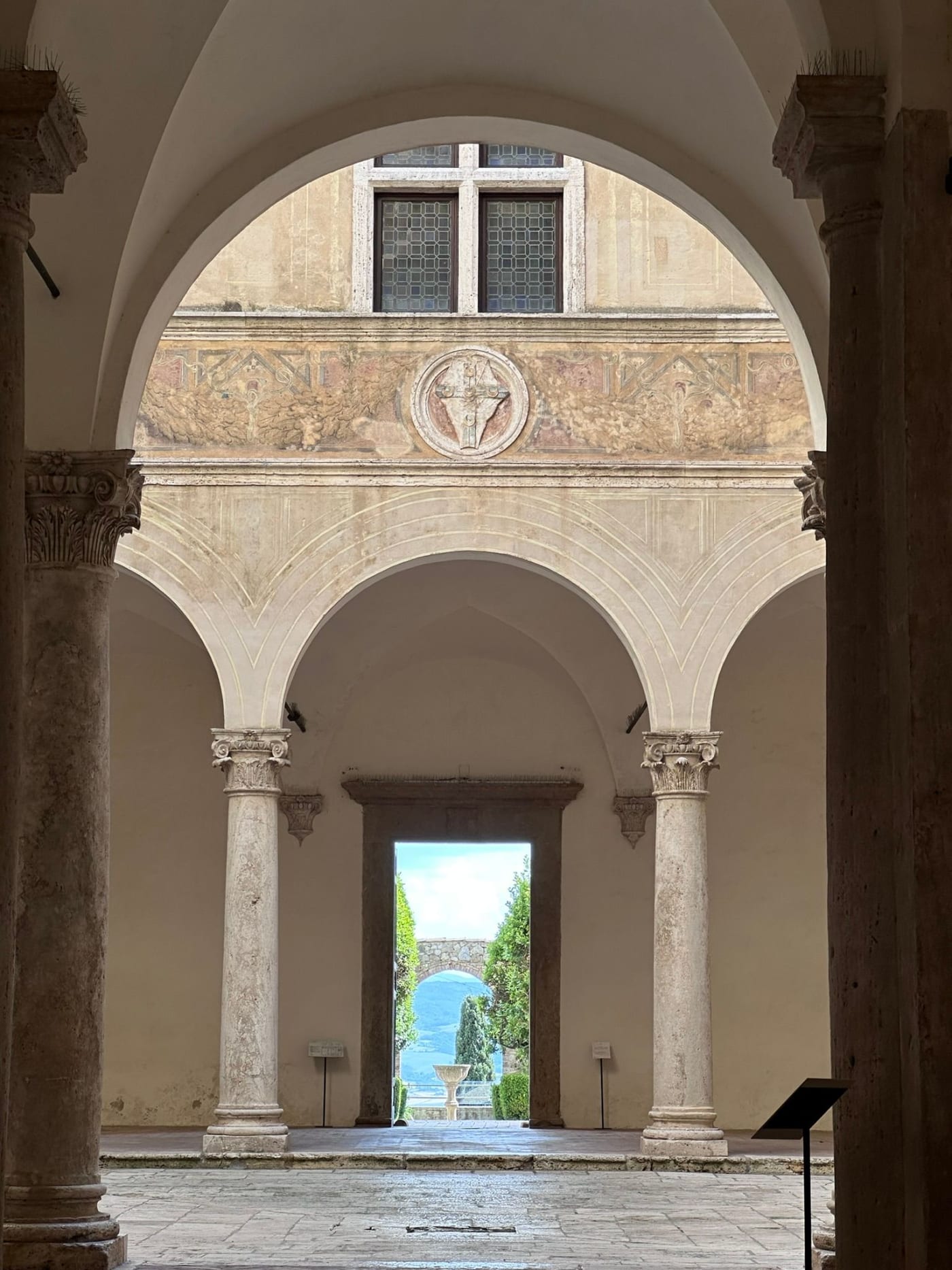
Five buildings frame the Piazza Pio II, the principal square. The Duomo (Cathedral of the Assumption), with its Sienese-school altarpieces by Sano di Pietro, Vecchietta, and Matteo di Giovanni. The Palazzo Piccolomini, the papal palace, modelled by Rossellino on Alberti's Palazzo Rucellai in Florence. The Palazzo Borgia (now the Diocesan Museum), the cardinal's palace. The Palazzo Comunale, the town hall. And the well in the centre of the square, a small Rossellino design that is, in some respects, the most-photographed object in the town.
The town is also the home of Pecorino di Pienza DOP, sheep's-milk cheese aged in straw, walnut leaves, or ash, produced by about 30 small dairies in the surrounding crete valleys. The cheese is sold at almost every shop on the Corso il Rossellino, the town's principal street.
How to think about a Pienza visit
Pienza is a half-day visit, repeated. The full circuit, Piazza Pio II, the Duomo, the Palazzo Piccolomini interior, lunch, the loggia walk along the southern walls, a pecorino purchase, takes three to four hours.
The right structure for guests staying in our Val d'Orcia villas is two visits: one in the cool of the morning (8am to noon) for the principal monuments and lunch, and a second in the late afternoon (5pm to 7pm) for the loggia walk, the evening light over the valley, and dinner. Pienza in the middle of the day in summer fills with day-trippers; the town does not punish the visitor at midday so much as it is simply not at its best.
What to do once you have done the obvious
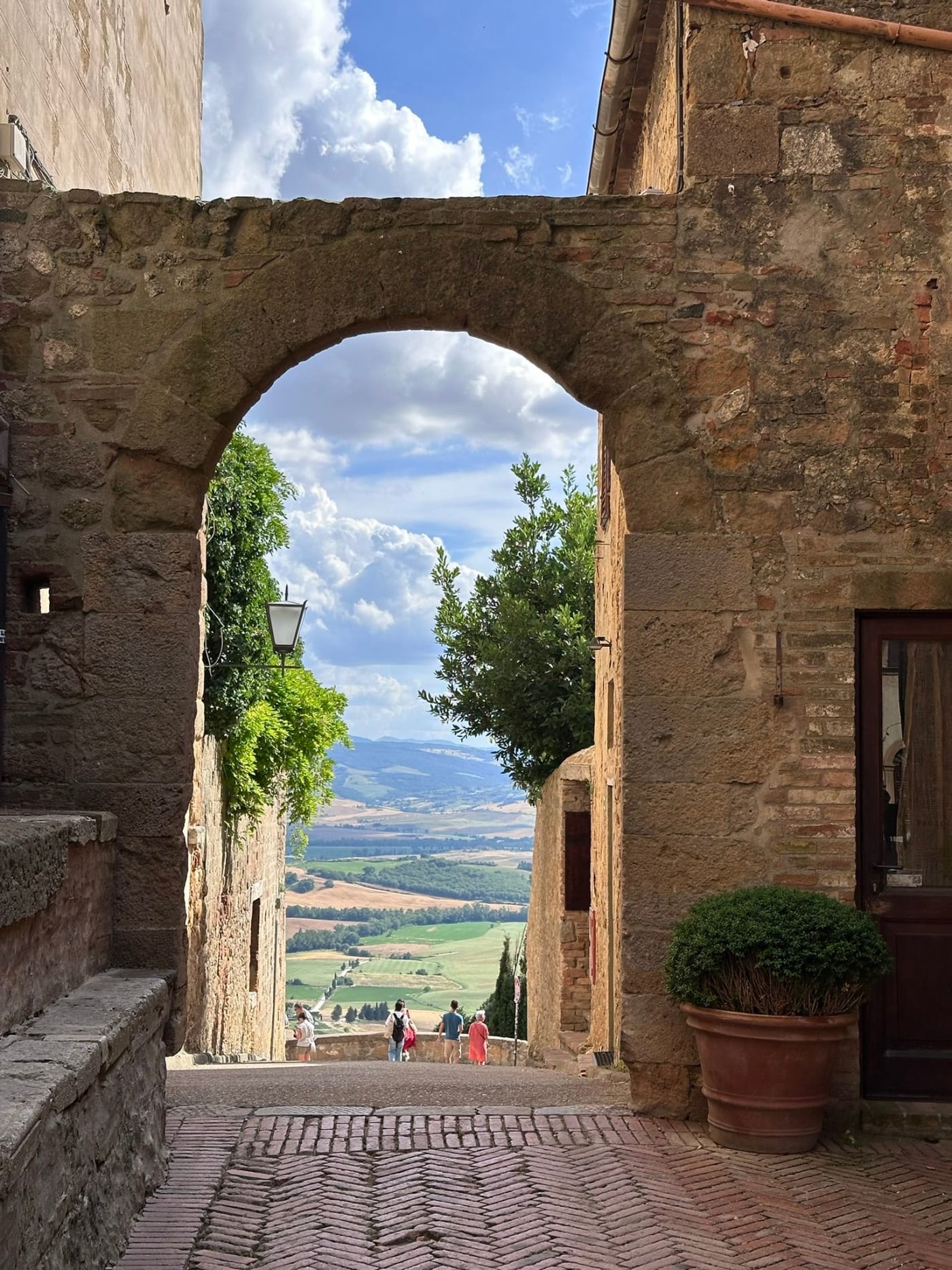
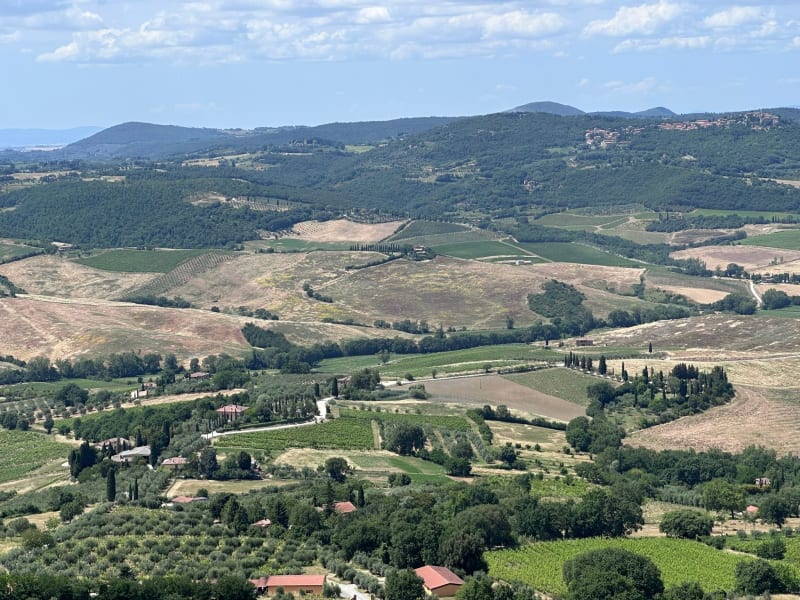
Walk the loggia. The southern walls of Pienza include a small open arcaded walkway, Via dell'Amore (officially Via del Bacio), built into the original city plan as the belvedere of the town. It runs along the southern edge with a continuous view over the Val d'Orcia. The view is one of the great panoramic moments in central Tuscany; the walkway is the right place at six in the evening on a summer day.
Visit the Palazzo Piccolomini gardens. The Italian Renaissance hanging garden behind the papal palace, looking south over the valley. Originally Rossellino's design; restored in the 19th century; one of the most quietly perfect small Renaissance gardens in Tuscany. Open with the Palazzo Piccolomini ticket.
The Diocesan Museum. In the cardinal's palace on the Piazza Pio II. Sienese-school paintings, the Assumption of the Virgin by Vecchietta, and an exceptional collection of vestments and ecclesiastical objects from the Pius II period. Half an hour; no queue.
The drive to Monticchiello. A 12-minute drive south-east of Pienza to the perfectly preserved medieval hilltop village of Monticchiello, where the Compagnia Popolare di Monticchiello, the local theatre company, has performed an annual outdoor teatro popolare (community theatre) play in the village square every summer since 1967. The plays run for two weeks in late July; the village is otherwise the right small Tuscan walking visit.
*A pecorino tasting at one of the dairies. Caseificio Cugusi, on the road to San Quirico, is the most considered of the Pienza dairies and runs hour-long tastings for visitors. Fresh, semi-aged, aged-in-straw, aged-in-walnut-leaves, and the pecorino di fossa* (cave-aged). One of the right small experiences for a Val d'Orcia week.
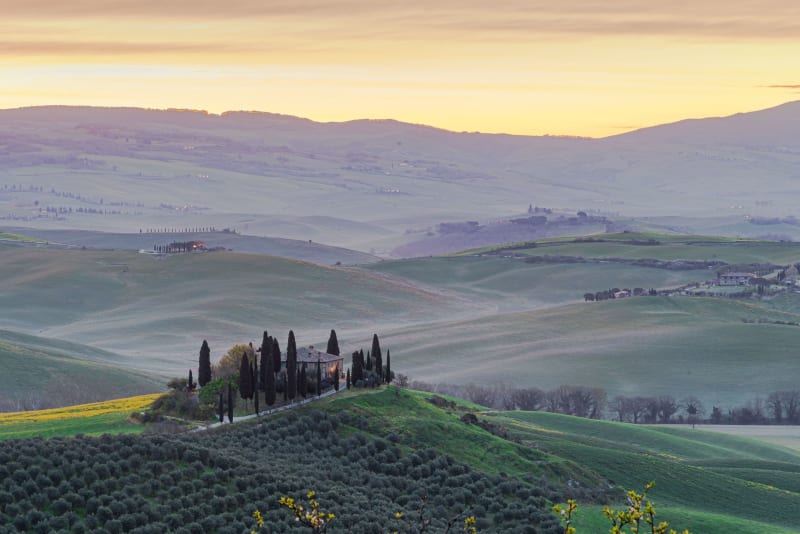
The Cappella di Vitaleta. A tiny Renaissance chapel sitting alone on a ridge five kilometres west of Pienza, on the road to San Quirico. The chapel is one of the most photographed buildings in the Val d'Orcia and the site of the Madonna di Vitaleta devotion. Walk the last 500 metres from the parking pull-off; the chapel is normally closed but the setting is the point.
Where to eat
Trattoria Latte di Luna, on Vicolo del Mandorlo, just off the central piazza. The institutional Pienza lunch spot. Pici in any of the three local sauces (cacio e pepe, aglione, ragù di chianina), the zuppa di farro, the pecorino al miele. Closed Tuesdays.
Locanda San Vincenzo, on the Corso il Rossellino. Owner-run; ten tables; the proper Val d'Orcia register. The tortelli with ricotta and pecorino; the piccione. Reservations recommended.
Trattoria del Pellegrino, near Porta al Prato. The smaller, less-touristed lunch alternative. The local Sangiovese by the carafe; the daily-special secondo; the affettati platter with proper cinta senese and Pienza pecorino.
La Bandita Townhouse Caffè, on Corso il Rossellino. The civilised modern coffee-and-light-lunch spot in the town. Espresso quality genuine; the cantucci are the proper hand-baked Pienza ones.
*Caseificio Cugusi for cheese, Buon Gusto for wine, Marusco e Maria for pici fresh-made.* The shopping circuit for an in-villa dinner. Pienza's central street is one of the few in Tuscany where you can do an entire week's shopping for a top-end villa kitchen in a 15-minute walk.
When to come
Mid-April to early June is the strongest window, the green months, the wildflowers, the wheat fields. Mid-September to early November is the second strong window, vendemmia at the surrounding Brunello estates, the olio nuovo in November, the cooler light.
*June 24 (the Festa di San Giovanni) and July's annual Festival del Pellegrino*** are local festivals worth being in town for.
July and August are hot. Pienza in the middle of an August day is full of day-trippers; the town is at its best in the cool of the morning and the long evening.
Practical ground
Pienza has no train station. The closest are Chiusi-Chianciano Terme (35 min by car) and Buonconvento (30 min). Florence airport (FLR) is 90 minutes north on the SR2 Cassia. Rome (FCO) is 2 hours south.
Driving in. The historic centre is mostly pedestrian. Park at the Parcheggio della Piaggia (just below the southern walls; 5-minute walk up) or at Parcheggio dei Mercatali (north of the centre, also 5-minute walk).
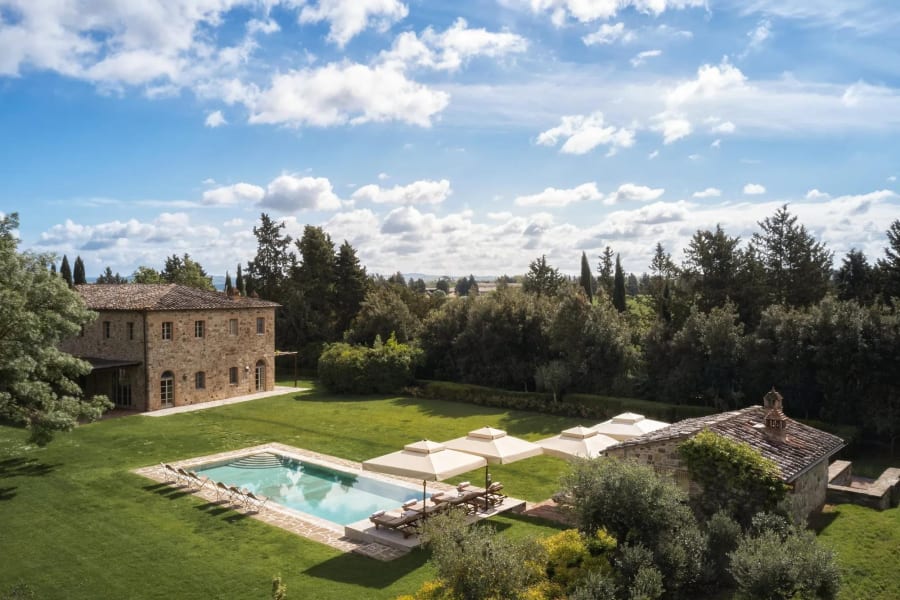
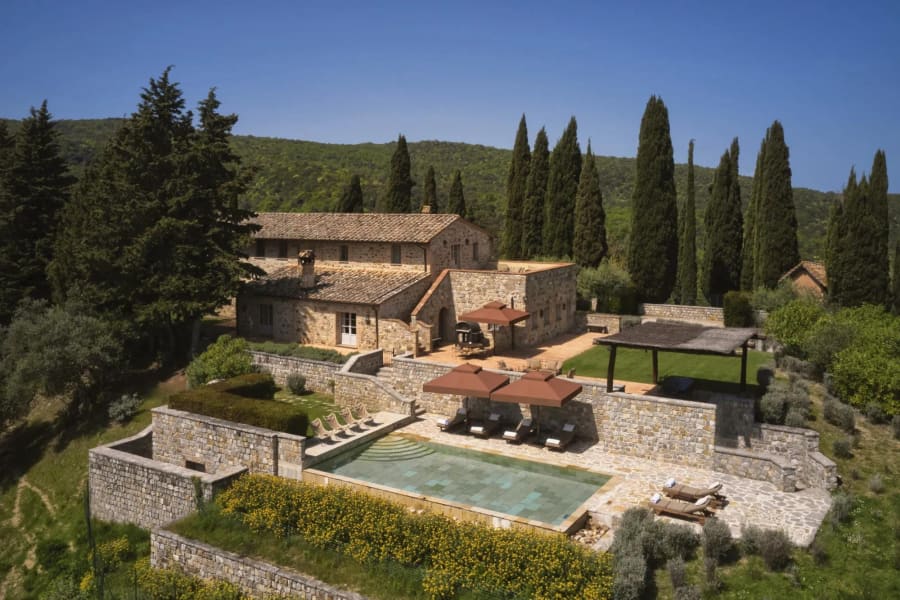
The Val d'Orcia villas in our collection are 10–25 minutes by car from Pienza. This is the practical structural advantage of the Val d'Orcia as a Pienza base.
Pecorino shopping. Most cheeses can be vacuum-sealed for transport; check with the shop on each visit. Italy permits the export of cheese to most countries; the US and Australia have specific restrictions for unpasteurised or specific aged categories. We arrange specialist shipment for guests at Val d'Orcia villas.
Frequently asked
What is Pienza famous for?
Pienza is the only Italian Renaissance city built whole, in five years (1459–1464), to a single architectural plan, by Bernardo Rossellino under the personal direction of Pope Pius II. It is also the home of Pecorino di Pienza DOP, sheep's-milk cheese aged in straw, walnut leaves, or ash.
How long do I need in Pienza?
A morning or a long afternoon is enough for a single visit. For guests staying in the Val d'Orcia, two visits is the right structure, one for the principal monuments and lunch, one for the late-afternoon loggia walk.
Should I stay in Pienza or in the countryside?
In the countryside. Pienza has limited high-end accommodation inside the walls and is on most days at its best from outside, in for a half-day, then out again to a country base. Our Val d'Orcia villas are 10–25 minutes away.
When is Pienza best?
Mid-April to early June for the spring landscape; mid-September to November for the autumn light and the wine harvest. Avoid the middle of an August day; visit early or late.
Where can I taste Pecorino di Pienza?
At Caseificio Cugusi, on the road from Pienza to San Quirico, which runs scheduled hour-long tastings. Most of the small alimentari on Corso il Rossellino also offer in-shop tastings.
Do I need tickets in advance in Pienza?
No. The Duomo is free, and Palazzo Piccolomini, the pope's house and the garden with the Val d'Orcia view, is visited on short guided tours bought at the door; only summer weekend middays ever queue. Pienza is the rare Tuscan set piece that requires no planning at all, which is part of its charm.