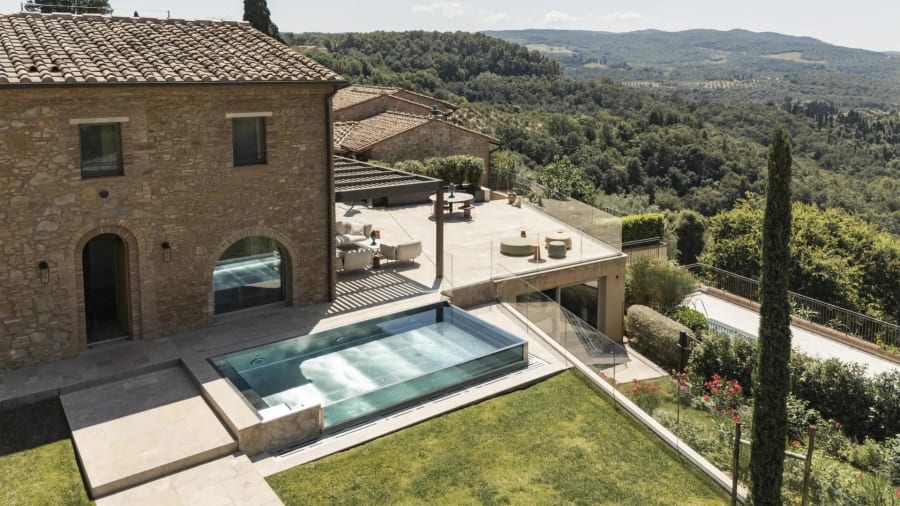
Castelfalfi
Casale La Pergola
Sleeps 6 · 3 bedrooms
TuscanySub-region
Etruscan walls, alabaster workshops and high, wild country between San Gimignano and the sea.
On Volterra
Volterra is the oldest town in Tuscany and feels it: an Etruscan city five centuries older than Rome, sitting on a windswept ridge at five hundred and thirty metres with views that run to the sea. Where San Gimignano performs, Volterra broods. D'Annunzio called it a city of wind and rock, and the description still holds, which is exactly why the guests who love it love it.
The Etruscan inheritance is not a museum caption here; it is the town's working identity. The Guarnacci Museum holds one of Italy's great Etruscan collections, including the Ombra della Sera, the elongated bronze votive figure that looks startlingly modern; the Porta all'Arco gate has Etruscan stones still in place; and the alabaster the Etruscans carved for funerary urns is still worked in open studios along the streets, the last town in Europe where the craft survives at this scale.
From our Castelfalfi villas Volterra is about forty minutes, and it pairs naturally with San Gimignano on the same day for the contrast: the crowded beauty and the empty one.
Below the medieval town, the first-century Roman theatre is one of the best preserved in Italy, viewed for free from the walls above. On the town's western edge, the balze are the other spectacle: sheer erosion cliffs that have been swallowing the plateau for centuries, taking Etruscan necropolises and a medieval abbey with them. The Medici fortress that crowns the town has been a working prison for most of five hundred years, which is very Volterra: even the crown jewel is unsentimental.
When to come
May, June and September for warm days without the summer glare. Volterra's altitude keeps it cooler than the valley towns in high summer and windier in every season; October up here is proper autumn.
Towns worth knowing
Best for
Practicalities
Park at the underground Piazza Martiri lot below the centre. The road up from the Cecina valley is a proper hill climb; allow forty minutes from Castelfalfi, an hour from Pisa airport.
Frequently asked
None of our houses sit inside Volterra itself — these are the ones we would stay in to spend days here.
Castelfalfi
Sleeps 6 · 3 bedrooms
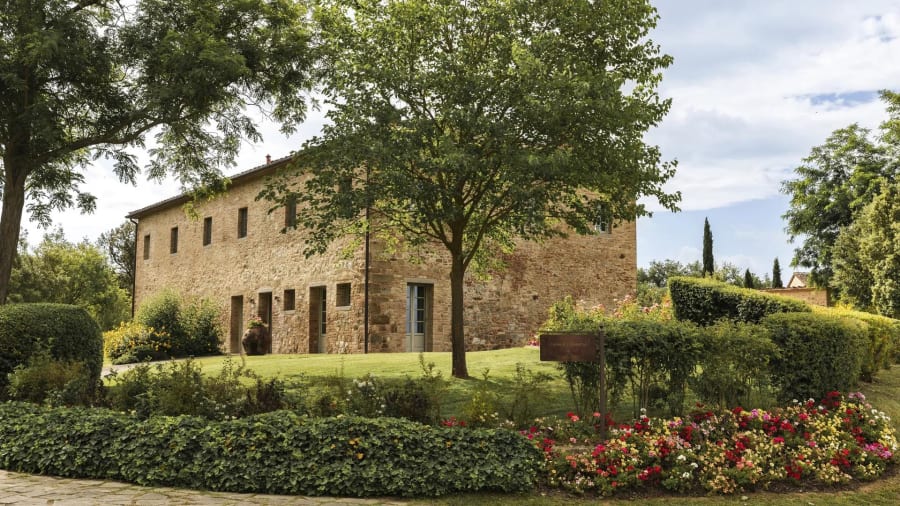
Castelfalfi
Sleeps 10 · 5 bedrooms
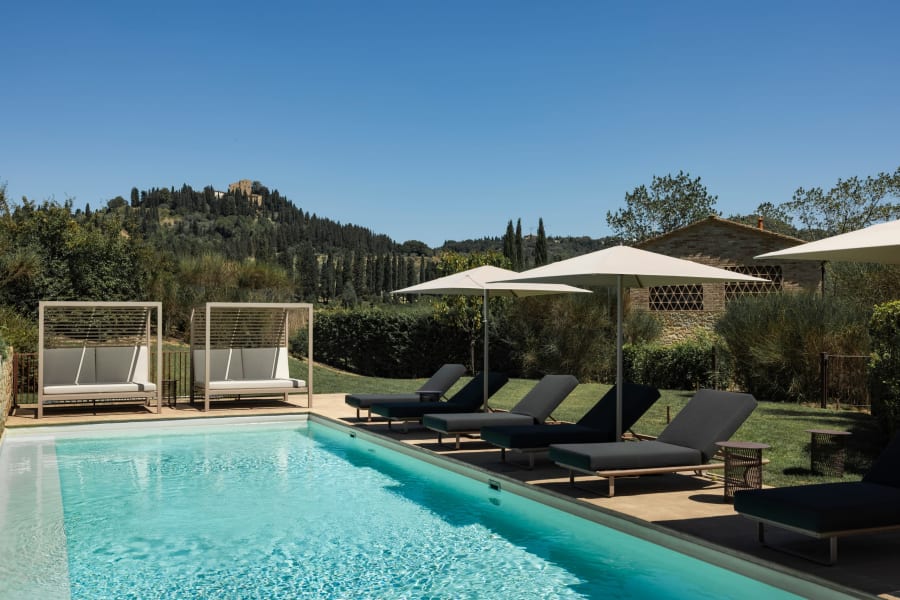
Castelfalfi
Sleeps 6 · 3 bedrooms
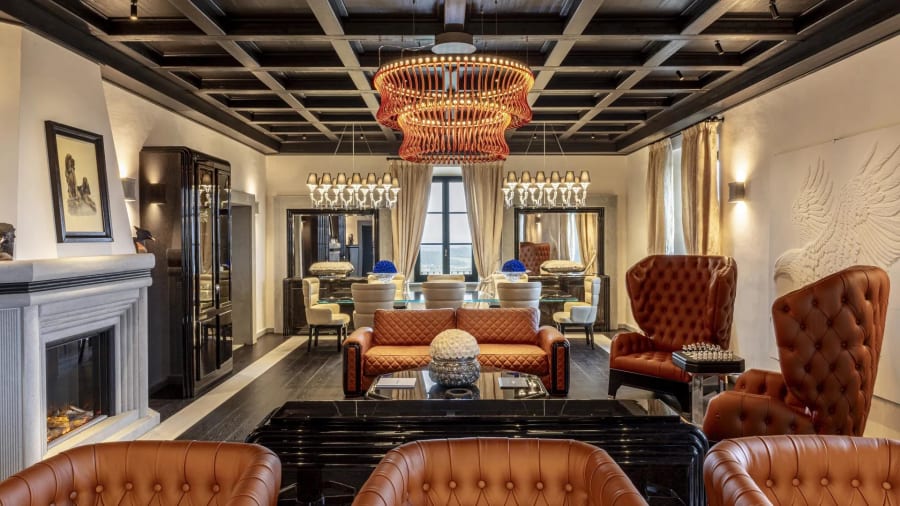
Castelfalfi
Sleeps 4 · 2 bedrooms
Elsewhere in Tuscany
Planning the week