Cortona, Tuscany: What to See Above the Valdichiana
Cortona, twenty years after *Under the Tuscan Sun*. The Etruscan museum, the medieval streets, the morning before nine. The editor's view of the hilltop town that has earned its second wind.
From the founders·6 min read
Cortona has lived three separate lives. The first was the Etruscan one, Cortona was one of the twelve cities of the Etruscan League, founded around the 8th century BC, and the hilltop on which the town sits has been continuously inhabited since then. The Etruscan tombs in the valley below (the Tumulo del Sodo, the Melone del Sodo) are some of the most consequential pre-Roman monuments in central Italy, and the MAEC museum in the centre of town houses one of the finest Etruscan collections anywhere.
The second was the medieval-Renaissance one, the town as a Sienese-then-Florentine outpost, with frescoes by Fra Angelico, paintings by Luca Signorelli, and the steep, intact 14th-century street plan that still defines the historic centre.
The third, the most recent and most disputed, was as Frances Mayes' Cortona: the town she renovated a house in, wrote about, and inadvertently turned into one of the most-visited small Tuscan towns of the 2000s. The publication of Under the Tuscan Sun in 1996 and the 2003 film changed the town for fifteen years.
By about 2018, the town had recovered. Walk Cortona on a Tuesday morning in October before nine and it is, once again, a working Tuscan hilltop town with one of the most considered Etruscan museums in the country and several of the right restaurants.
What Cortona is
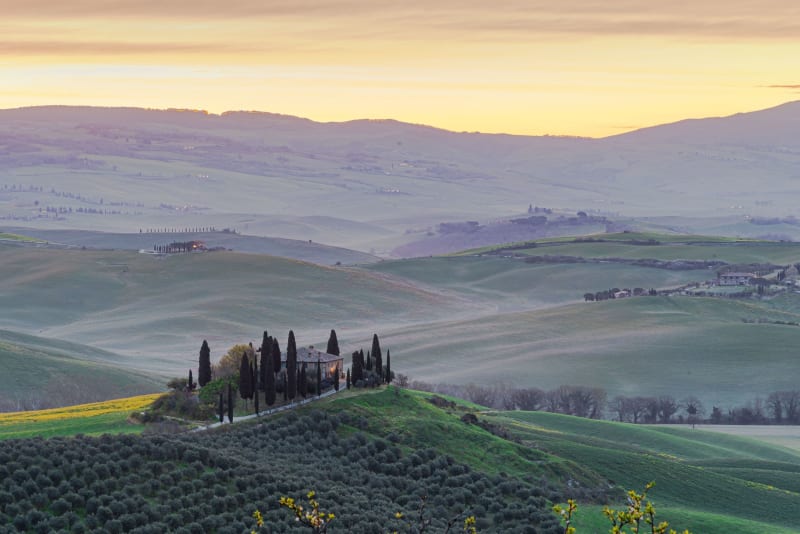
Cortona is a hilltop town in the Val di Chiana, 30 km south-east of Arezzo and 110 km south-east of Florence. About 22,000 residents in the wider municipality; a much smaller population in the historic centre proper. The town sits on a high spur above the valley, with a panoramic view east toward Lake Trasimeno and south toward Monte Amiata.
Three institutions anchor the town.
The MAEC (Museo dell'Accademia Etrusca e della Città di Cortona) on the Piazza Signorelli. The Etruscan-and-Roman archaeological collection: the Tabula Cortonensis (a 7th-century BC bronze tablet with one of the longest Etruscan inscriptions ever found), Etruscan funerary objects, and the cataloguing of the Etruscan tombs of Sodo. Half a day's serious visit.
The Diocesan Museum, in the former church of Gesù next to the cathedral. Fra Angelico's Annunciation (c. 1432–1434), one of his most considered works, and several paintings by Luca Signorelli, the Cortonese Renaissance painter who later worked on the Sistine Chapel. The Fra Angelico is one of the under-recognised great religious paintings of the Italian Renaissance.
The Tanella di Pitagora. A 4th-century BC Etruscan tomb, set in a quiet field 2 km outside the town walls. The name (the Cell of Pythagoras) comes from a medieval misattribution; the tomb is genuinely Etruscan and is the kind of small monument that distinguishes a serious visit to Cortona from a casual one. Free; signposted from the SS71.
How to think about a Cortona visit
The right structure is the morning visit. Park at the Parterre car park at the foot of the town; walk up to the Piazza Signorelli (a 5-minute climb); spend two hours in the MAEC; have lunch at one of the kitchens on or near the Piazza; descend in the late afternoon. The total visit is four to five hours.
For the Under the Tuscan Sun register specifically, the wine-and-piazza-and-romance version, the right structure is the late afternoon arrival: in by 4pm, an aperitivo in Piazza della Repubblica at five, dinner at one of the trattorias, departure by ten. The town is at its most generous in the cool of the evening.
The all-day Cortona visit, in our experience, almost always overstays. The town is small enough that it works as a structured half-day; longer than that, and the same streets begin to repeat.
What to do once you have done the obvious
The Etruscan tombs of Sodo. Two large monumental Etruscan tumuli in the valley below the town (5 km drive). The Tumulo del Sodo II has an exterior altar-staircase that is one of only three of its kind in Etruscan archaeology. €5, signposted from the SS71. Allow an hour.
The Eremo Le Celle. A small Franciscan hermitage 3 km north of Cortona, founded by Saint Francis himself in 1211. Active monastic community; one of the genuinely peaceful Tuscan small monastic visits. Walk in from the road; the hermitage rooms are open to silent visitors.
The Santa Margherita basilica. The 13th-century pilgrim church at the top of the town's hill (a 15-minute climb above the historic centre). Local pilgrimage destination since the 1290s; the view across the Val di Chiana from the terrace is one of the great Tuscan panoramas.
The Cortona Mix Festival. The contemporary-music-and-arts festival running late July to early August in the Teatro Signorelli and outdoor venues across the town. International programming; good registration discipline; the right week to be in Cortona if you want the contemporary cultural register.
Cortona Antiquaria. The annual antiques fair in the historic centre, late August to early September. One of the longest-running Italian antique fairs (since 1963). Worth attending if you are in town; walk the stands at the cool end of the day.
The Bramasole climb. Frances Mayes' house, Bramasole, is private and not a museum. There is no formal Under the Tuscan Sun trail. But the road past Bramasole, Via di Bramasole, the SP35 climbing north out of the town toward Torreone, is the right walk for guests who want the register of the book without the curated tourism. The walk takes 90 minutes round trip; the views are the point; the houses are private and remain so.
Where to eat
Osteria del Teatro, on Via Maffei behind the Piazza Signorelli. The institutional Cortona dining room, owner-run for thirty-five years, ten tables, the proper Vino Nobile and Chianti list. Pici al cinghiale, bistecca alla fiorentina (Chianina), the local piccione in autumn. Reservations essential.
La Bucaccia, on Via Ghibellina. A wood-vaulted cellar room; the Cortona-specific cinta senese and bistecca preparations; the considered Tuscan wine list. Closed Mondays.
Trattoria Toscana, on Via Dardano. The owner-run lunch alternative, pasta fresca made daily, the proper zuppa di farro, the daily-special secondo. Closed Sundays.
Caffè degli Artisti, on Piazza della Repubblica. The right aperitivo in the central piazza in the cool of the evening. Aperol properly made, cantucci with Vin Santo, the working-Cortonese register.
Pasticceria Banchelli, on Via Nazionale. The proper Cortonese pastry shop. Cantucci, the local brutti ma buoni almond cookies, cioccolato cortonese.
When to come
April to early June and mid-September to October are the strongest single windows. May for the wildflower-and-cypress register; September for the post-harvest light at the end of vendemmia; October for the chestnut-festival weeks at the surrounding villages.
*The Cortona Mix Festival* runs late July to early August. Cortona Antiquaria** runs late August to early September. Both are right reasons to be in town in those specific weeks.
Mid-July through mid-August is hot, busy, and at peak day-trip density. Ferragosto (15 August) is the absolute peak.
November to early March is quiet. Cortona in February is one of the under-recognised quiet-traveller months, empty Etruscan museum, generous trattorias, the kind of week a writer would pick.
Practical ground
Cortona has no train station of its own; the closest is Camucia-Cortona, 5 km below the town. Florence airport (FLR) is 90 minutes north on the A1. Rome (FCO) is 2 hours south. Perugia (PEG) is 45 minutes east, with limited routes.
Driving in. The historic centre is mostly pedestrian. Park at the Parterre lot at the foot of the town (free for the first hour, paid afterward) or at Spoletini (paid, larger).
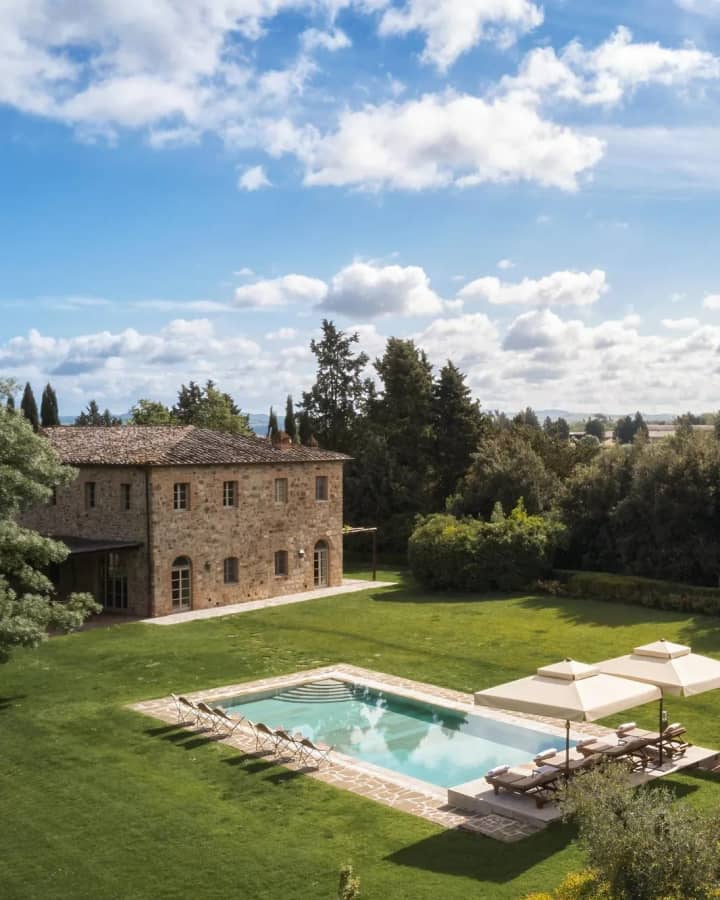
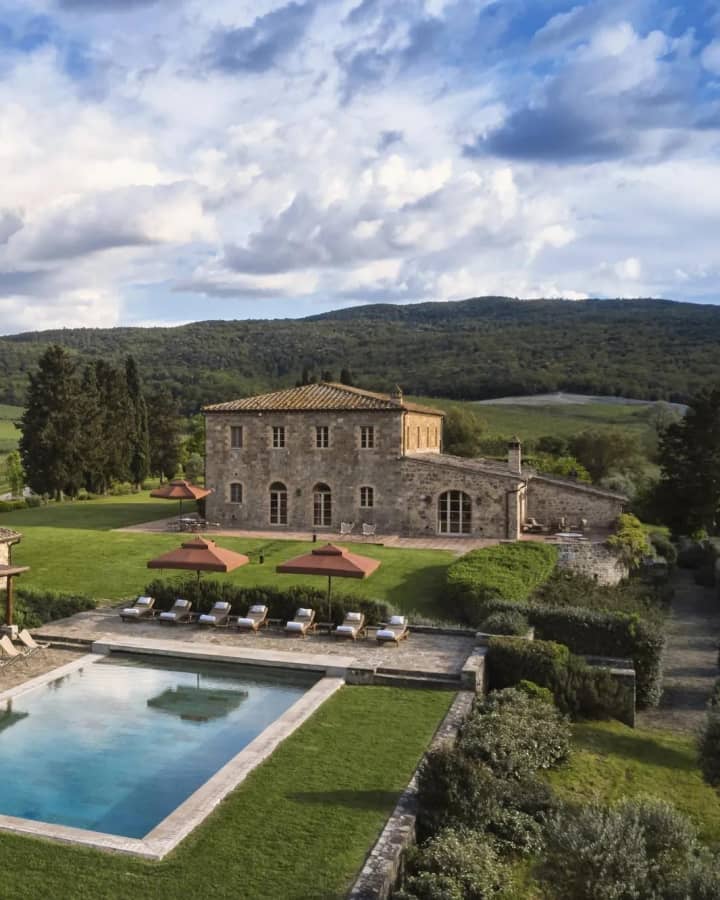
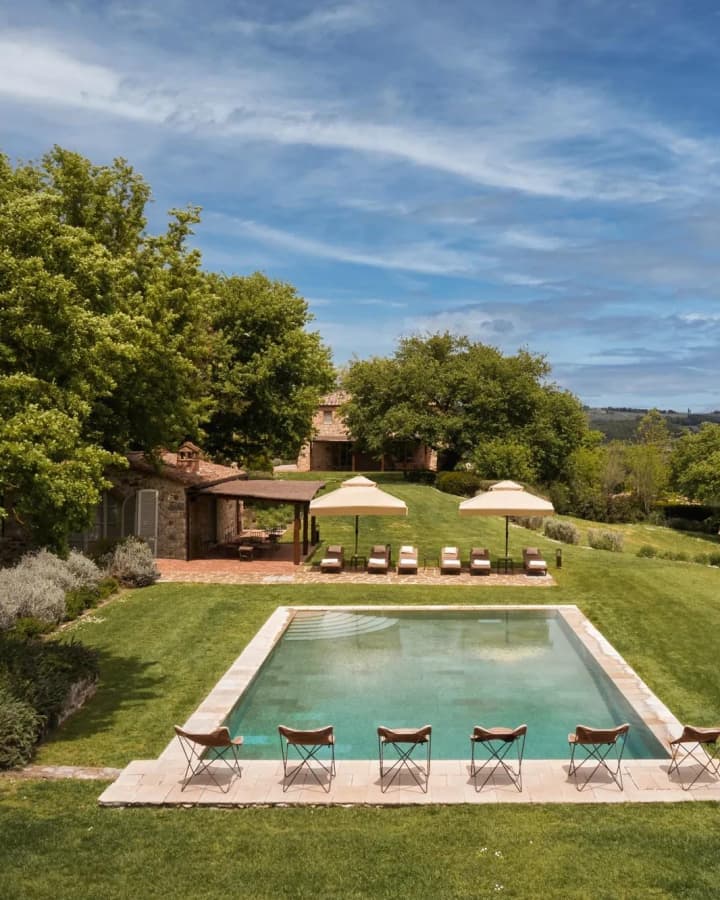
The Val di Chiana villas in our collection are 10–25 minutes by car from the Parterre parking. This is the structural advantage of the Val di Chiana as a Cortona base.
MAEC bookings. The museum is generally accessible without advance booking outside the high-summer weekends. For guests with specific Etruscan or Renaissance-art interests, we arrange small-group guided tours with one of the museum's curators.
Frequently asked
Is Cortona over-marketed because of Under the Tuscan Sun?
It was, between roughly 2002 and 2015. As of about 2018, the town had recovered most of its working character. It is at its best in the cool of the morning before nine, in October on a weekday, and in the long evenings of late September. We do not recommend visiting in the middle of an August day.
What is the MAEC?
The Museo dell'Accademia Etrusca e della Città di Cortona, the Etruscan and Roman archaeological collection, in the centre of the town. One of the finest Etruscan collections in central Italy, including the Tabula Cortonensis (a 7th-century BC bronze tablet with one of the longest known Etruscan inscriptions). Half a day's serious visit.
Is Cortona worth visiting beyond Under the Tuscan Sun?
Yes, emphatically. The Etruscan archaeological depth, the Fra Angelico Annunciation in the Diocesan Museum, the medieval-Renaissance street plan, and the food culture are all the reasons to visit, and all of them precede Frances Mayes by centuries.
Should I stay in Cortona or in the countryside?
In the countryside. The town has limited high-end accommodation inside the walls. Our Val di Chiana villas are 10–25 minutes away.
Can I see Frances Mayes' house?
Bramasole, her house, is private. The road past it (Via di Bramasole / SP35) is publicly walkable; the houses themselves are not visited. There is no formal Under the Tuscan Sun trail, and we do not recommend the curated commercial tours.
Who is Cortona's patron saint?
Santa Margherita da Cortona, the thirteenth-century penitent whose basilica crowns the top of the town, a steep, worthwhile walk above the Via Crucis with the whole Val di Chiana below. Her feast in late February is the town's own day, celebrated for itself rather than for visitors.