San Gimignano: What to See, and When to Beat the Crowds
San Gimignano: the medieval Manhattan of fourteen towers, day-tripped to within an inch of its life, and still one of the genuinely remarkable visits in Tuscany if you know how to time it.
From the founders·6 min read
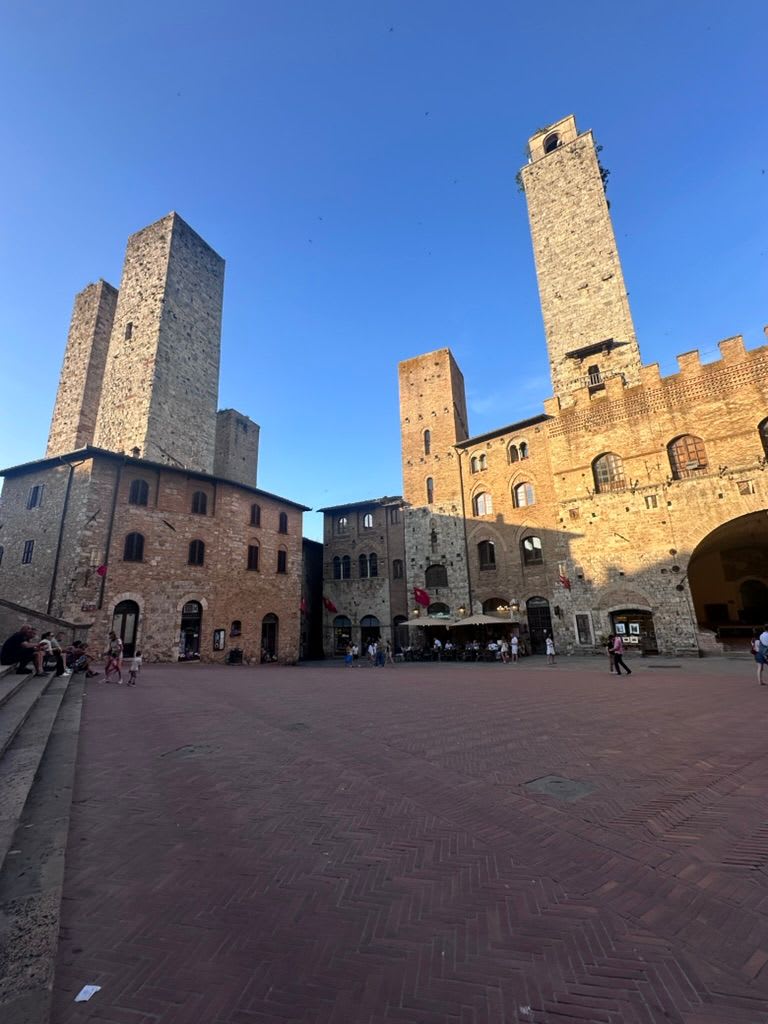
San Gimignano has the distinction of being one of the few small Italian towns where the warning is louder than the recommendation. Almost every guidebook to Tuscany will mention how spectacularly day-tripped the town has become; almost every traveller who has visited at noon in July will agree. The fourteen surviving medieval towers, built between the 12th and 14th centuries by competing patrician families as both fortified residences and visible markers of family standing, make the town's profile one of the most recognisable in Italy and, by some distance, one of the most photographed. The visitor flow follows.
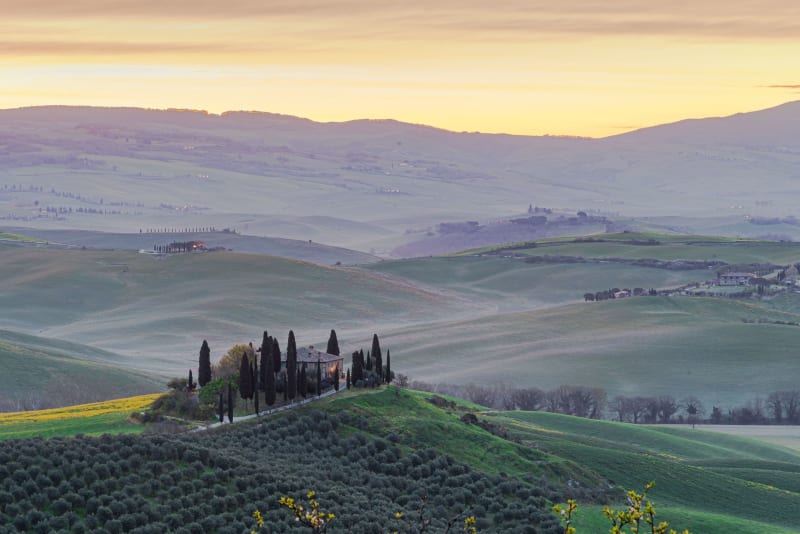
And yet, and this is the entire point of this piece, San Gimignano in the cool of the morning, before the day-tour buses arrive, or in the evening after they have left, is one of the genuinely remarkable places in central Italy. The town is small (about 7,800 residents); the historic centre is intact; the medieval skyline has not been adulterated; and the surrounding countryside, between the Crete Senesi to the south and the Chianti to the north, is some of the best landscape in Tuscany.
The trick is the timing. In and out by 9:30am, or in after 6pm. Anything between is the wrong visit.
What San Gimignano is
San Gimignano sits on a small hill in the Val d'Elsa, between the Crete Senesi to the south, Chianti Classico to the north-east, and the Volterra-Pisan hinterland to the west. UNESCO inscribed the historic centre in 1990 specifically for the integrity of the medieval urban fabric.
The town's historical economy was twofold. First, it sat on the Via Francigena, the medieval pilgrim route between Canterbury and Rome, and prospered for two centuries as a stop. Second, it produced saffron (still grown locally, still used in some of the town's specialty pastries) and Vernaccia di San Gimignano, the white wine that received Italy's first DOC designation in 1966 and the DOCG upgrade in 1993. The Vernaccia grape is unrelated to the better-known Vernaccia di Oristano in Sardinia; it is its own variety, grown almost exclusively in the immediate vicinity of the town.
The towers, once seventy-two of them, now fourteen, are the visual signature. The tallest, the Torre Grossa (54 metres), is climbable. The pair of the Salvucci towers and the pair of the Ardinghelli towers (the Torri Gemelle) sit across the Piazza della Cisterna, each pair built to be exactly the same height as the rivals' to avoid the medieval shame of being out-towered.
How to think about a San Gimignano visit
Two patterns work; everything else is the wrong visit.
The 7am-to-9:30am morning visit. The right pattern. Park at the Bagnaia lot below the walls; walk up to the Piazza della Cisterna for first coffee at one of the bars; visit the Collegiata (the cathedral, with the Domenico Ghirlandaio fresco cycle in the Chapel of Santa Fina) before the queue forms; climb the Torre Grossa for the panoramic view; have an early lunch at one of the two trattorias that work; leave by midday before the day-tour density peaks.
The 6pm-to-10pm evening visit. The alternative. Arrive after the day-trippers have left; have an aperitivo at one of the bars on the Piazza della Cisterna; eat at one of the considered evening kitchens; walk the streets in the long evening; leave by ten. The town is at its quietest and most generous in the evening hours.
The all-day San Gimignano visit, on a summer weekday, is one of the worst standard tourist experiences in Italy. The streets fill; the prices double; the experience is degraded. Plan around it.
What to do once you have done the obvious
The Torre Grossa. The 54-metre civic tower next to the Palazzo Comunale. €9, 200-step climb. The best panoramic view of the town's medieval skyline and the Val d'Elsa beyond. The right first move.
The Collegiata (Duomo). The 12th-century Romanesque cathedral, with three 14th-century fresco cycles: the Old Testament by Bartolo di Fredi, the New Testament by Lippo Memmi (and brothers), and Ghirlandaio's Stories of Santa Fina in the side chapel. One of the most concentrated medieval-fresco visits in Tuscany.
The Sant'Agostino church. The 13th-century Augustinian church at the northern edge of the historic centre. The Benozzo Gozzoli fresco cycle in the apse, Stories of Saint Augustine (1464–1465), is one of the most considered Tuscan Early Renaissance fresco programmes outside Florence. Almost no queue, even in summer.
The Galleria d'Arte Moderna e Contemporanea. A small but seriously curated modern-art collection in a 14th-century building, with rotating contemporary exhibitions. Often overlooked; one of the surprising attractions of the town.
The Vernaccia DOCG tasting.La Cantina del Vernaccia (the consortium's tasting room, just below the historic centre) and several producers in the surrounding countryside (Cantine Falchini, Panizzi) run scheduled tastings. The Vernaccia is structurally a serious white wine, much more interesting than its supermarket-cheap reputation suggests, and a proper tasting flight at one of the considered producers is the right way to understand it.
*The medieval city walls and the vie dei pellegrini***. The pilgrim routes that run through and below the town are signposted; the walking circuit out from the Porta San Giovanni, around the southern walls, and back via the Porta San Matteo is a 90-minute walk and the right antidote to the central piazze when those fill.
The Saffron Festival. The annual Festa dello Zafferano in late October: a small civic event around the saffron harvest with tastings, market stalls, and the local crociai almond pastries flavoured with saffron. One of the right small reasons to visit in October.
Where to eat
Dorando, on Vicolo dell'Oro just off the Piazza della Cisterna. The owner-run institutional San Gimignano dinner kitchen, ten tables, the local cinghiale and bistecca register, the proper Vernaccia and Chianti list. Reservations essential, particularly in summer evenings.
Cum Quibus, on Via San Martino. The most ambitious modern Italian kitchen in the town, one Michelin star, a small dining room, the contemporary version of Sangimignanese cooking. Lead time of three weeks for a reservation.
Trattoria La Mangiatoia, on Via Mainardi. The owner-run lunch alternative. Pici, cinghiale, the daily-special secondo, the house Vernaccia by the carafe. Closed Wednesdays.
Caffè della Cisterna, on the Piazza della Cisterna. The right place for a 7:30am espresso before the queue at the Collegiata forms.
Gelateria Dondoli, on the Piazza della Cisterna. Multiple-time winner of the gelato world championship (the Coppa del Mondo del Gelato). Open from 11am; the queue is real, the gelato genuinely is among the best in Italy.
When to come
April to mid-June and mid-September to early November are the strongest single windows. The town's day-tripper density is meaningfully lower in these months; the wine region is at its photogenic peak; the weather is generous.
*The Festa Medievale** runs the third weekend of June: a serious medieval-history civic festival with parades, costumed events, and the historic Giochi del Saracino* tournament. The right week to be in town for the civic-festival register.
*The Festa dello Zafferano*** runs the last weekend of October. The right week for the saffron-and-Vernaccia register.
Mid-July through mid-August is the hardest version of the town. Day-tripper density at its absolute peak; heat compounds; the streets are essentially impassable from 11am to 5pm. Visit in the cool of the morning or the long evening, or skip in these months.
November to early March is quiet, atmospheric, and the right window for the considered visit. February in San Gimignano is one of the under-recognised quiet-Tuscany months.
Practical ground
San Gimignano has no train station; the closest is Poggibonsi-San Gimignano, 11 km east, with a regular bus connection to the town. Florence airport (FLR) is 75 minutes north. Pisa (PSA) is 90 minutes west.
Driving in. The historic centre is closed to traffic. Park at Bagnaia (the principal car park, large and signposted, just below the walls), at Giubileo (also below the walls, smaller), or at Montemaggio (further out, free, requires a 20-minute walk).
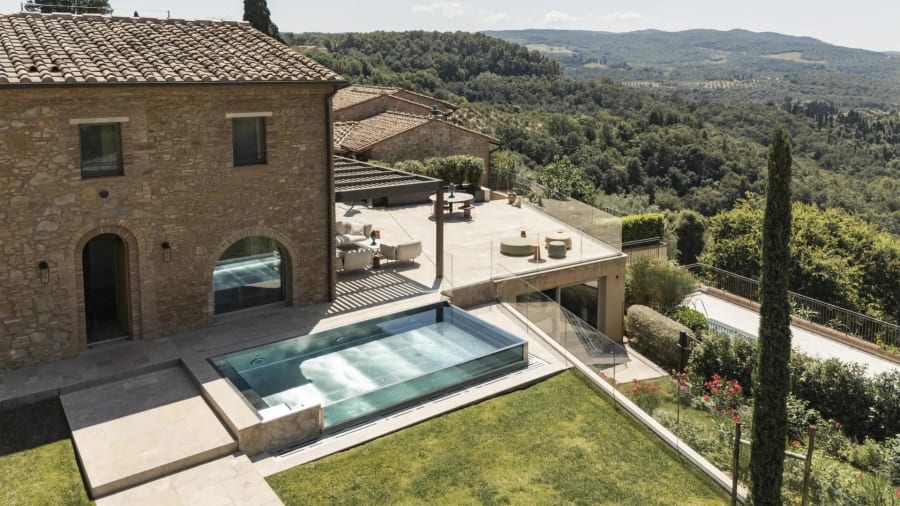
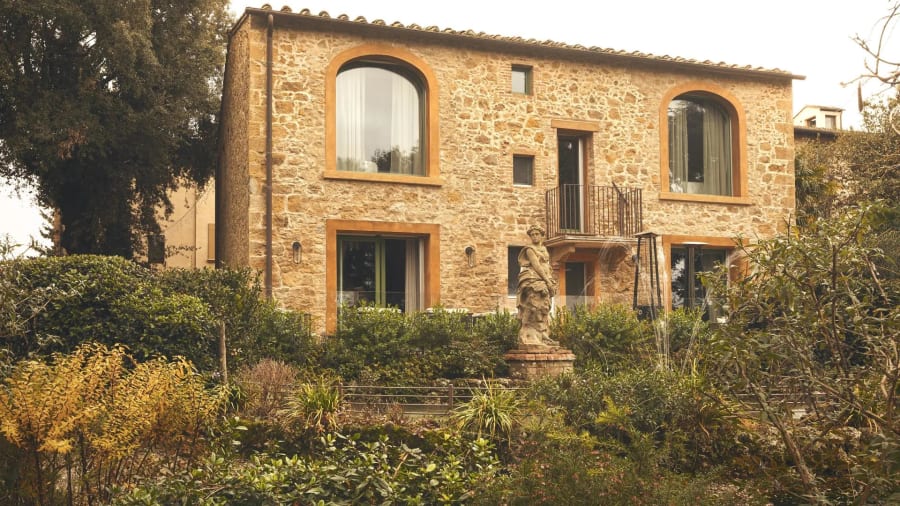
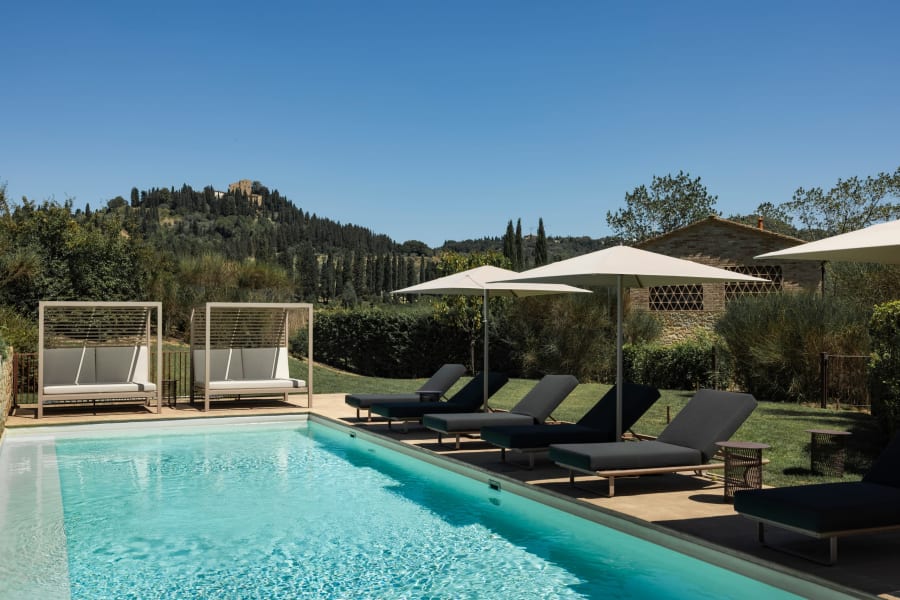
The Crete Senesi villas in our collection are 30–45 minutes south by car. The Chianti villas are 30–45 minutes north-east. Either base works; the Crete is closer for a Pienza-and-San Gimignano combined trip.
Tower bookings. The Torre Grossa is generally accessible without advance booking outside the high-summer middle of the day. For guests with specific architectural or art-history interests, we arrange small-group guided tours of the Sant'Agostino frescoes and the Collegiata.
Frequently asked
Is San Gimignano worth visiting?
Yes, but the timing matters. In the cool of the morning before nine, or in the long evening after the day-trippers have left, the town is one of the genuinely remarkable visits in Tuscany. In the middle of a summer day, it is one of the worst standard tourist experiences in Italy. Plan accordingly.
How long do I need in San Gimignano?
Two to three hours in the morning, or three to four hours in the late afternoon and evening. The all-day visit overstays.
What is the Vernaccia di San Gimignano?
A serious white wine, DOC since 1966 (Italy's first), DOCG since 1993, made from the Vernaccia grape grown almost exclusively around the town. Structurally drier and more mineral than its reputation suggests; the considered producers (Panizzi, Cantine Falchini) make wines that hold their own against any of the central Italian white-wine appellations.
Why are there fourteen towers?
Originally there were seventy-two. They were built between the 12th and 14th centuries by competing patrician families as both fortified residences and visible markers of family standing. Most were demolished or partially dismantled in subsequent centuries; the surviving fourteen have been protected since the 1990 UNESCO inscription.
Should I stay in San Gimignano or in the countryside?
In the countryside. The town has limited high-end accommodation inside the walls; the experience of being in San Gimignano in the early evening, after a day at a country villa, is the right structural pattern.
Do I need advance tickets in San Gimignano?
No. The Torre Grossa climb comes with the civic-museums ticket, bought at the door, and the Collegiata, whose fresco cycles include Ghirlandaio's Santa Fina chapel, takes a small separate ticket, also at the door. The only queue that ever matters in San Gimignano is at Gelateria Dondoli on the Cisterna, and it moves.