Florence as a base, a day trip, and a city to keep returning to. Where to stay, when to go, what to do once you have done the obvious. The editor's perspective on the city you will spend a week working out.
From the founders·6 min read
The mistake most travellers make with Florence is to do Florence. The mistake repeats every year: the four-day stay, the Uffizi tickets bought too late, the Duomo queue at 11am in July, the relief at leaving on the fifth day with the feeling that the city has, at some level, defeated them. Florence does not reward that approach. It rewards the opposite, the half-week with three or four small clear intentions, mornings before nine, and the long lunches that the rest of Tuscany teaches you to take. Florence is the city of an afternoon, repeated several times. It is the city you keep returning to, not the city you finish.
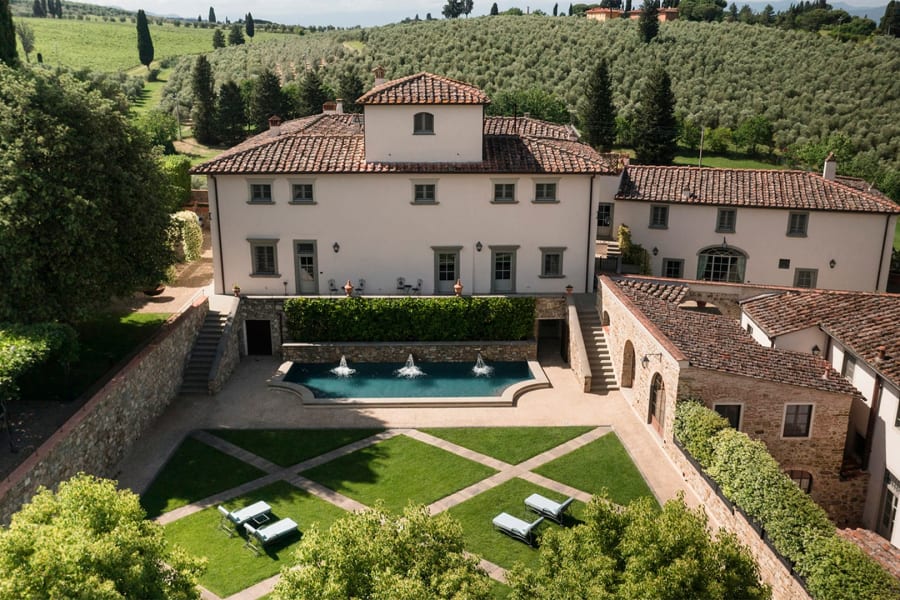
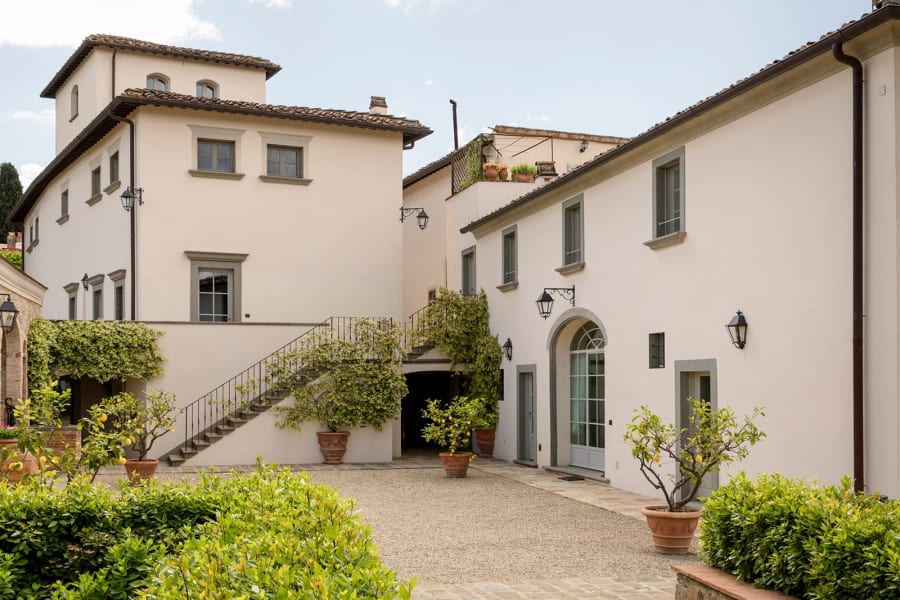
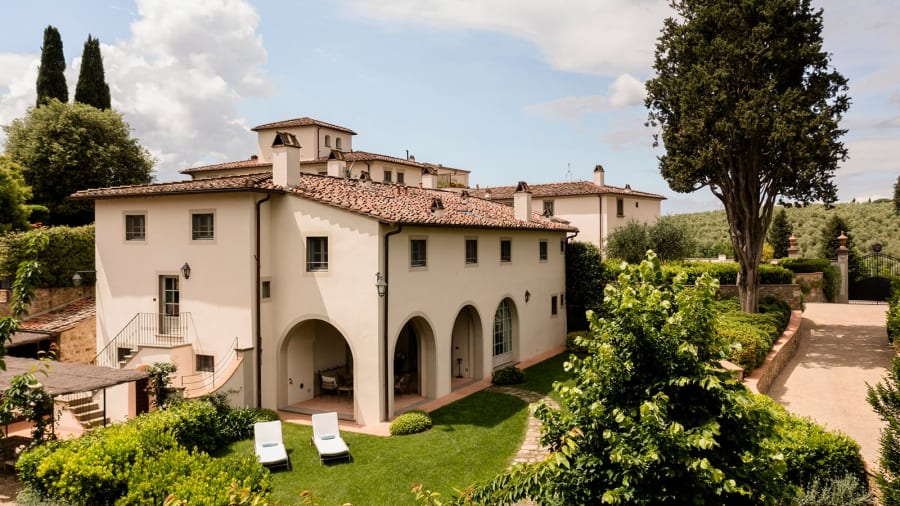
The best Florentine weeks happen when the city is not the entire trip. A villa base in the Mugello (40 minutes north), Chianti (45 minutes south), or the Crete Senesi (an hour south) is the right structural decision. Florence is not a city you sleep in for a week; it is a city you visit on the four mornings and one evening that fit.
What Florence is
Florence is the principal city of Tuscany and the cradle of the Italian Renaissance, the city of Brunelleschi, Michelangelo, Botticelli, Dante (born and exiled here), Machiavelli, the Medici. Population around 380,000; tourists in 2024 around 16 million. The city's compact historic centre, about a square kilometre, bounded by the river Arno to the south and the medieval walls to the north, sits on a UNESCO World Heritage list since 1982 and contains, by most credible counts, more than a quarter of all Italian cultural heritage by inventory.
Five museums anchor the city. The Uffizi for the Renaissance painting collection (Botticelli, da Vinci, Raphael). The Galleria dell'Accademia for Michelangelo's David. The Bargello for the Renaissance sculpture collection (Donatello, Verrocchio, Michelangelo's Bacchus). The Palazzo Pitti and Boboli Gardens for the Medici palace and one of the great Renaissance gardens. The Museo dell'Opera del Duomo for the original sculptures from the cathedral complex (Donatello's Magdalene, the Pietà of Michelangelo).
How to think about a Florence visit
Three patterns work. Every other pattern fights the city.
The half-day. One museum (booked in advance), one walk, one lunch. Arrive before the city is awake (8am parking at the Beccaria lot, walking by 8:30am into the Piazza della Signoria); leave by 2pm before the afternoon heat. This is the right pattern for a guest using Florence as a day trip from a country base.
The 24-hour overnight. Arrive late afternoon, dinner at one of the serious kitchens, a morning museum, departure by mid-afternoon. The right pattern when a guest wants the city's evening register, which is its best one.
The week-of-mornings. The pattern most experienced Florentines recommend. A villa base; into the city for breakfast and a museum on three or four mornings; back at the villa for lunch; the city in the evening for dinner once or twice. Florence becomes a series of short, deliberate visits rather than a four-day campaign.
What to do once you have done the obvious
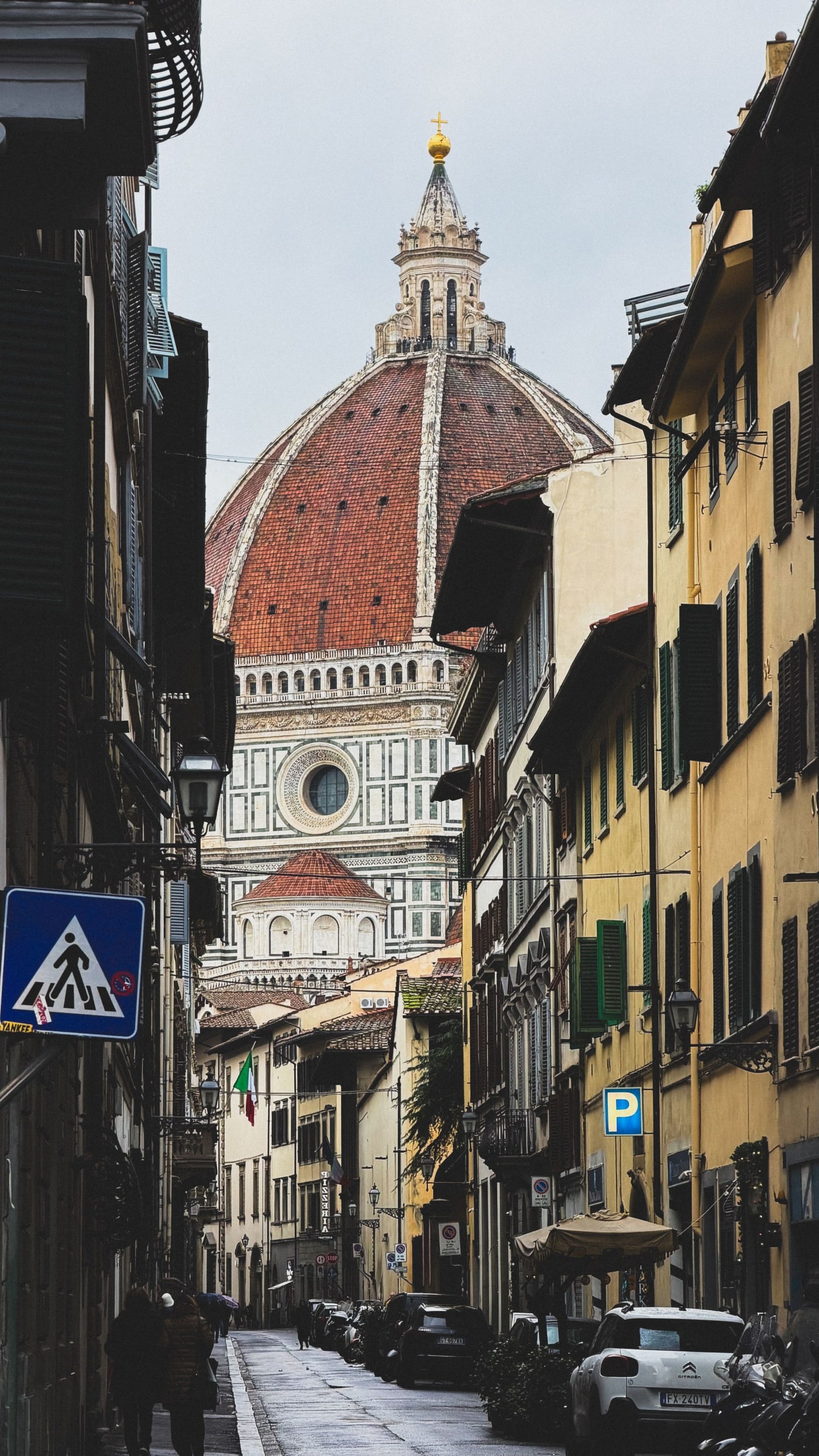
The Uffizi, the Duomo, the David, and the Ponte Vecchio are the obvious moves and you should not avoid them. They are obvious because they are extraordinary. Book in advance, six weeks for the Uffizi, four weeks for the Accademia, and go in the first hour of the morning.
The less-obvious moves are the ones that change the trip.
The Brancacci Chapel. A small chapel in Santa Maria del Carmine, on the south bank, with the Masaccio frescoes that effectively invented Renaissance painting. Twenty-minute visit, almost always uncrowded, and one of the most consequential rooms in European art.
The Sant'Ambrogio market. The morning food market east of the centre, the working market where Florentines actually shop. Open Monday to Saturday, 7am to 2pm. Have an espresso at the bar inside, buy a schiacciata with mortadella for lunch back at the villa.
The Bargello. The under-visited sculpture museum, in a 13th-century palace. Donatello's two Davids; Verrocchio's David; Michelangelo's Bacchus. Half the queue of the Accademia, more than half the experience.
The Officina Profumo-Farmaceutica di Santa Maria Novella. A working pharmacy in a 13th-century Dominican apothecary, north-west of Santa Maria Novella station. They have been making perfumes and tonics here since the 1380s. The waters and soaps are a good gift; the building is a small museum.
An hour at Procacci, in via Tornabuoni. The 1885 salumeria-and-wine bar that more or less invented the panini al tartufo (truffle sandwich) genre. Stand at the marble counter, order one tartufo and a glass of Vernaccia, watch the city pass.
The Palazzo Davanzati. The under-visited 14th-century private palace, restored as a museum of Florentine domestic life. Tells you what it actually looked like to live in Renaissance Florence. Twenty minutes; almost no other visitors at most hours.
A walk up to Piazzale Michelangelo and onward to San Miniato al Monte. The view of the city from the Piazzale is the obvious one. The 30-minute walk further up to San Miniato, the 11th-century Romanesque church above the city, with one of the great Tuscan mosaic façades, is the considered version. Time it for evening vespers (around 5:30pm in summer); the Gregorian chant is real.
Where to eat
A short list. The longer list lives in the journal piece "Florentine kitchens, Florentine prices" (planned, October 2026).
Trattoria Mario, near San Lorenzo. The institutional Florentine lunch; family-run since 1953; bistecca alla fiorentina and peposo. Open lunch only; closed Sundays; no reservations. Be there at 12:15.
Il Latini, near Santa Maria Novella. Long communal tables, the bistecca and peposo register, an entire experience that is not for the squeamish. Open dinner; reservations essential.
Cibrèo Trattoria (the smaller, less-formal sister of the Cibrèo restaurant), for the considered modern-Florentine kitchen at trattoria prices. Closed Sundays and Mondays; small room; book.
Trippaio del Porcellino or Pollini's tripe stand, for the Florentine trippa alla fiorentina or lampredotto (the working-Florentine sandwich filling, the offal of the fourth stomach). Standing at a kerbside cart, in central Florence, on a Tuesday morning in October. The right register.
Procacci, already mentioned. For the wine bar / salumeria / panini al tartufo afternoon.
Enoteca Pinchiorri, the three-Michelin-star restaurant in via Ghibellina, for the kind of guest who wants the most ambitious version of Italian dining. €600 a head and one of the great wine cellars in Italy.
When to come
March to early May is the strongest single window. The crowds are smaller, the weather is generous, and the museums are accessible without two-hour queues.
Mid-September to early November is the second strong window, the post-summer clearing, the Settembre Lucchese, the start of the cultural season at the Teatro del Maggio.
Early June is workable but starts to hit summer density. Late June through August is the worst time to visit Florence by an order of magnitude. The heat is real, the queues are catastrophic, and the city's residents are mostly elsewhere.
November to early March is the quiet version of the city, wet sometimes, generous to walkers, and the right window for a serious traveller who has been to Florence in summer and never wants to repeat the experience.
Practical ground
Florence airport (FLR / Peretola) is 5 km north-west of the city, with limited European routes. Pisa airport (PSA) is 90 minutes by car or train and has more international connections. Bologna airport (BLQ) is 90 minutes north over the Apennines and is the best long-haul gateway.
Train. Florence Santa Maria Novella is the principal station; Italo and Trenitalia high-speed trains connect in 90 minutes to Rome, 35 minutes to Bologna, two hours to Milan, 90 minutes to Venice.
Driving in. From a country villa base, the practical move is the A1 motorway to the Firenze Sud exit, then to one of the central paid car parks. Beccaria (east) and Sant'Ambrogio (east, free with a permit for some) are the most practical for the historic centre. Porta Romana (south) is the option from a Chianti or Val d'Orcia base.
Parking inside the historic centre is essentially impossible. The ZTL (Zona a Traffico Limitato) is enforced 7:30am to 7:30pm and the cameras are unforgiving. Park outside; walk in.
Museum bookings. The Uffizi: book six weeks ahead through the official site (firenzemusei.it), specifically choosing a 9:00am or 9:15am slot. The Accademia: four weeks ahead. The Brancacci Chapel: required by appointment, free, two weeks ahead.
Frequently asked
Is Florence a good base for a Tuscany trip?
No, in our view. Florence is best as a day-trip from a country base, Mugello, Chianti, or the upper Val d'Orcia. The city is too hot in summer, too crowded for the kind of week most of our guests want, and short on the kind of private accommodation that suits the brand register.
How many days should I spend in Florence?
For a serious first visit, three to four days, structured as morning visits with afternoons elsewhere. For a return visit, one or two days as part of a Tuscany trip. The week-long Florence holiday is rarely the right structure.
When is Florence at its worst?
Mid-July through mid-August. Heat, peak tourism, and most Florentines themselves are out of the city.
Can you visit the Uffizi without booking?
Theoretically. In practice, in any month except December and January, the wait at the door is two to three hours. Book online through the official site, six weeks ahead, for a 9:00am slot.
What is the Florence ZTL and does it apply to me?
The ZTL is the historic-centre traffic restriction zone, enforced 7:30am to 7:30pm by automated cameras. Driving into it without a permit triggers a fine. Park outside the ZTL; walk in. The cameras do not forget.
Do I need to book the Duomo dome climb?
Yes, strictly. The climb up Brunelleschi's dome is by mandatory timed reservation, and slots in season go well ahead; the cathedral floor itself is free to enter. If the dome is sold out, Giotto's campanile beside it takes the same legs to a nearly identical view with far less ceremony.
What is the calcio storico?
Sixteenth-century football with almost no rules, played in costume on a sand pitch in Piazza Santa Croce each June by the four historic quarters of the city. The final falls on 24 June, the feast of San Giovanni, Florence's patron, and the day ends with fireworks over the Arno; an excellent, chaotic evening to be in the city.