Pisa is a half-day: use it on the way to the villa
Pisa is most guests' first hour in Tuscany and almost nobody's destination. How to use the city properly: the Field of Miracles early, lunch by the river, and the villa by mid-afternoon.
From the founders·4 min read
Pisa is most of our guests' first hour in Tuscany and almost nobody's destination, which is precisely how to use it well. The airport sits ten minutes from the centre, the centre holds one of the most photographed squares on earth, and the temptation is to treat the whole city as a runway with a monument attached. Give it half a day on the way to the villa and it repays you; give it more and you will wish you were already in the hills.
The Field of Miracles, Early or Late
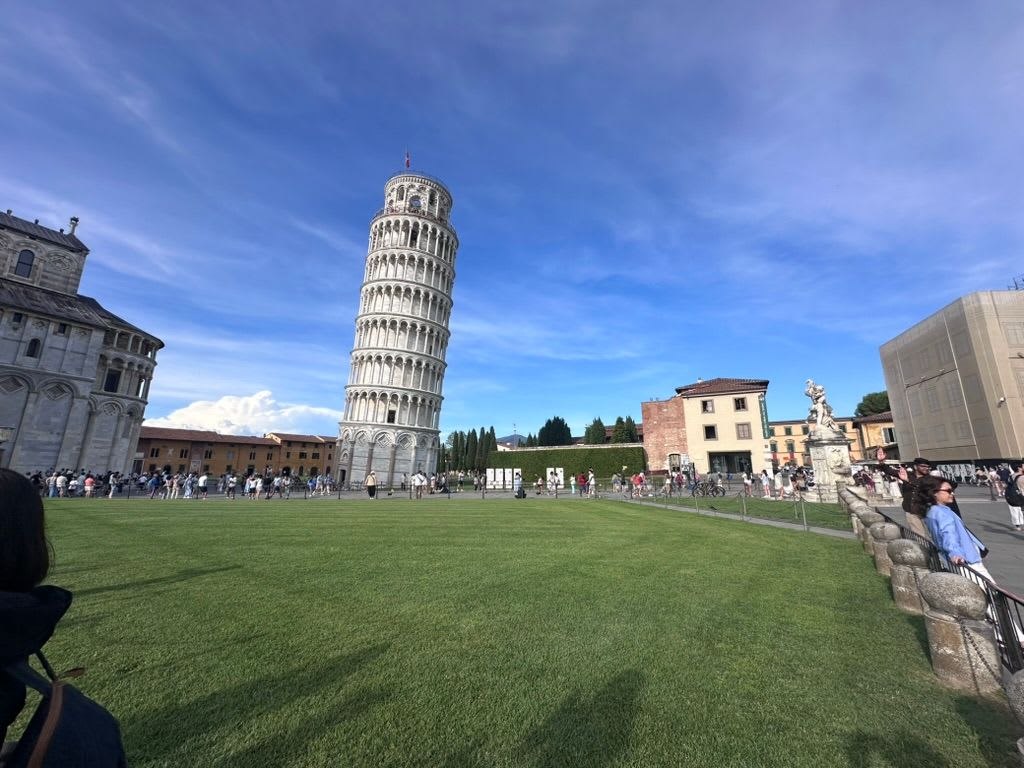
The tower leans in a grass field alongside the cathedral and the baptistery, and the ensemble, the Campo dei Miracoli, is genuinely miraculous: white marble against green lawn, put up when Pisa was a maritime republic that rivalled Venice. The crowds are the price. Go before ten or after five and the square belongs to you; in the middle of the day it belongs to everyone. Climbing the tower needs a timed ticket booked ahead. The baptistery is the underrated one, an attendant demonstrates its echo on the hour, and the Camposanto's frescoes reward the fifteen minutes most visitors never give them.
The City the Coaches Miss
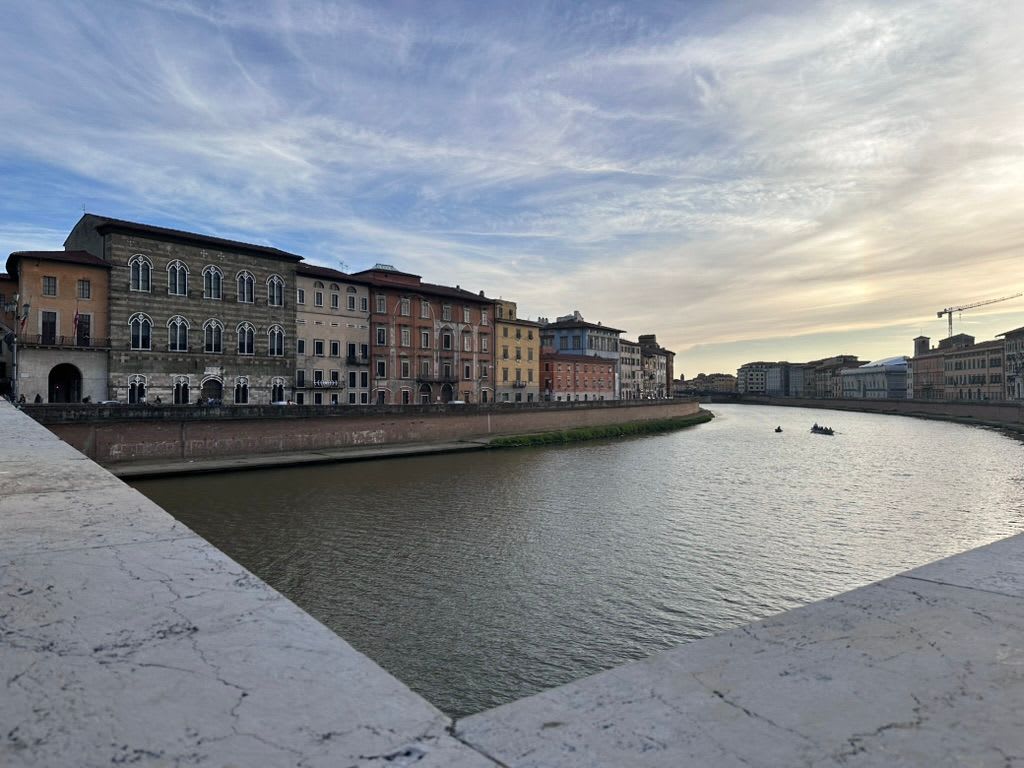
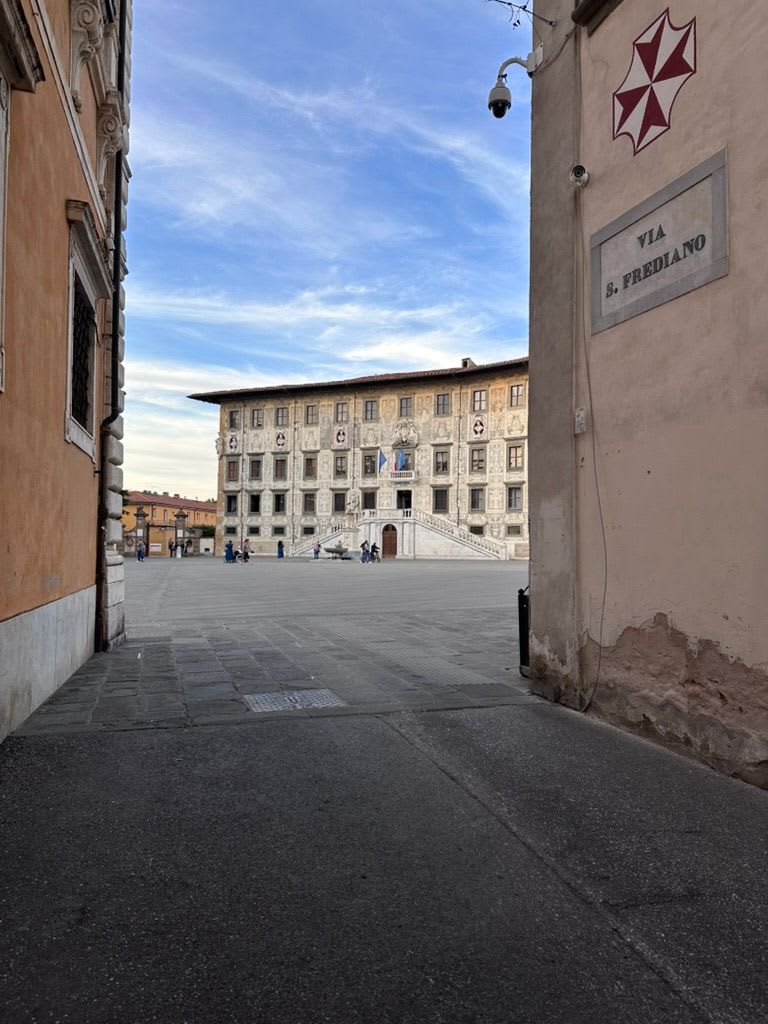
Walk ten minutes south toward the Arno and Pisa becomes a handsome, busy university city that tourism barely touches. Borgo Stretto's arcades hold the coffee bars the students use; the riverfront palazzi glow at dusk the way Florence's never quite do; and Piazza dei Cavalieri, all Vasari façades, is what the city looked like when it mattered. Lunch is better here than anywhere near the tower: cecina, the chickpea flatbread the Pisans claim as their own, or a full riverside lunch before the last hour of the drive.
Tickets: What Needs Booking and What Does Not
The tower is the one strict reservation in Tuscany: entry is by timed slot, numbers are capped, bags are not allowed up, and children under eight are not admitted at all. In season the good morning and late-afternoon slots go days or weeks ahead, so book online as soon as your dates are fixed. Everything else on the square is easier: a combined ticket covers the baptistery, the Camposanto and the museums, and the cathedral itself is free but needs a timed pass collected with any ticket. If the tower is sold out, climb nothing and lose little; the ensemble is the sight, and the tower is better photographed than climbed.
Eating in Pisa
The rule is the same as everywhere in Tuscany: walk away from the monument. Ten minutes south of the Miracles, the streets around Piazza delle Vettovaglie, the arcaded market square, hold the trattorie and wine bars the university crowd actually uses, at university prices. The Pisan claim to fame is cecina, the thin chickpea flatbread eaten hot from the oven in a folded square of paper, best from a forno mid-morning; the coast this close also means the seafood is honest. The bars under Borgo Stretto's arcades do the correct standing coffee, and a riverside table on the Lungarni at dusk is the city's best hour.
Getting There: Train Beats Car
Pisa is the one Tuscan city where the train is the genuine advice. From Lucca it runs about thirty minutes, frequently, and Pisa San Rossore station is a ten-minute walk from the Miracles, which turns the whole outing car-free from the Lucca houses' side. Driving instead? The centre is ZTL like every Tuscan city; use the Via Pietrasantina park-and-ride north of the Miracles, built for exactly this, a flat ten-minute walk or shuttle from the square. Do not attempt the streets between the station and the tower.
The Quirks Worth Knowing
Pisa was a maritime republic that rivalled Venice and Genoa, and everything on the Miracles was paid for by that fleet; the defeat at Meloria in 1284 ended the empire, which is why the city is a preserved medieval port with a university where the navy used to be. Galileo was born here and, by the story, timed the cathedral's swinging lamp against his own pulse. The patron is San Ranieri, and his feast gives the city its finest night: the Luminara, 16 June, when the palazzi along the Arno are outlined in tens of thousands of candles, worth planning a June villa week around. The last Saturday of June brings the Gioco del Ponte, the costumed pushing-match for possession of the middle bridge. The neighbouring rivalry is real, too: ask a Livornese about Pisa, or a Pisan about Livorno, and you get the same answer with the names reversed. One more local note: the Vespa is Pisan by adoption, built since 1946 at Pontedera twenty minutes east, where the Piaggio Museum makes a good wet-morning stop with children.
The Practical City
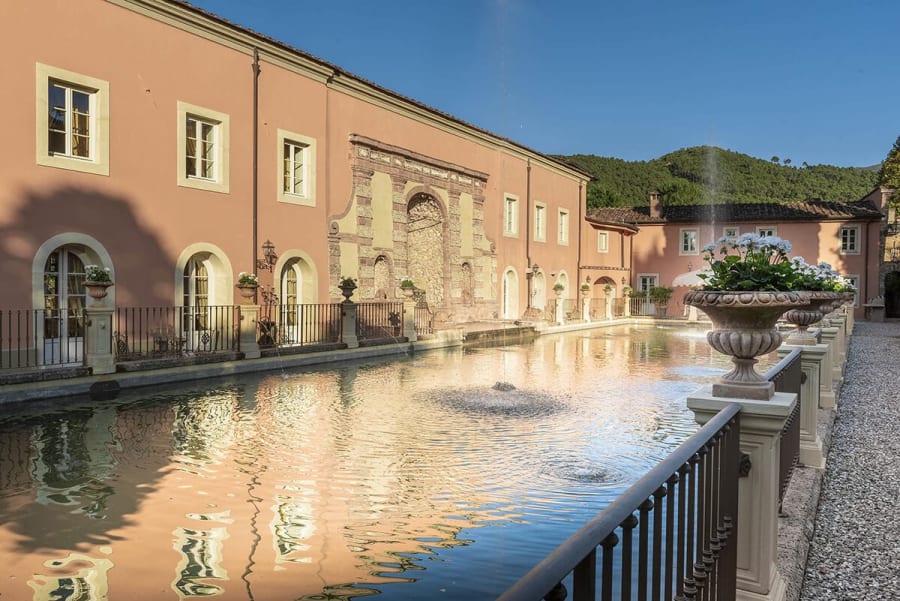
For most of the collection, Pisa is the natural airport: the Lucca houses, Villa Lenka, Casa Felice Matteucci, Borgo Bernardini, are thirty to forty minutes away, and Castelfalfi is under an hour. The arithmetic that works: land mid-morning, drop bags with the driver, ninety minutes at the Miracles while the adrenaline of arriving carries you, lunch by the river, and the villa by mid-afternoon with the whole first evening intact. The full comparison of airports and drive times is in our Tuscany airports guide, and the wider geography in the map of Tuscany.
One honest warning: Pisa on a Saturday in high summer is an exercise in queue management. If your dates land there, flip the plan, straight to the villa, and take Pisa as a cool-morning outing later in the week from the Lucca side, where the drive is short enough to be back for lunch.
Frequently asked
Do I need to book the Leaning Tower in advance?
Yes. Entry is by timed slot with capped numbers, and the good slots go days or weeks ahead in season. Book online the moment your dates are fixed. Children under eight are not admitted to the climb, and bags go into the free lockers.
Is the cathedral free?
Yes, but it needs a timed entry pass, which comes free with any ticket for the baptistery, Camposanto or museums. The baptistery is the underrated one; an attendant demonstrates its echo on the hour.
Should I drive or take the train to Pisa?
Train, if you are coming from the Lucca side: about thirty minutes, and Pisa San Rossore station is a ten-minute walk from the Miracles. If driving, use the Via Pietrasantina park-and-ride north of the square and stay out of the ZTL centre.
How long does Pisa need?
Half a day. Ninety minutes at the Field of Miracles, a walk south through Borgo Stretto to the river, lunch, and out. It is the ideal first-hour or last-morning city of a villa week, not a destination in itself.
What is the Luminara?
The feast of San Ranieri, Pisa's patron, on 16 June: the palazzi along the Arno are outlined in tens of thousands of candles, with fireworks over the river. If your villa week covers mid-June, plan an evening around it.
What should I eat in Pisa?
Cecina, the hot chickpea flatbread the Pisans claim as their own, from a forno mid-morning; otherwise the trattorie around Piazza delle Vettovaglie, the arcaded market square the students use, and honest seafood this close to the coast.