Lucca, the only Italian Renaissance city you can walk around on its own walls. The Puccini birthplace, the rooftop terraces, the *vie* on a Saturday morning, and how to use the city as part of a Tuscan week.
From the founders·6 min read
Lucca is, structurally, the most pleasant medium-sized Italian Renaissance city to walk in. The four-kilometre walls of the city are intact, built in the early 1500s as a defensive system, kept in service through three centuries, and converted from 1820 onward by the Bourbon family of Parma into a continuous public park that locals still use as the city's principal walking-and-running circuit. The walls form an elliptical loop around the historic centre; the centre itself is dense, mostly pedestrian, and built to a Renaissance plan that has been respected by every Lucchese generation since 1545.
The result is a city you can know. Within a week's stay at a country villa with Lucca as the principal urban anchor, a serious visitor builds a working mental map of the vie and piazze, learns where the best espresso is, and adopts a personal walking circuit on the walls. Few Tuscan cities reward repeat visits the way Lucca does.
What Lucca is
Lucca is the principal city of north-western Tuscany, about 89,000 people, 30 km north of Pisa, on the alluvial plain of the Serchio river. The historic centre is roughly elliptical, contained by the 16th-century walls, and entirely walkable end-to-end in 25 minutes.
Three things define the city in the international imagination.
The walls. Four kilometres of intact Renaissance fortification, converted to a public park in the early 19th century, with a continuous walking-and-cycling path on the upper edge. The walls are wide enough at most points for two cars side-by-side. Lucchesi walk them every morning. The view of the city from the walls, particularly the section near Porta San Donato, is the right introduction.
Puccini. The composer Giacomo Puccini (1858–1924) was born in Lucca and the city has not got over it. The Casa Natale di Puccini (his birthplace, on Corte San Lorenzo) is a small museum. The Lucca Summer Festival in Piazza Napoleone runs concerts through July. The Puccini Festival, at Torre del Lago on the coast 30 minutes west, runs operas July to August. A serious visitor can have an entire week in Lucca built around the Puccini scaffolding.
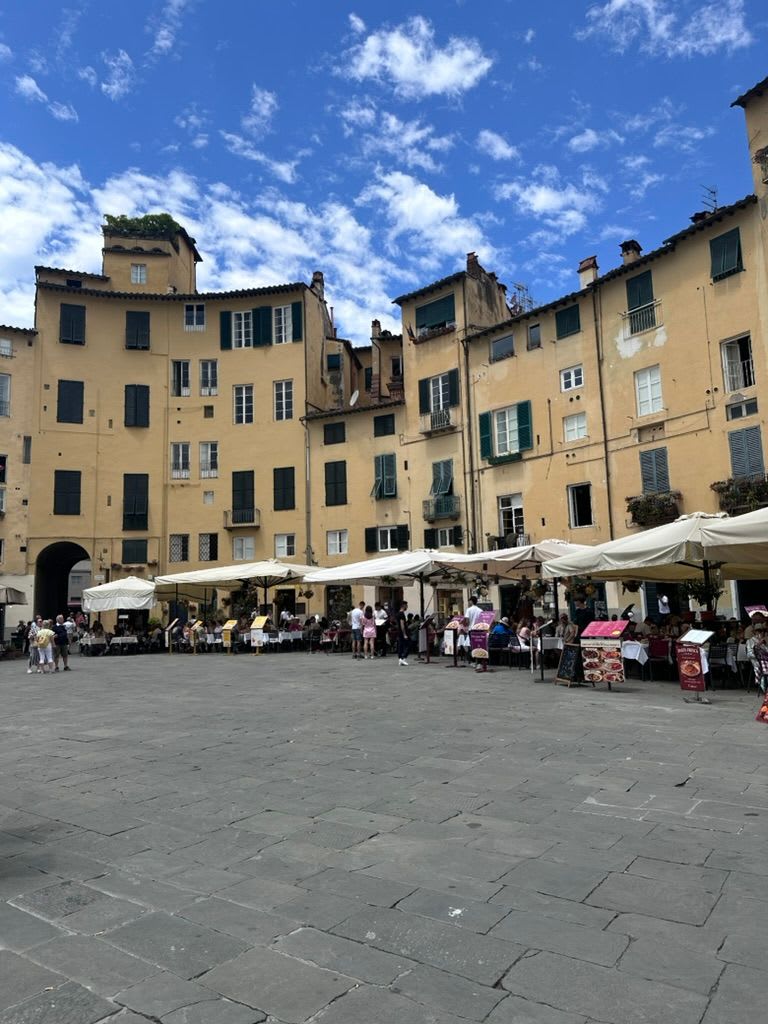
The Piazza dell'Anfiteatro. The elliptical piazza built directly on the foundation of a 2nd-century Roman amphitheatre. The shape of the Roman ring is the shape of the modern piazza; the houses around it follow the curve of the Roman wall. One of the most quietly remarkable urban spaces in Italy.
How to think about a Lucca visit
The right structure is the week-of-mornings pattern, with a country villa base in the Lucca plain or the Garfagnana.
The mornings are for the city: a walk on the walls, a coffee at one of the bars on Piazza San Michele, a museum visit, lunch at one of the trattorias the city does well. The afternoons are for the country, the coast, or the mountain valleys behind. The evenings are for the aperitivo in Piazza San Michele or for one of the city's three serious dinner kitchens.
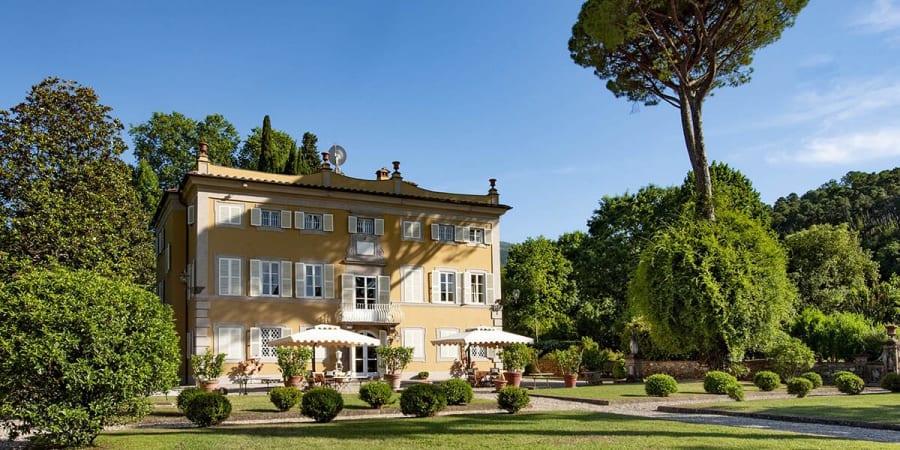
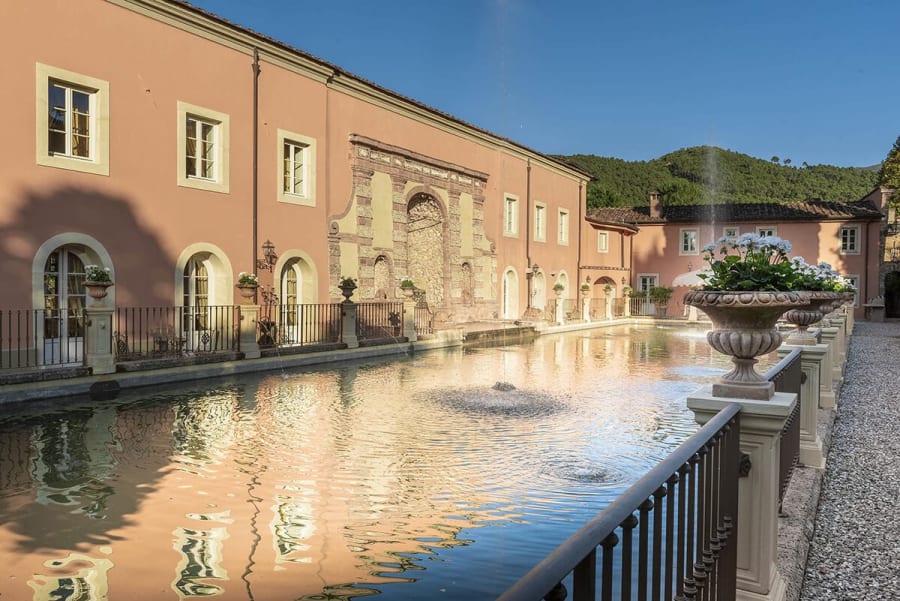
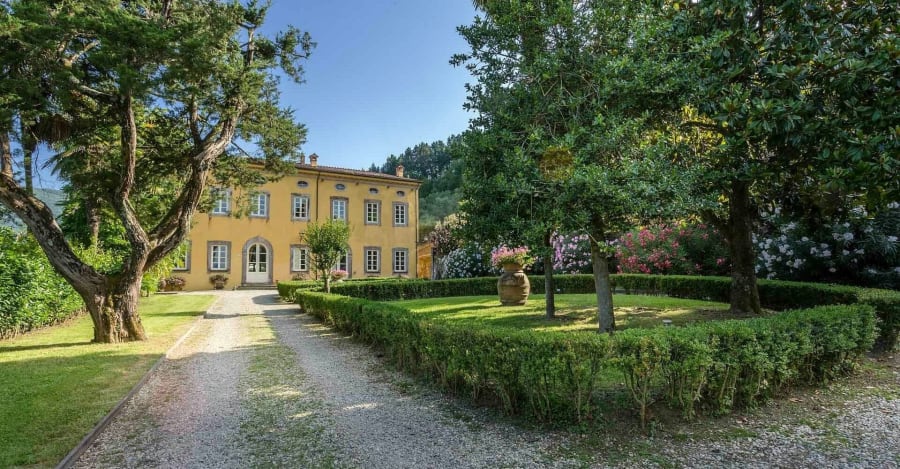
Lucca does not punish overstaying as Florence and Siena do; the city's pace allows a long lunch in the Piazza dell'Anfiteatro followed by a slow afternoon on the walls. But the structural argument for a country base remains: the high-end accommodation inside the walls is thin, and the ville lucchesi (the 18th-century country villas of the Lucchese merchant aristocracy) are the right register of stay.
What to do once you have done the obvious
Climb the Torre Guinigi. The 14th-century brick tower with seven oak trees growing on its roof. €5, 40-step climb, the best view of the city.
The Cathedral of San Martino and the Volto Santo. The 11th-century cathedral, with the Volto Santo di Lucca, a wooden crucifix said by tradition to have been carved by Nicodemus, present in Lucca since at least the 8th century. The cathedral museum next door has the cathedral's collected treasures.
The Casa Natale di Puccini. A small museum (45 minutes' visit) with Puccini's piano, manuscripts, family photographs, and the room where he was born. For the music-led traveller, the right second visit is to Torre del Lago, 30 minutes west, where Puccini lived and worked, his villa is a museum, and the Puccini Festival theatre sits on the lake.
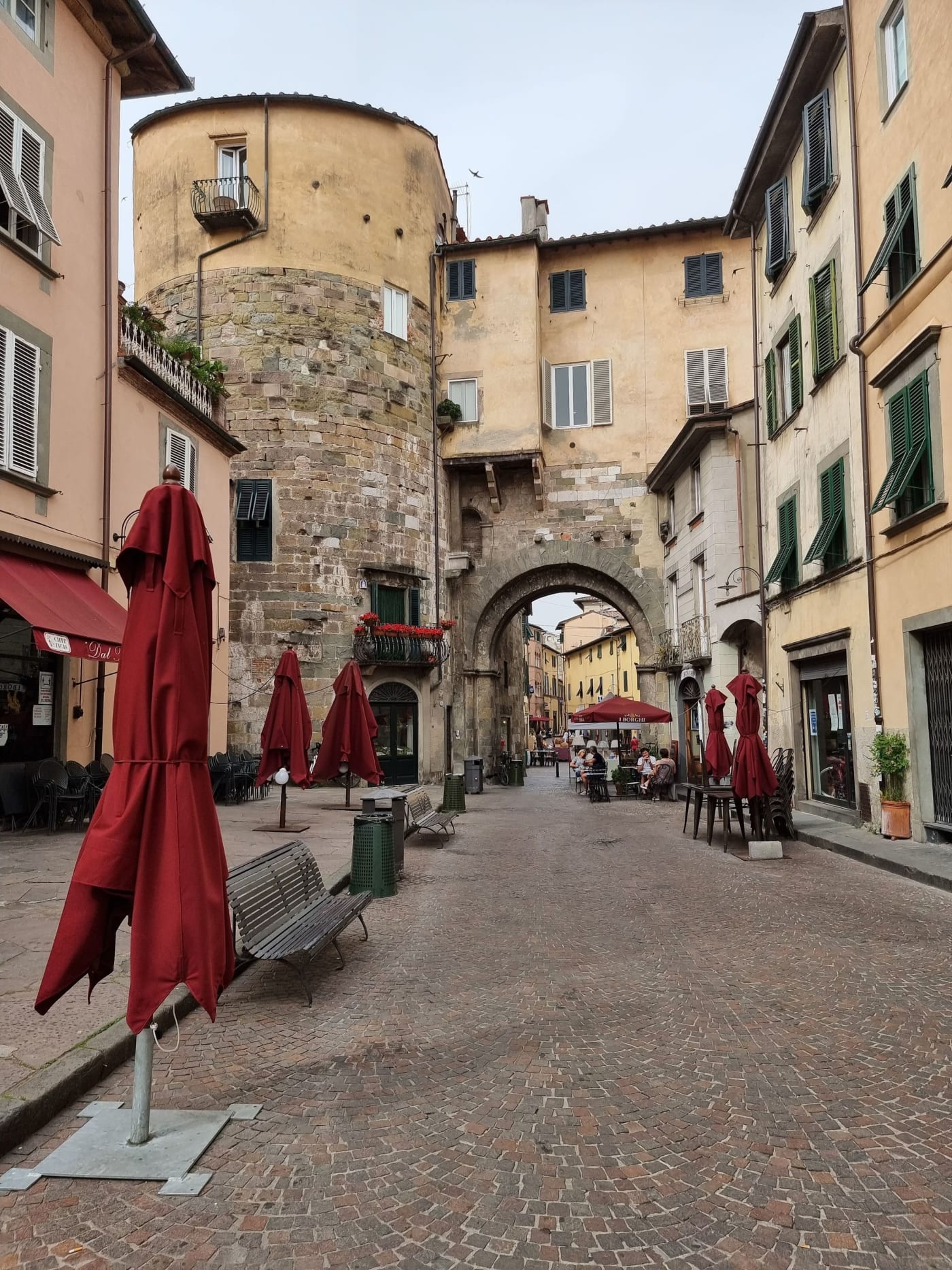
*The Saturday morning vie walk.* The Saturday morning ritual of Lucca: locals walk via Fillungo and via San Paolino slowly, stopping at five or six bars and shops along the way. Join the rhythm; do not try to do anything on a Saturday morning except this.
*The ville lucchesi circuit.* The 18th-century country villas of the Lucchese merchant aristocracy, Villa Reale di Marlia, Villa Mansi, Villa Torrigiani, Villa Bernardini, sit on the plain west and north of the city, all open to visitors, all with serious historic Italian gardens. A half-day driving circuit covers three of them comfortably.
Pietrasanta. The sculpture-and-foundry town 35 minutes west on the coast, working contemporary sculptors in studios on the back streets, a piazza on Friday evenings at seven that is one of the right registers of an Italian summer evening, and the right dinner-and-evening pairing for a Lucca-based week.
Where to eat
Buca di Sant'Antonio, on Via della Cervia. One of the oldest continuously running trattorias in Italy (since 1782); old-fashioned, sometimes tourist-aware, but still genuine. Tordelli lucchesi (the local meat-stuffed pasta) and the coniglio in umido. Lunch and dinner; closed Sunday evenings and Mondays.
L'Imbuto, on Piazza del Giglio. The most ambitious modern Italian kitchen in the city, a tasting-menu room run by the chef Cristiano Tomei, two Michelin stars. For the kind of guest who wants the contemporary version of Lucchese cooking; lead time of three to four weeks for a reservation.
Trattoria da Leo, in Via Tegrimi. The institutional Lucchese family-run lunch spot. Farro soup; the local biroldo (blood sausage); baccalà alla lucchese. Closed Sundays.
Caffè delle Mura, on the walls themselves. The right place for a caffè and a slice of castagnaccio (chestnut cake) on the morning's walk-on-the-walls.
Forno Amedeo Giusti, on Via Santa Lucia. The bakery the Lucchesi go to. Buccellato (the Lucchese aniseed-and-raisin bread), focaccia con uva in autumn, the proper castagnaccio.
When to come
April to early June is the strongest window. The walls are full of locals walking, the camellias in the country-house gardens come into colour, Lucca does what it does best.
Mid-September to mid-October is the second strong window. Settembre Lucchese, the city's civic festival, runs through September and culminates in the Luminara di Santa Croce on 13 September (the Volto Santo procession, a serious Lucchese civic event).
July is busy because of the Lucca Summer Festival (concerts in Piazza Napoleone) and the Puccini Festival on the coast. Hot, but tolerable. August is hot and the city is half-empty of locals.
Early November is peculiarly busy: Lucca Comics & Games, the international comics-and-games convention, takes over the city for one week each year (typically the week of 1 November). For most of our guests, this is the wrong week to visit Lucca; the city sells out.
Mid-November to March is the quiet version of the city. December has a small Christmas market; the city is generous to walkers.
Practical ground
Pisa airport (PSA) is 30 minutes south. Florence airport (FLR) is 80 minutes east. Pisa is the right entry point.
Train. Lucca station is just outside the Porta San Pietro at the south of the walls. Direct trains run to Pisa (30 min), Florence (80 min), Viareggio (20 min), and into the Garfagnana valley.
Driving in. The historic centre is mostly pedestrian. The principal car parks for visitors are the Cittadella underground (central, paid, busy), Mazzini (just outside the walls, paid), and the Carducci lot (free, 10-minute walk into the centre).
The walls. The walking circuit is 4.2 km. Allow 50–60 minutes at a normal pace; longer if you stop. Bicycles are available for hire at most of the gates; a bicicletta tandem for two is the most-photographed option but a single bicycle is more practical.
Frequently asked
What is Lucca known for?
The intact Renaissance walls (now a public park), Giacomo Puccini (born here in 1858), and the Piazza dell'Anfiteatro (built directly on a Roman amphitheatre's ring). The city is one of the most pleasant medium-sized historic Italian cities to walk in.
How long do I need in Lucca?
For a first visit, two to three days is enough. As an urban anchor for a country week (using one of our Lucca-province villas as a base), four to five mornings spread across the week is the right structure.
Is Lucca better than Siena or Pisa?
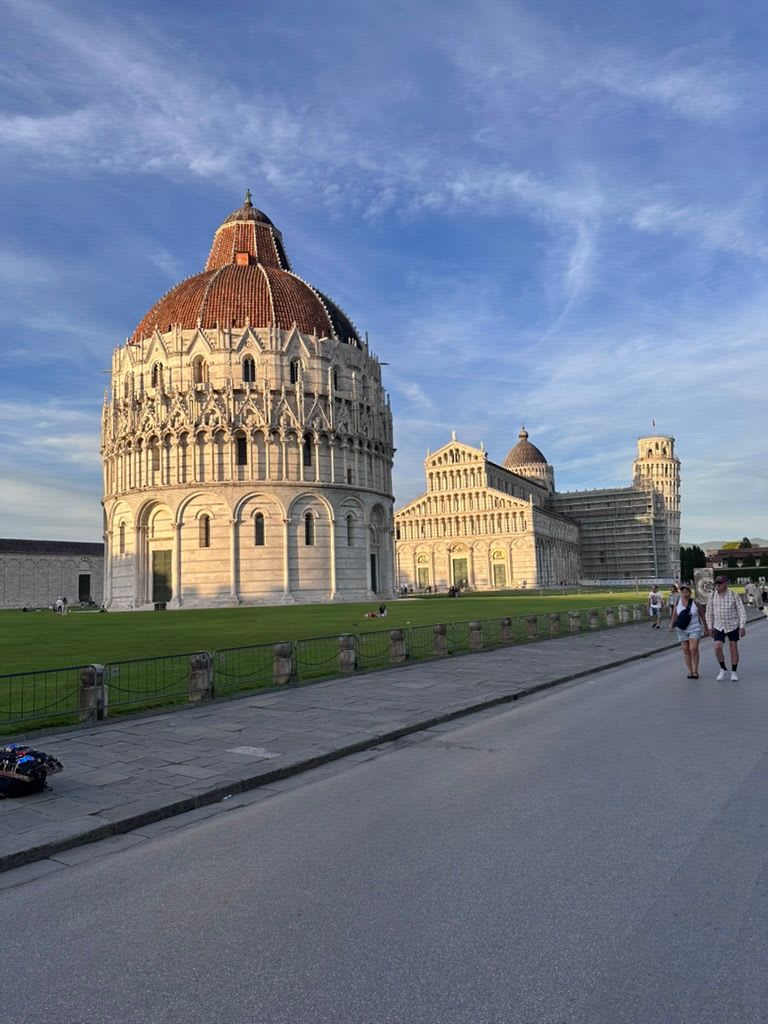
They are different cities for different trips. Pisa is essentially a half-day visit (the Field of Miracles plus lunch). Siena is a serious medieval walking city, denser and more demanding than Lucca. Lucca is the easiest of the three to live near and visit repeatedly.
Should I stay inside the walls or in the countryside?
In the countryside. The high-end accommodation inside the walls is thin; the ville lucchesi on the plain (15–25 minutes' drive) are the right register of stay.
When is Lucca at its busiest?
The first week of November (Lucca Comics & Games) and mid-July (the Summer Festival concerts in Piazza Napoleone). Everyone else: April–May and September–October.
Can I drive into Lucca?
No; the centre inside the walls is a camera-enforced ZTL. Park in the lots ringing the walls and walk through the nearest gate, nothing inside is more than fifteen flat minutes away. Lucca is also one of the few Tuscan towns the train serves well: the Florence line runs roughly hourly, and Pisa is about thirty minutes.
What is the Luminara di Santa Croce?
Lucca's night of the year: 13 September, when the city switches off its lights and a candlelit procession carries the Volto Santo, the town's ancient wooden crucifix, through streets lit by tens of thousands of flames. If your villa week covers mid-September, plan an evening in for it.